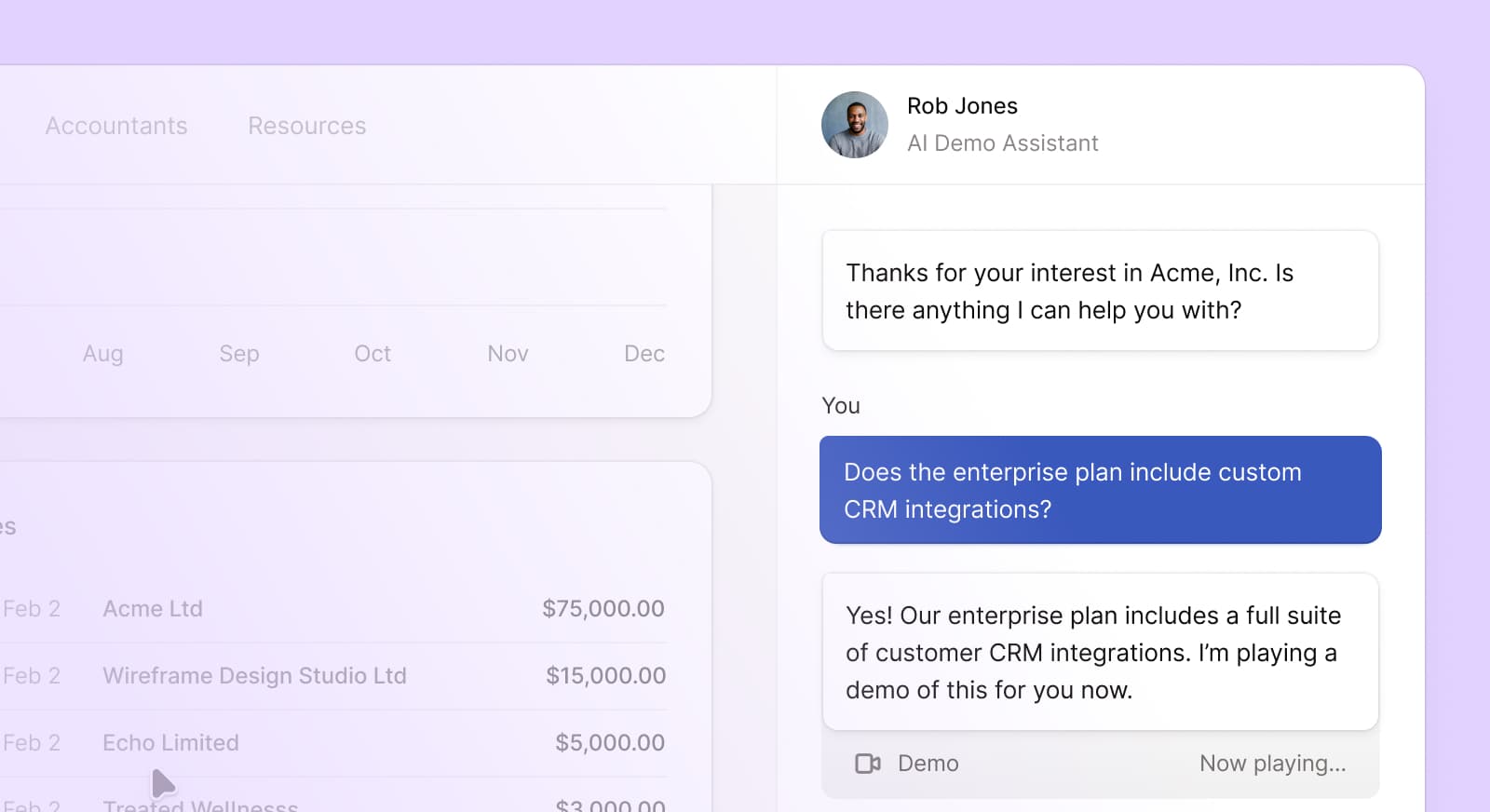

A prospect fills out a form at 3 p.m. Your rep sees it the next morning. By then, that prospect has already started talking to your competitor.
Buyers don’t wait anymore. Prospects are shopping right now, three vendors open in different tabs, ready to move forward with whoever responds first. Your manual outreach process, or the form-based automation you installed two years ago, cannot keep up.
The gap between a form fill and a first reply is where most inbound pipeline goes. What follows covers what an AI SDR is, how it differs from the tools you’re probably using, and how to deploy one to turn more of your inbound traffic into pipeline.
Key takeaways
An AI SDR is an AI agent that qualifies inbound leads, routes them, and books meetings automatically, without waiting for a human rep.
The difference from a chat widget is conversion, not capture. AI SDRs answer pricing questions, qualify during the conversation, and book onto a rep’s calendar rather than adding a name to a list.
LLM-native platforms adapt to off-script questions and learn from your sales data. Platforms with AI retrofitted onto decision trees break when a prospect asks something unexpected.
Multi-modal agents carry context across chat, email, voice, text, and product demos, so a prospect who calls after chatting doesn’t start over.
Rho increased form-to-meeting conversion 3.1x, booked 137 qualified meetings in a quarter, and cut time per lead by 60% after deploying Spara.
What is an AI SDR?
An AI SDR, or Artificial Intelligence Sales Development Representative, is an AI agent that lives inside your workflow and accelerates how fast you create pipeline. It connects to your CRM and calendar, follows whatever qualification rules you set, and enriches lead data while conversations are happening. The big difference from human SDRs? AI agents can engage every single inbound lead the moment they show interest, with no “I’ll get back to you tomorrow.”
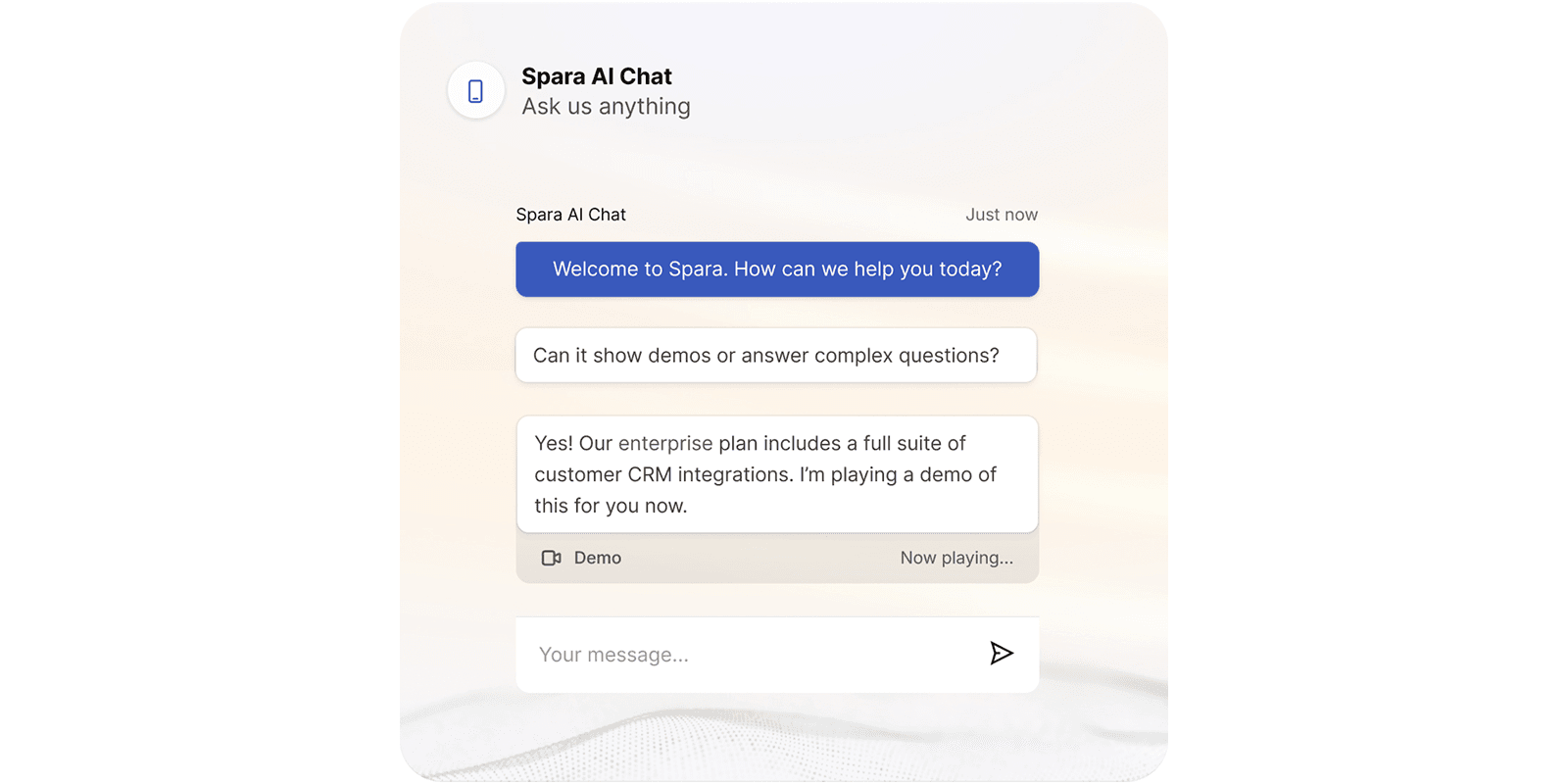
Spara AI Chat
Why multi-modal matters
Buyers don’t stick to one channel. Prospects start a chat on your website at lunch, send a follow-up email that afternoon, then call the next morning when they’re ready to move forward.
The best AI SDRs work across chat, text, email, voice, and product demos for exactly this reason. Multi-modal agents remember context across every channel, so when that prospect calls after chatting and emailing, they’re not starting from square one. The conversation picks up right where it left off.
LLM-native vs. retrofitted platforms
Not all AI SDRs are built the same, and the difference matters.
Legacy platforms have AI features added to infrastructure built before large language models existed. Under the hood, these systems still run on rigid scripts and decision trees, with a conversational interface on top. You can usually tell because the AI agent breaks down the moment a prospect asks something slightly off-script.
Platforms like Spara were built after LLMs, meaning adaptive conversations and real-time learning are foundational. LLM-native AI SDRs train on your company’s data, including sales playbooks, past conversations, and product documentation, and get smarter over time. You don’t manually program every possible question and response. Instead, the AI agent learns your qualification logic, adapts to different buyer scenarios, and improves conversion rates as it handles more conversations.
How AI SDRs differ from traditional tools
Traditional chat widgets and email automation do one thing: collect contact info and add it to a list. Then a human has to follow up manually. Even if your rep is fast, say 15 minutes, that prospect has probably already heard back from a competitor who’s using AI to respond instantly.
AI SDRs convert leads rather than just capture them. When a prospect asks about pricing, the agent answers immediately. When the qualification boxes are checked, it books a meeting straight onto your AE’s calendar. Your team only talks to people who are already qualified and ready to have a real conversation. Everyone else gets routed to self-service content or your support team.
Why are traditional SDR workflows losing to AI SDRs?
You can’t use traditional SDR workflows and expect to compete with faster, better, and more efficient AI ones. Traditional SDR workflows follow a predictable pattern. Someone fills out a form. It lands in a queue. An SDR eventually picks it up, researches the company, checks the customer relationship management (CRM) data, and drafts a thoughtful response. But by the time the SDR hits send, the prospect has moved on, because your consumers expect immediacy. Competitors who responded faster have already started the conversation.
Speed-to-lead is now the battleground, and the first responder wins. Across 5.7 million inbound leads at more than 400 companies, conversion rates are more than 8x higher when contact happens inside the first five minutes, and only 0.1% of leads get a call that fast. Human-only SDR models cannot add headcount fast enough, or cheaply enough, to keep pace.
How do AI SDRs close the gap between MQL and booked meetings?
The gap is waiting. A lead becomes an MQL, then sits in a queue until someone picks it up, and by then the buyer has moved on. An AI SDR closes it by doing the qualifying and the booking inside the same conversation, so there’s no handoff to wait for. Four things make that work.
Real-time lead engagement
Speed matters because buyer intent peaks the moment prospects reach out, and drops fast after that. When someone requests a demo or asks about enterprise features, they’re comparing vendors right now. If your team takes 15 minutes to respond, they’ve already gotten answers from a competitor who replied instantly.
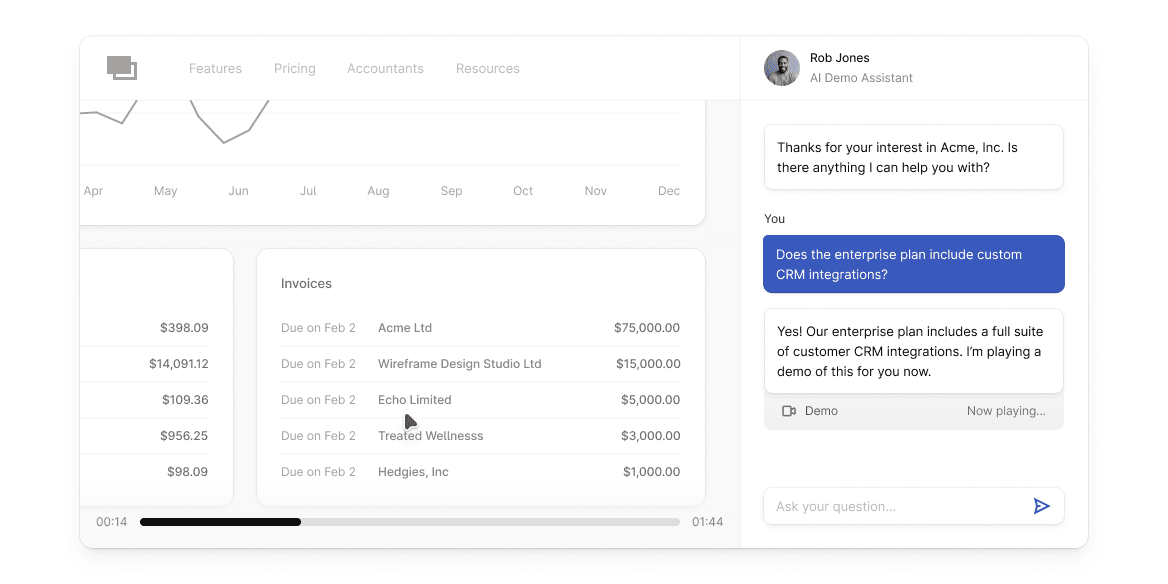
Lead engagement with Spara Chat
AI SDRs engage the second that buyers’ interest hits. A contact form triggers a conversation immediately. Someone browsing your pricing or integrations page gets answers before moving on. Companies using AI SDRs for inbound automation capture buyers when they’re actively evaluating, rather than after the moment has passed.
Lead qualification and routing
AI lead qualification happens during the conversation, using natural language processing combined with your CRM data. AI agents don’t follow rigid scripts. Instead, the agents pick up on what prospects mean vs. what they say. You set the qualification bar based on your business: company size, budget range, decision-making authority, and buying timeline.
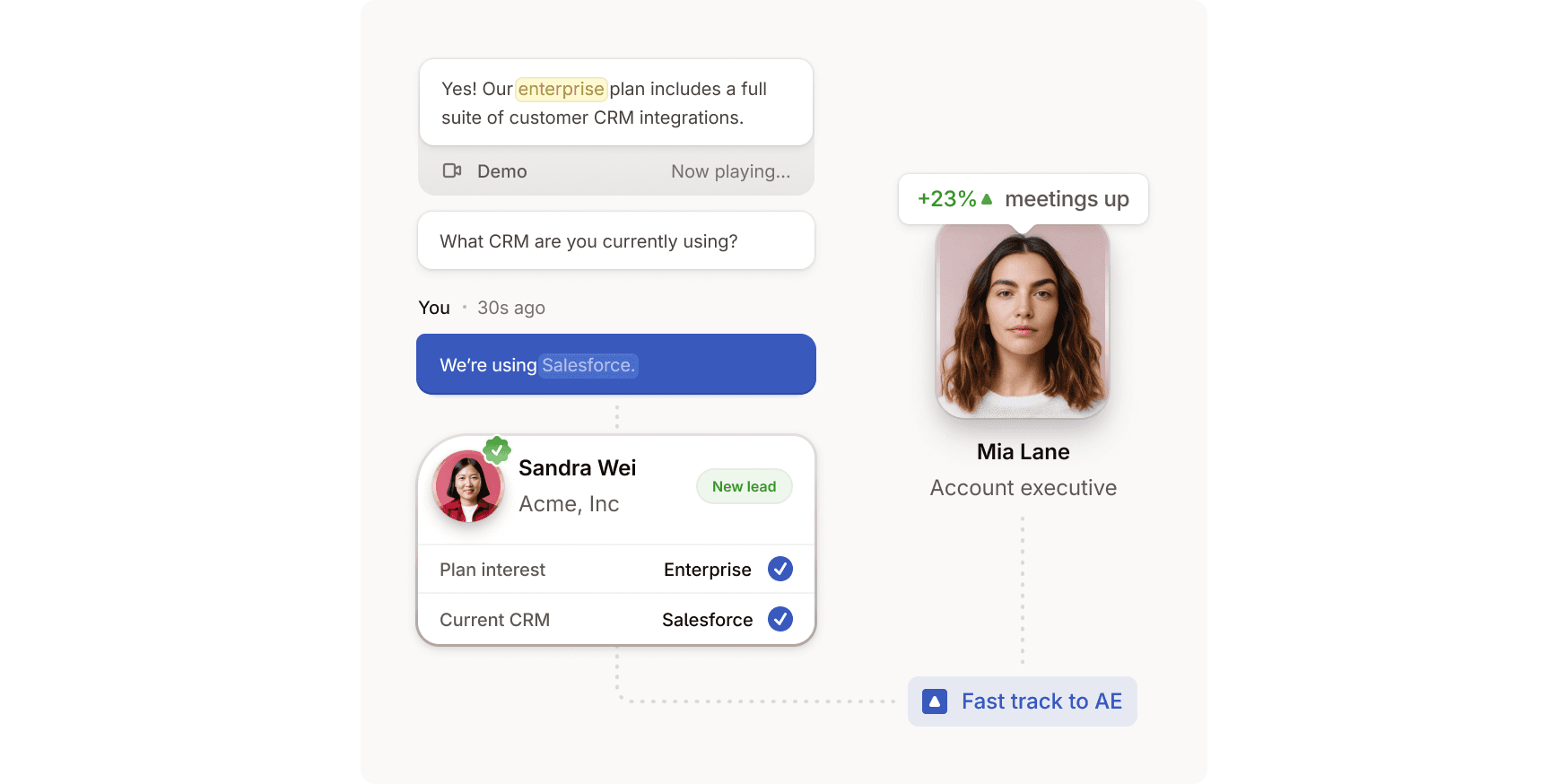
AI SDR lead qualification and routing
This works better than forms because when conversations feel natural, prospects share more. Prospects will mention their actual timeline, budget concerns, and who else needs to sign off. Information prospects would never volunteer in a form unless prompted to.
Once qualified, AI SDRs book meetings and intelligently route every lead to the right next step. Qualified prospects are automatically booked directly onto your reps’ calendars. But unqualified leads don’t disappear. AI agents triage unqualified leads based on your rules: routing leads to self-service resources, directing product questions to support teams, or keeping unqualified leads off sales calendars entirely so your team only talks to buyers who are ready.
This routing means your pipeline stays clean and your reps spend time on conversations that move deals forward.
CRM integration and context retention
AI SDRs plug directly into Salesforce, HubSpot, and calendar systems. Every conversation syncs automatically to your CRM and sales tools, giving your team real-time visibility into every lead interaction. AI agents remember what was discussed, so when a prospect moves from AI to human interaction, your reps don’t need to ask prospects to repeat themselves.
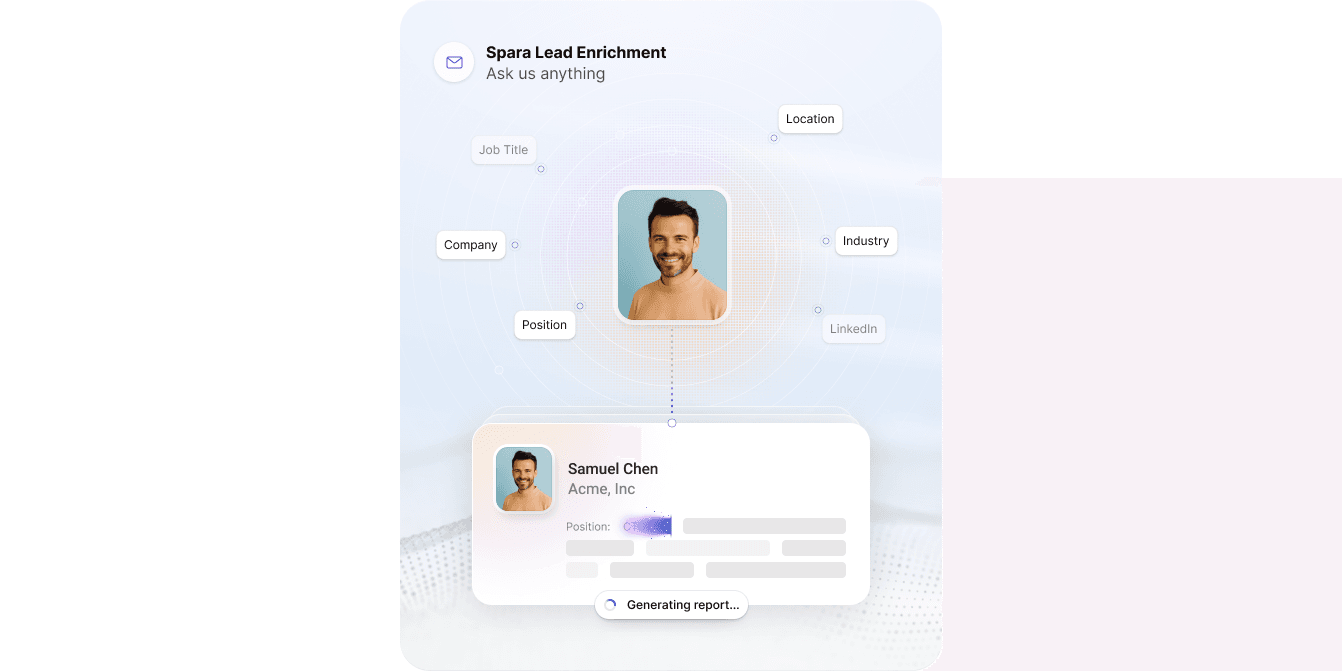
Spara lead enrichment
This creates an end-to-end view of every deal in motion, updated as conversations happen. Reps walk into calls already knowing what matters to their customers, and know which engagement patterns are turning into closed deals.
Multi-channel intelligence
Buyers have preferences. Some want to chat via messaging system, others would rather talk on the phone, and plenty prefer email exchanges. AI platforms built for multi-channel engagement handle all three without forcing everyone into the same box.
Spara built its platform around multiple communication channels: chat, email, voice, text, and product demos. AI agents engage prospects through their preferred channel while maintaining the same brand voice, response quality, and conversation context across every touchpoint.
Many platforms limit customer interaction to chats, though this approach may not appeal to those who prefer to speak directly to a rep. Multi-channel AI SDRs adapt to how each person wants to communicate and switch between channels without dropping context. This kind of fluid flexibility helps drive higher engagement and better conversion rates across different types of buyers, no matter your industry or product/service.
Where do AI SDRs fit across the funnel?
AI SDRs extend automation through the entire funnel, from the first question on a pricing page to the follow-up weeks later. The gap between Marketing Qualified Lead (MQL), Sales Qualified Lead (SQL), and booked opportunity shrinks because there’s no waiting period for leads to cool off.
The capabilities above all fire at first contact. Further down, AI agents re-engage leads that went cold or didn’t convert initially: prospects who downloaded content but didn’t book, reached out months ago and went quiet, or need follow-up after initial qualification.
Take Rho, a financial services company. Rho increased form-to-meeting conversion by 3.1 times and booked 137 qualified meetings in a single quarter. Time per lead dropped 60%, and every qualified meeting hit Rho’s CRM with notes and intent data. Spara went live in days.
Better response rates mean more conversations, which compounds over time. AI SDRs eliminate the leakage between marketing engagement and sales conversations, the gap where most inbound leads disappear.
What happens if a qualified lead doesn’t book?
Spara follows up by email to continue the conversation. Some buyers prefer voice calls, so AI agents handle those too. The system meets prospects where they want to engage rather than limiting everyone to a single channel.
What should an AI SDR own, and what should reps keep?
Every GTM team has a band of revenue it loses money acquiring. Deals too small to justify a rep’s time, or too complex for a buyer to close alone. Today that band either burns rep capacity or goes unanswered.
That’s what an AI SDR is for. The agent engages the moment intent appears and works the deal as far as it can, closing what it can close and handing reps only the deals that need them. Where AI SDRs and human SDRs split the work is the question worth getting right. The agent runs the motion. Salesforce’s State of Sales found that 85% of sales reps with agents say AI frees them to focus on higher-value work, and 88% say it improves their odds of hitting targets.
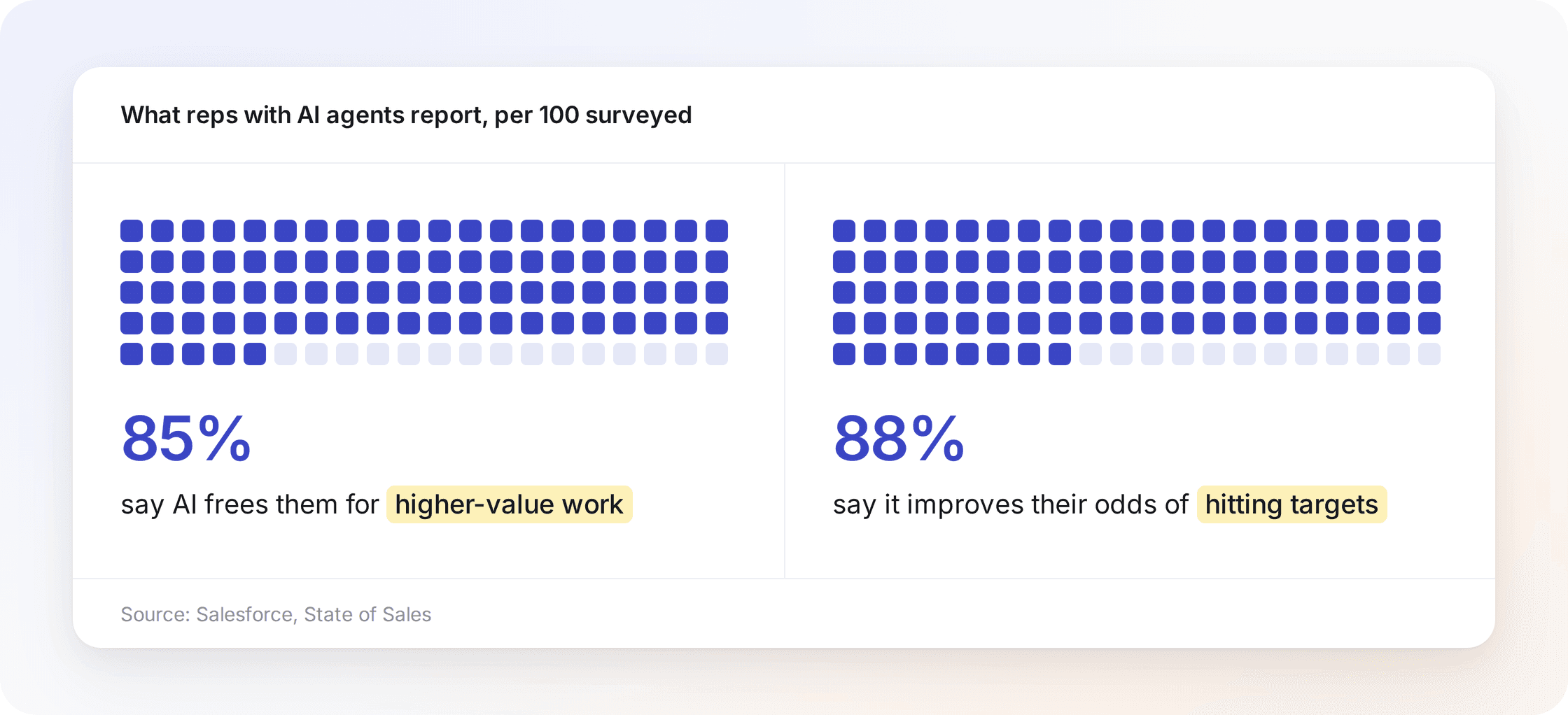
Reps with AI agents report more time on high-value work and better odds of hitting targets. Source: Salesforce, State of Sales.
Your sales process stays your own. The agent executes it faster and more consistently than a queue of people can, and your reps spend their time on the deals where a person changes the outcome.
What does the future of SDR work look like?
Agentic AI is changing more than response speed. Agents now identify buying signals and act on them without waiting for a rep to trigger anything, moving deals forward while feeding context back to your team.
This matters because manual processes can’t keep pace. Responding to every inbound lead fast enough means hiring more sales people, and adding headcount just drives up costs. AI SDRs address both speed and consistency, giving you the capacity to handle more leads without expanding your roster.
AI SDR technology is shifting from competitive advantage to baseline expectation for inbound sales. The AI SDR market shows where this is headed: The Business Research Company values it at $5.81 billion in 2026, projected to reach $17.58 billion by 2030, a 31.9% CAGR. Early adopters are winning deals that their slower competitors never even see.
When response times are measured in hours while buyers expect seconds, opportunities slip away. The same applies to qualification bottlenecks that let high-intent leads cool off. AI SDRs address both.
For most teams the open question is how quickly they can get AI SDRs working in the funnel. Revenue teams that solve for speed without sacrificing qualification quality are the ones converting inbound traffic at rates their competitors can’t match.
Ready to see how AI SDRs work in practice? Watch an interactive AI product demo or talk to Spara to find out what instant qualification and routing could do for your pipeline.

Lauren ThompsonHead of Marketing, Spara
FAQs
Related posts
View all
GTM
Databricks' Barry Dauber on why every project should start with impact, not AI
Barry Dauber runs Gen AI go-to-market at Databricks, talking companies down from AI hype every day. Here's his framework for scoping an AI project: name the metric, classify the initiative, and reserve the model for what actually needs one.
Sep 2, 2026
•
4 min read
GTM
How Clay's Head of GTM Engineering Took Event ROI From 2x to 10x
Everett Berry treats every dinner like a funnel. Here's the six-stage system — golden lists, leader-to-leader invites, engineered seating, automated follow-up — that took Clay's event ROI from 2x to 10x.
Aug 26, 2026
•
5 min read

GTM
How to Spot Real Buyer Intent in Inbound
Learn to separate real buyer intent from curiosity in inbound, and act on the signals before the moment passes.
Aug 26, 2026
•
5 min read
Sign up for the latest from Spara
Subscribe to get more GTM insights straight to your inbox.