

AI SDRs are everywhere right now, and so are promises. Vendors claim you can automate outreach, qualification, follow-up, and booking, making human sales development representatives (SDRs) optional. CROs and sales leaders, under pressure to do more with less, are asking: Can I fully replace a human SDR with an AI SDR?
The short answer is no. The more useful answer is that AI SDR vs human SDR is the wrong frame.
AI can absorb the volume that breaks SDR teams, instantly engaging every inbound lead, qualifying buyers using customer relationship management (CRM) data, and booking meetings in real time. What it can’t do is replace judgment, trust-building, or complex deal navigation.
The real opportunity is a different split. Agents run the motion, engaging every lead, qualifying, booking, and following up across the cycle. Reps step in where judgment decides the outcome, and the conversation is already qualified and booked when they do.
Key takeaways
Agent-led growth reverses the usual split. Agents run the motion across the cycle, owning engagement, qualification, CRM enrichment, follow-up, and booking. Reps lead from the point where judgment decides the deal.
Treating agents as headcount replacement rather than a system upgrade breaks buyer trust and loses reps’ confidence in the tools.
Fama booked 2.5x more qualified meetings after routing inbound through agents. Reps got fewer conversations and better ones.
Why does the SDR model break at scale?
Every GTM team has a band of revenue it loses money acquiring. Deals too small to justify a rep’s time. Deals too complex for a buyer to close alone. Deals that arrive at 11pm and go cold before anyone sees them. Today that band either burns rep capacity or goes unanswered, and neither outcome is good.
That’s the pressure behind the SDR role. Rising inbound volume, higher activity quotas, and shrinking response windows, on top of CRM data entry and follow-up. Burnout follows, and so does turnover.
Speed-to-lead has become the battleground. If a prospect waits minutes instead of seconds, response rates drop, and conversion rates follow. Human SDRs simply can’t scale that level of responsiveness without ballooning headcount.
AI SDRs change the equation. Agents take the motion itself: engaging every lead the moment it lands, acting on buying signals, qualifying, and booking. Further down the cycle they keep working, picking up replies to outbound and handing reps a qualified conversation rather than a notification.
For instance, TinyMCE tripled MQL creation against its previous chat provider and lifted MQL-to-SQL conversion by 20%, without adding headcount.
What can AI SDRs do, and where do human SDRs still lead?
Agents add capacity, but only when leaders are clear about what agents lead and where reps take over. For CROs the useful question is which moments need a person.
Here’s a quick breakdown of what AI SDRs can and can’t do.
SDR Responsibility | AI SDRs | Human SDRs |
Speed-to-lead & response time | Instant, 24/7 | Limited by hours |
Lead capture & qualification | Automated, data-driven | Manual, time-consuming |
CRM enrichment & workflows | Real-time, consistent | Error-prone |
High-volume follow-up and reactivation | Scales easily | Burnout risk |
Complex objections & emotions | Limited, with escalation for nuanced cases | Yes |
What agents own
Agents run the inbound SDR automation at the core of the motion. They engage inbound leads, qualify, route, and book across chat, voice, and product demos, then follow up by email and text when a buyer leaves without booking. The same agents work further down the cycle too: event follow-up, outbound reply handling, post-sale onboarding, and PLG upsell.
That works because agents are connected to your CRM rather than sitting beside it. They read the record before the conversation and write back to it during, so the next touch, whoever makes it, starts from what already happened.
What reps own
AI SDRs can’t replace the human touch. They read emotional nuance and sensitive objections less reliably than a person, and the harder cases escalate to a rep in complex sales cycles. Nor can they build trust with multiple stakeholders or navigate political dynamics inside buying committees.
Even advanced AI agents are only as good as the content they are grounded in, the systems they connect to, and the qualification logic and guardrails you set. Creativity, intuition, and problem-solving still live with experienced salespeople.
Why does replacing human SDRs miss the point?
Asking whether an AI SDR can replace a human SDR assumes the human is running the motion and the agent is filling in. That assumption is what’s wrong. In an agent-led model the agent engages the moment intent appears, qualifies against your criteria, and books the meeting, handing reps only the conversations that need them.
The rep’s job changes rather than shrinks. Every conversation they enter has already been qualified, and every record they open has the history in it.
Here’s what that shift looks like in practice:
Agents lead the motion: They engage inbound leads, qualify, enrich CRM data, manage follow-up, and route in real time.
Reps lead where it counts: Human SDRs and AEs take the conversations where objections, stakeholders, and judgment decide the outcome.
Roles evolve, not disappear: SDRs become sales strategists or AI orchestrators, guiding workflows, tuning how AI chat handles objections, and optimizing how agents support the motion.
Spara runs that motion. Agents engage, qualify, educate, and book at scale, so your reps spend their time only on the deals that need them.
What does a high-performing human and AI SDR system look like?
In a high-performing workflow, the division of labor comes down to what each moment needs.
The agent: Engages every lead the moment it lands, through chat or a product demo on your site, or an inbound call. Qualifies against your criteria using CRM data, books when a buyer is ready, and follows up by email and text when they aren’t.
The rep: Picks up a conversation that’s already qualified, with full context in the record.
Spara customers see this play out in production. Fama booked 2.5x more qualified meetings after routing inbound through AI agents, and cut its demo no-show rate by 40%. Reps engaged only once a lead had cleared qualification, which is where the busywork reduction actually comes from.
What happens when AI replaces instead of enhances?
The fastest way to break trust with buyers is to treat AI SDRs as a headcount replacement instead of a sales system upgrade. When leaders try to act on that premise, the result often feels transactional, robotic, and disconnected from how real sales conversations work.
Poor AI implementation shows up quickly:
Over-scripted messaging that can’t adapt to real questions or context shifts
AI agents that mishandle nuance, pricing concerns, or emotional objections
Shallow automation that prioritizes cost-cutting over conversation quality
This kind of misuse costs you on both sides of the deal. Prospects lose confidence in your brand, and sales teams lose faith in the tools meant to help them.
AI SDRs that touch CRM data, lead qualification, and messaging must meet enterprise standards for SOC 2, GDPR, and data integrity. Inaccurate responses, hallucinated answers, or loose data handling can hurt conversion rates and create legal and reputational exposure.
Build around conversation quality, safety, and trust rather than automation for its own sake.
Where this leaves your SDR team
The replace-or-not question comes from real pressure around scale, speed, and cost. But it frames the choice as a swap when the actual change is to who owns which part of the motion.
The strongest GTM teams divide it like this:
Agents engage instantly, qualify, enrich CRM data, and handle follow-up without response times slipping.
Reps get fewer conversations and better ones.
The band of revenue that used to be unprofitable to chase becomes worth closing.
This is agent-led growth, and it is what Spara is built for. Agents work every deal across the full sales cycle, engaging the moment intent appears, qualifying, booking with the right rep, and writing every action back to your CRM.
If you’re rethinking your SDR model, start with what agents should own. The rest of the design follows from that.
Talk to Spara about putting agents to work across your sales cycle.

Lauren ThompsonHead of Marketing, Spara
FAQs
Related posts
View all
GTM
Databricks' Barry Dauber on why every project should start with impact, not AI
Barry Dauber runs Gen AI go-to-market at Databricks, talking companies down from AI hype every day. Here's his framework for scoping an AI project: name the metric, classify the initiative, and reserve the model for what actually needs one.
Sep 2, 2026
•
4 min read
GTM
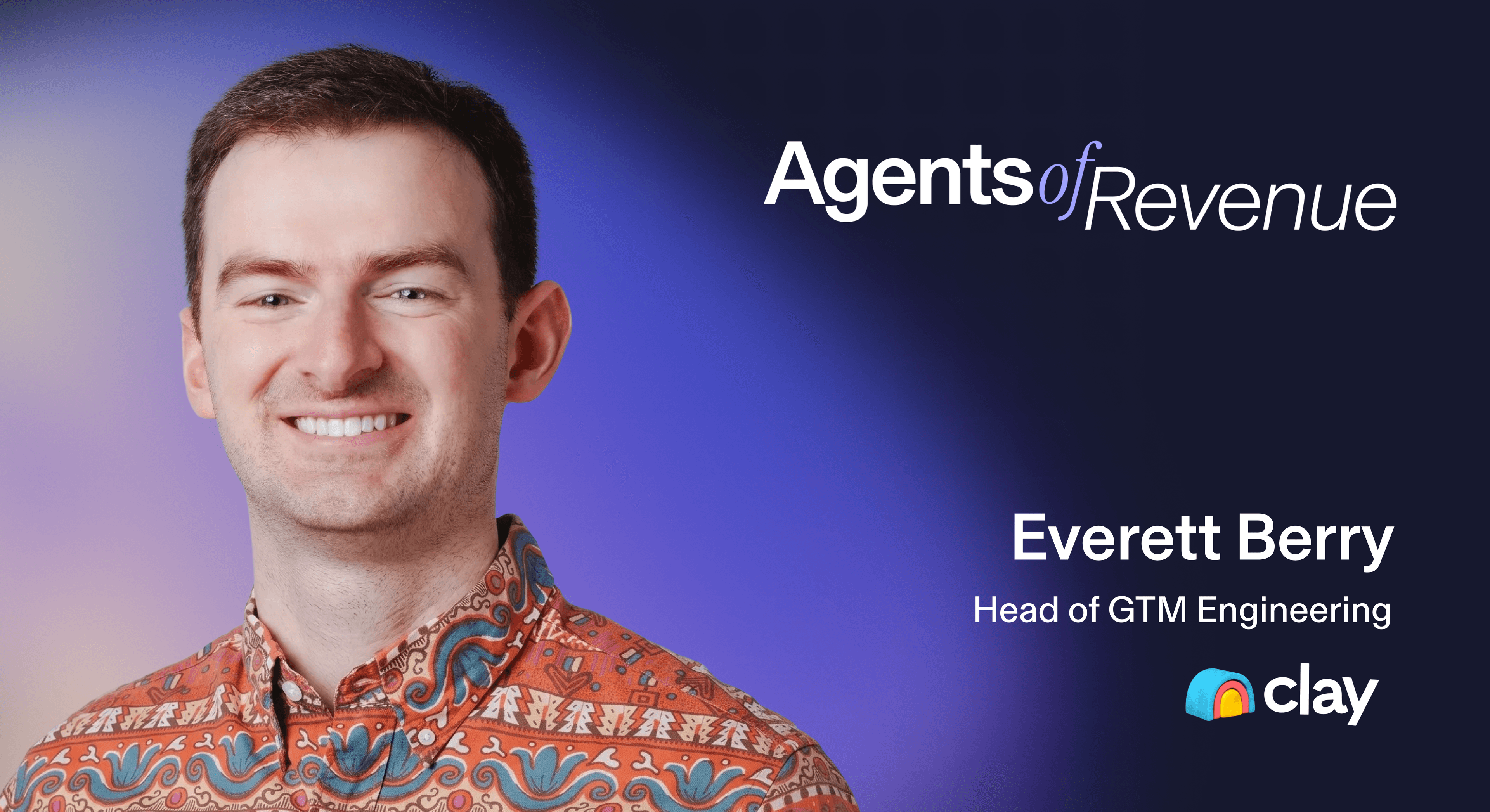
How Clay's Head of GTM Engineering Took Event ROI From 2x to 10x
Everett Berry treats every dinner like a funnel. Here's the six-stage system — golden lists, leader-to-leader invites, engineered seating, automated follow-up — that took Clay's event ROI from 2x to 10x.
Aug 26, 2026
•
5 min read
GTM
How to Spot Real Buyer Intent in Inbound
Learn to separate real buyer intent from curiosity in inbound, and act on the signals before the moment passes.
Aug 26, 2026
•
5 min read
Sign up for the latest from Spara
Subscribe to get more GTM insights straight to your inbox.