
The cost of a wrong-fit AI sales tool isn't just license fees. It's missed pipeline, delayed follow-up, and process disruption across your GTM team.
This article is for marketing and sales leaders comparing AI sales software solutions that commonly show up in active buying evaluations, so you can find the right fit for your GTM motion, team structure, and revenue goals. We'll explore:
Core function and primary use case
GTM motion fit (inbound, outbound, PLG, sales-led)
Strengths and limitations in day-to-day workflows
Typical trade-offs by team size and complexity
How inbound conversion software delivers qualified meetings and pipeline
Use the at-a-glance comparison to quickly narrow your shortlist. We also include breakdowns by software, sales motion, core use case, and tool limitations.
Still losing high-intent leads to slow follow-up or inconsistent qualification? See how Spara's AI agents qualify, route, and book meetings in real time. Book a live demo.
Why comparison matters in the AI sales software market
Different AI sales tools solve different parts of the sales process. Some are built for outbound sequencing, others focus on call analysis or sales enablement, and only a smaller subset handles inbound qualification and routing.
As a result, comparing tools on features alone often leads to overlap and unclear ownership. That is especially true if you are trying to optimize for outcomes like speed-to-lead, demo volume, win rates, or SDR productivity.
If you step back and look at AI-powered sales tools through your GTM motion, a few questions rise to the top:
Where in the funnel does this tool actually operate? Inbound form fill, outbound prospecting, opportunity management, or post-sale?
What behavior changes does it require from your team? New workflows, additional tools, process redesign?
How directly can you tie it to pipeline and revenue? Attribution, experiment design, and reporting in your CRM?
How does it integrate with marketing and RevOps? Data quality, governance, routing logic, qualification models?
Strong AI sales software integrates directly into your existing CRM and marketing systems and operates on first-party data. It also produces clean, attributable signals you can measure, such as qualified meetings booked, stage progression, or reclaimed SDR capacity.
Comparative snapshot of 7 leading AI sales software platforms
Before we break each one down, here's a side-by-side snapshot of how these seven solutions compare and where each one tends to fit best.
Software | Primary focus | Best use case | Key strengths | Best for |
Spara | Inbound conversion AI agents | High-intent inbound, SLG, marketing and sales alignment | Full platform for inbound qualification, routing, scheduling, and pipeline attribution across your existing GTM stack | Teams with high inbound volume needing real-time qualification, routing, and CRM attribution |
Zoho CRM | All-in-one CRM with embedded AI (Zia) | SMB and small teams needing a broad, cost-effective CRM suite | Wide feature set, many adjacent apps, accessible pricing | SMBs wanting an affordable all-in-one CRM with basic AI assistance |
Seismic | Sales enablement and content orchestration with AI | Enterprise teams with mature enablement programs | Strong content governance, training, and analytics | Enterprise teams with mature enablement programs and strict content compliance |
Lavender | AI email coach and writing assistant | Reps doing high-volume outbound or personalized prospecting | Improves email quality and relevance; easy to adopt | SDR and AE teams where outbound email quality and consistency are the priority |
Backstory | Revenue intelligence and activity capture | Large sales teams needing deep deal and account insights | Strong activity data, opportunity insights, relationship mapping | Large, Salesforce-heavy orgs with complex deal cycles and activity capture needs |
Outreach | Sales execution and sequencing platform | Outbound-centric SDR and AE motions | Robust sequencing, task management, AI-driven forecasting | Outbound-centric teams needing a structured, scalable sequencing and execution system |
Gong | Revenue and conversation intelligence | Sales teams with significant call and meeting volume | Rich call summaries and insights, coaching, and deal-risk visibility | Sales teams with high call volume that need coaching and deal-risk visibility |
Data accurate as of February 2026.
With that in mind, here's how each one works in the real world and who it's really built for.
1. Spara
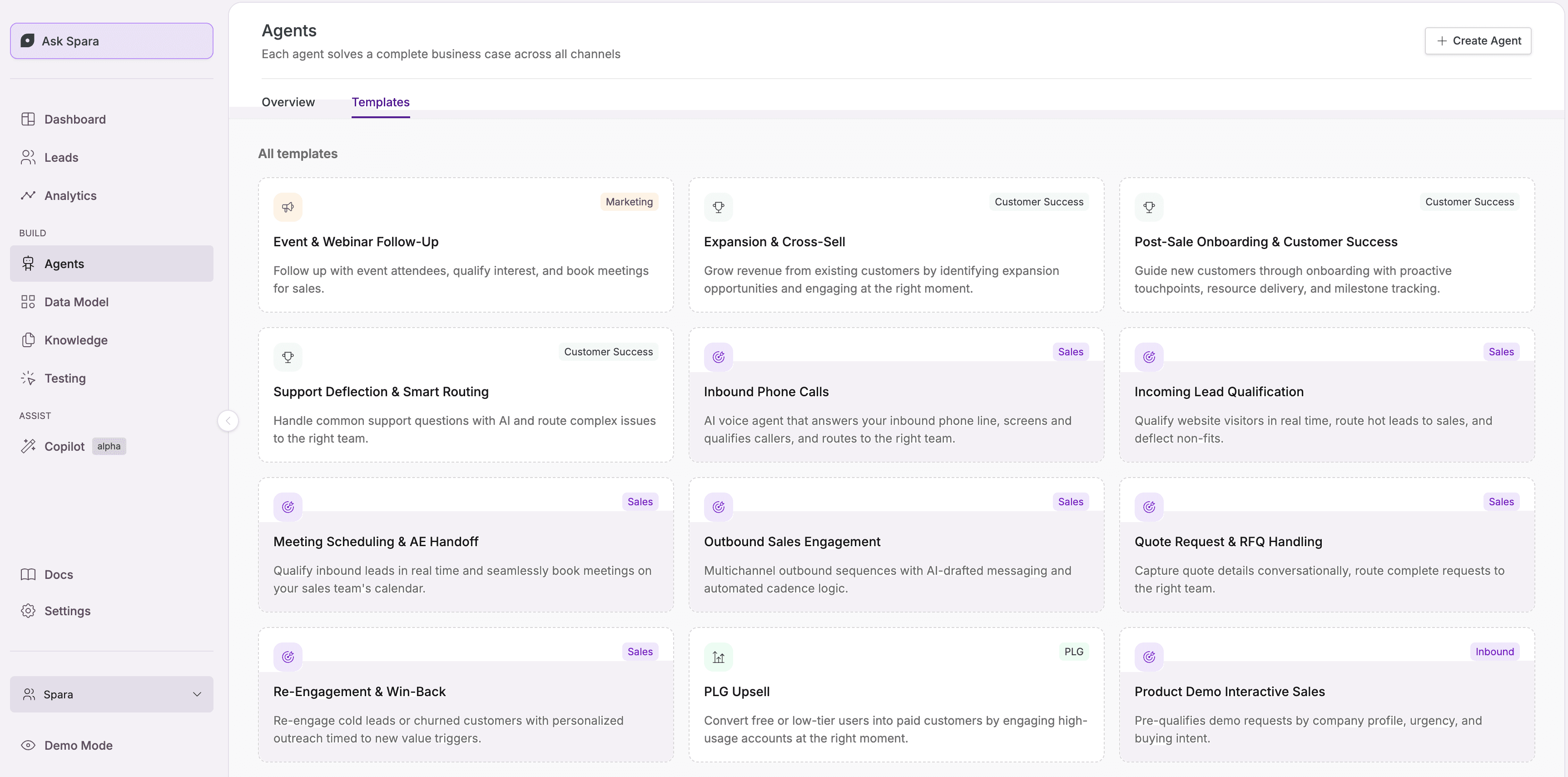
Spara is an AI-powered inbound conversion platform built to turn high-intent demand into qualified pipeline. It doesn't act as a chatbot or a lightweight assistant. Instead, it runs full inbound workflows: capturing interest, qualifying against your rules, routing to the right owner, and booking meetings in real time.
To do this, Spara connects to your existing CRM, routing, and scheduling systems and applies qualification and handoff logic automatically. Your team defines the questions, thresholds, and routing rules. Spara then writes conversation data, enrichment signals, and outcomes back to the CRM for tracking.
Key strengths
Built for conversion. Focused on lead-to-pipeline conversion, not generic engagement. Spara's AI agents are optimized around qualification, routing, and meeting creation.
Marketing and sales alignment. Uses your existing lead scoring, routing rules, and territories so marketing, RevOps, and sales operate from the same playbook.
Measurable pipeline impact. Deep CRM integration so you can A/B test, attribute meetings, and quantify lift in conversion rates and speed-to-lead.
Enterprise-ready. Designed for complex GTM orgs with requirements around data residency, permissions, auditability, and security reviews.
Best use case. High-volume inbound (PLG or SLG) where your team needs to respond immediately, qualify consistently, and handle SDR triage at scale across demo requests, pricing inquiries, trial sign-ups, and contact forms.
Spara's agents also run end-to-end workflows beyond initial capture: auto-rescheduling no-shows, triggering PLG upsell outreach when accounts hit usage milestones, and re-engaging cold accounts via AI calls or email sequences.
Turn inbound demand into automatically qualified pipeline. See how Spara qualifies, routes, and books meetings in real time, directly inside your CRM. Book a demo.
2. Zoho CRM
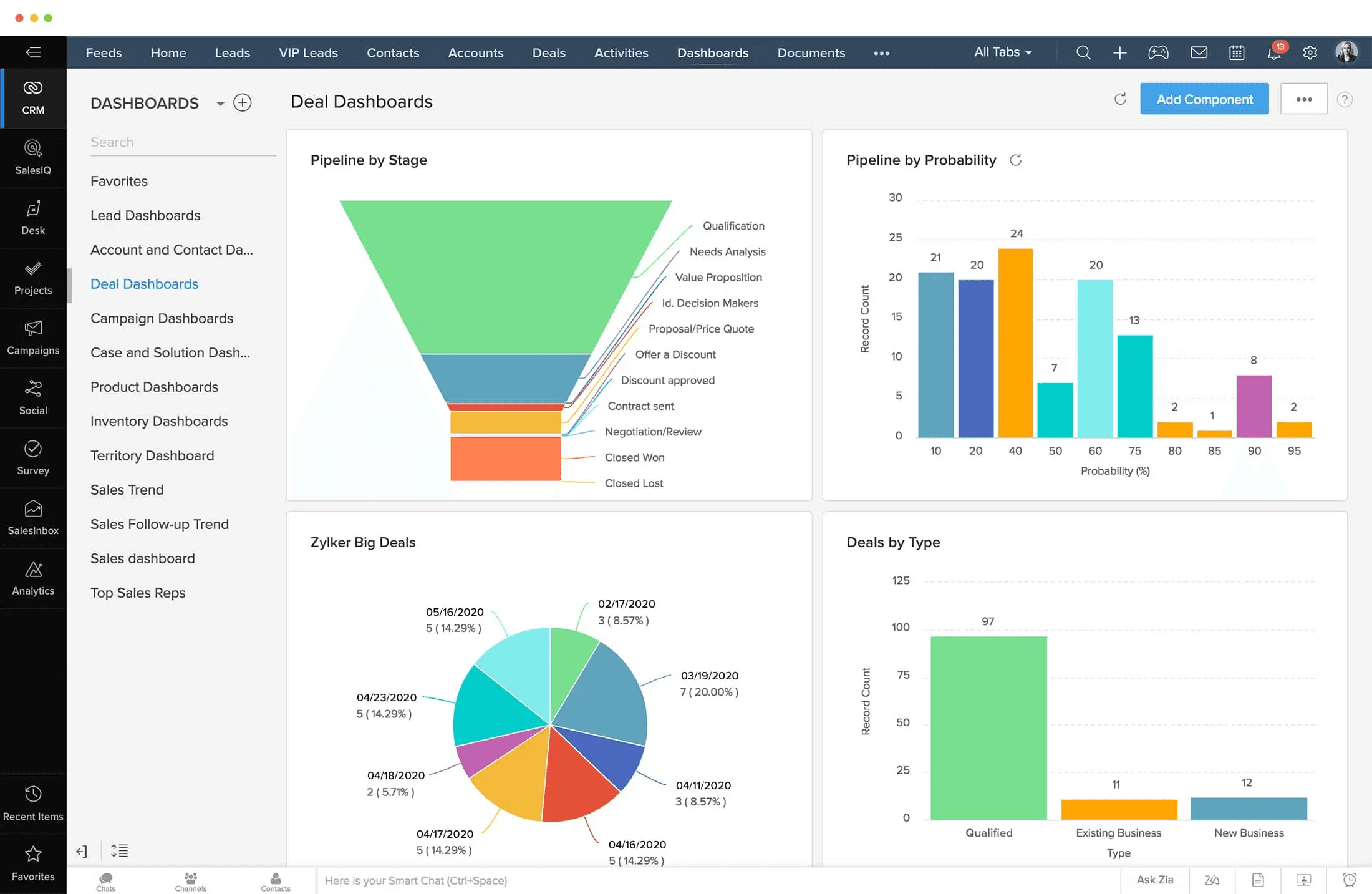
Zoho CRM is a broad CRM platform for small and mid-sized businesses that want an all-in-one system for managing contacts, deals, and basic automation. Its AI assistant, Zia, adds forecasting, anomaly alerts, and some conversational capabilities on top of core CRM workflows.
Key strengths
Broad feature coverage. CRM, email, helpdesk, and other apps in the Zoho ecosystem can cover a large portion of your stack.
Embedded AI assistant. Zia can surface patterns, suggest next actions, and help with some automation inside the CRM.
High value for price. Often a good fit when budget is constrained and you want a single vendor for many core tools.
Best use case. You need a cost-effective CRM with built-in AI assistance for forecasting and task recommendations, and you're comfortable with an all-in-one dashboard approach.
3. Seismic
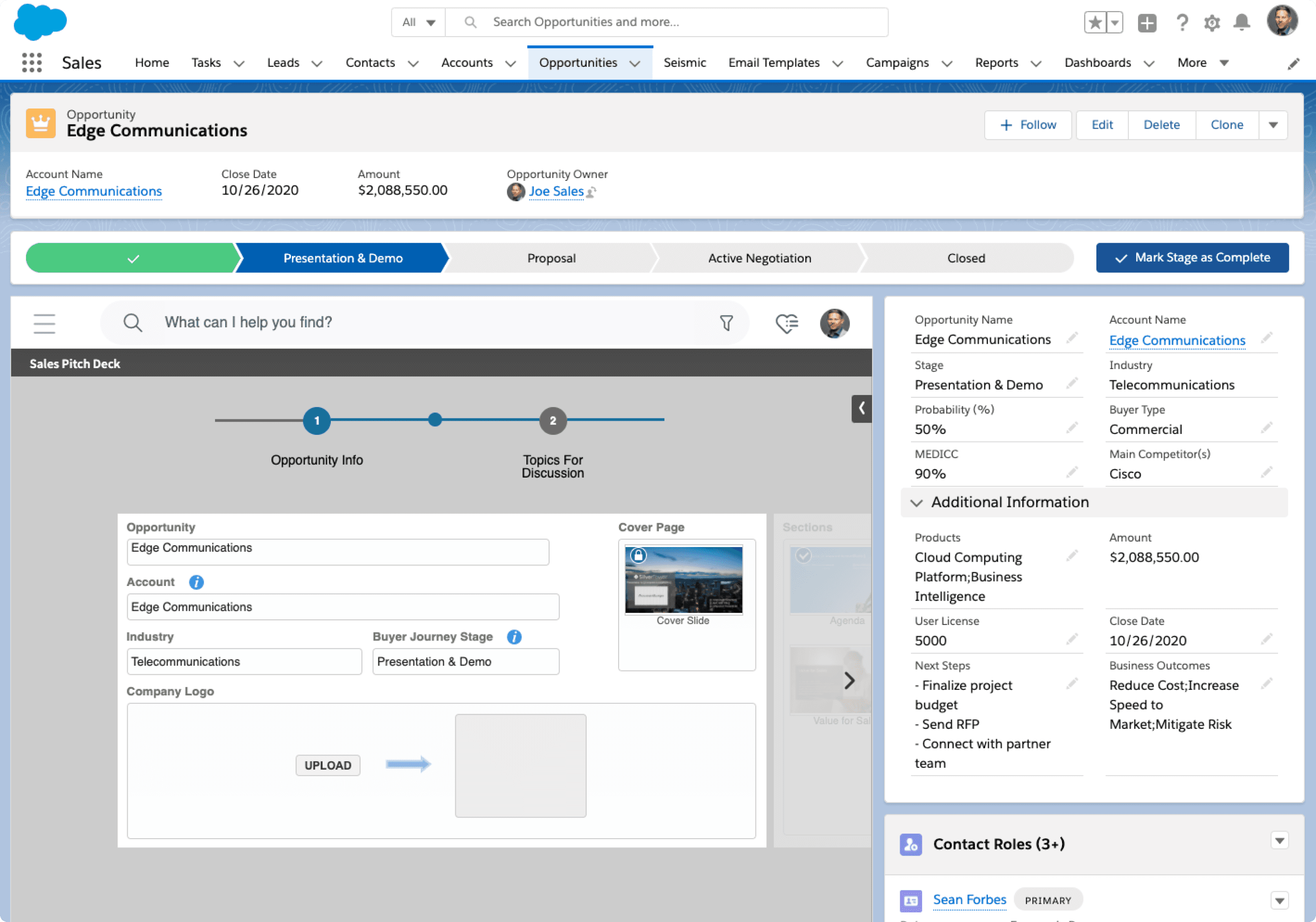
Seismic is a sales enablement and content orchestration platform that uses AI to recommend the right content, support training, and enforce brand and compliance standards at scale. It's built for large marketing and sales teams that need tight control over content.
Key strengths
Content governance. Helps ensure salespeople use current, compliant content, with AI surfacing what's likely to work in each scenario.
Training and readiness. Supports onboarding, certification, and ongoing learning tied to sales performance data.
Content analytics. Shows which assets actually contribute to deal progression.
Best use case. Enterprise organizations with mature enablement functions, complex product lines, and strict compliance or brand requirements.
4. Lavender
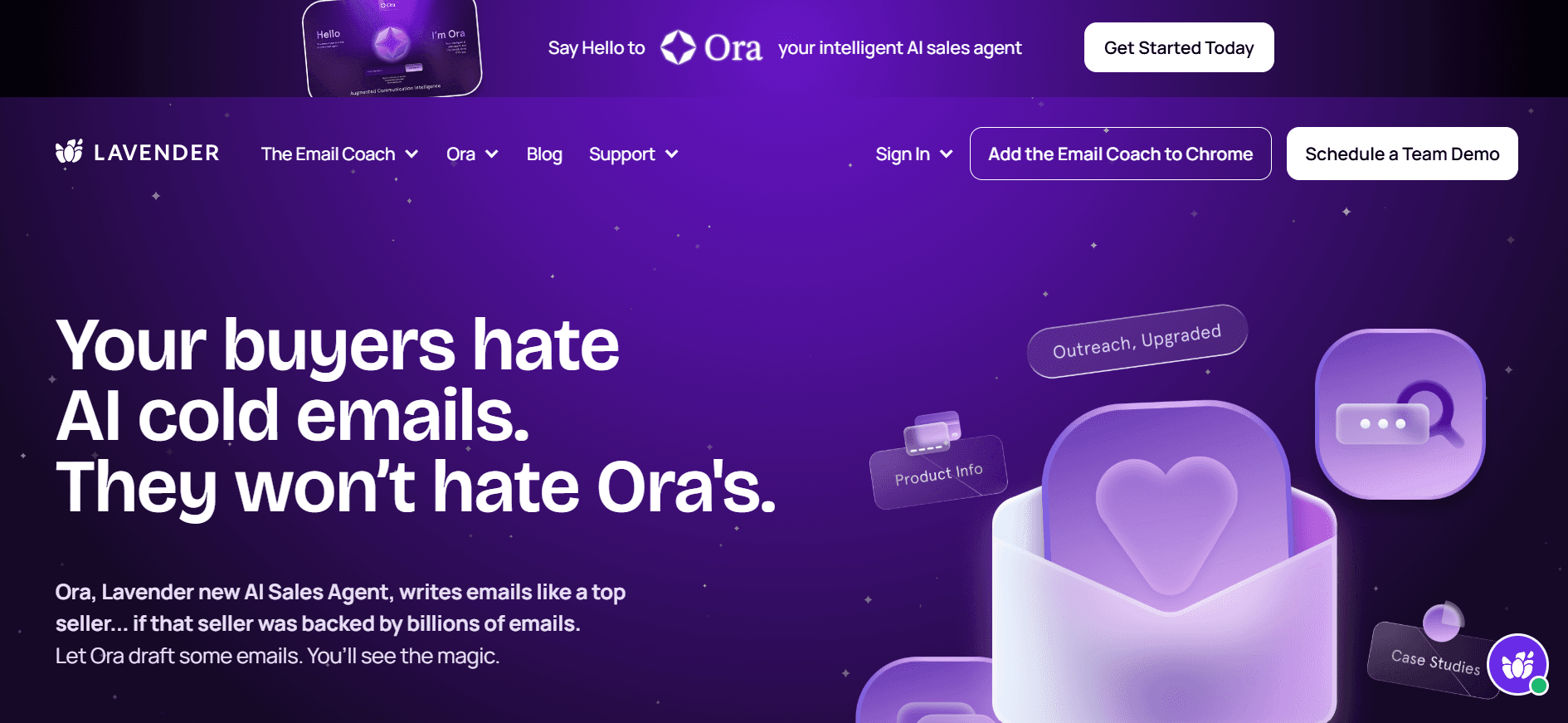
Lavender is an AI email coach that helps reps write more effective outbound emails. It scores emails in real time, offers suggestions to improve clarity and personalization, and integrates into common email and sales engagement workflows.
Key strengths
Real-time coaching. Offers actionable suggestions as reps write, improving outreach quality without a heavy change in workflow.
Personalization support. Helps reps quickly tailor sequences to prospects based on available context.
Lightweight deployment. Easy to roll out and adopt compared to heavier platforms.
Best use case. SDR and AE teams sending high volumes of outbound email where message quality and relevance are inconsistent across the team.
5. Backstory
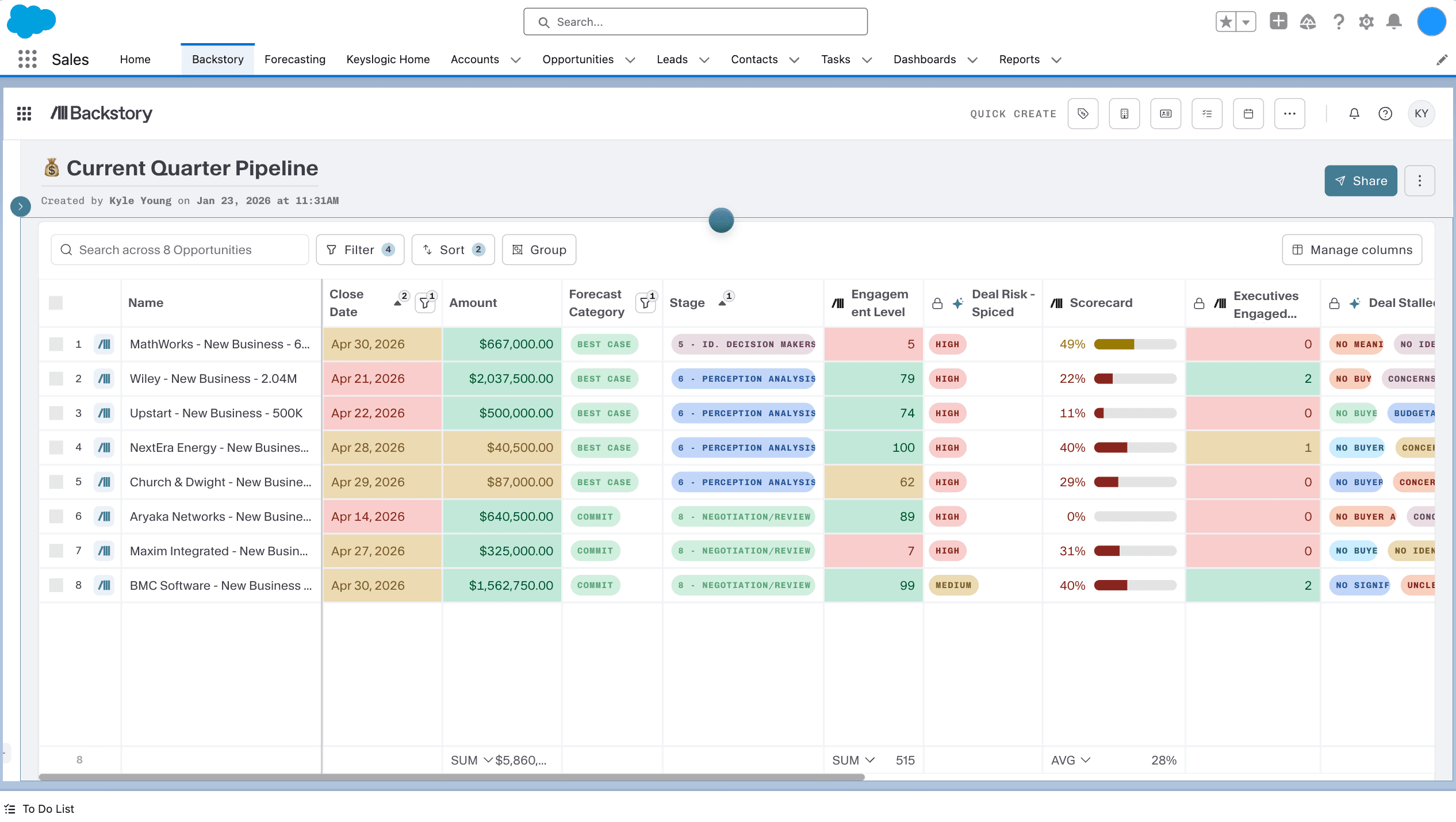
Backstory is a revenue intelligence platform that captures sales activity data across email, calendar, and meetings, then uses AI to surface insights about deals, accounts, and rep performance. It targets large B2B sales organizations with complex deal cycles.
Key strengths
Automatic activity capture. Reduces manual data entry and improves CRM completeness.
Deal and account insights. Uses AI to highlight risk, relationship gaps, and next-best actions.
Enterprise focus. Built for large orgs with complex territories and management layers.
Best use case. Enterprise sales teams with long, multi-stakeholder deals that need a clear picture of engagement, risk, and whitespace within key accounts.
6. Outreach
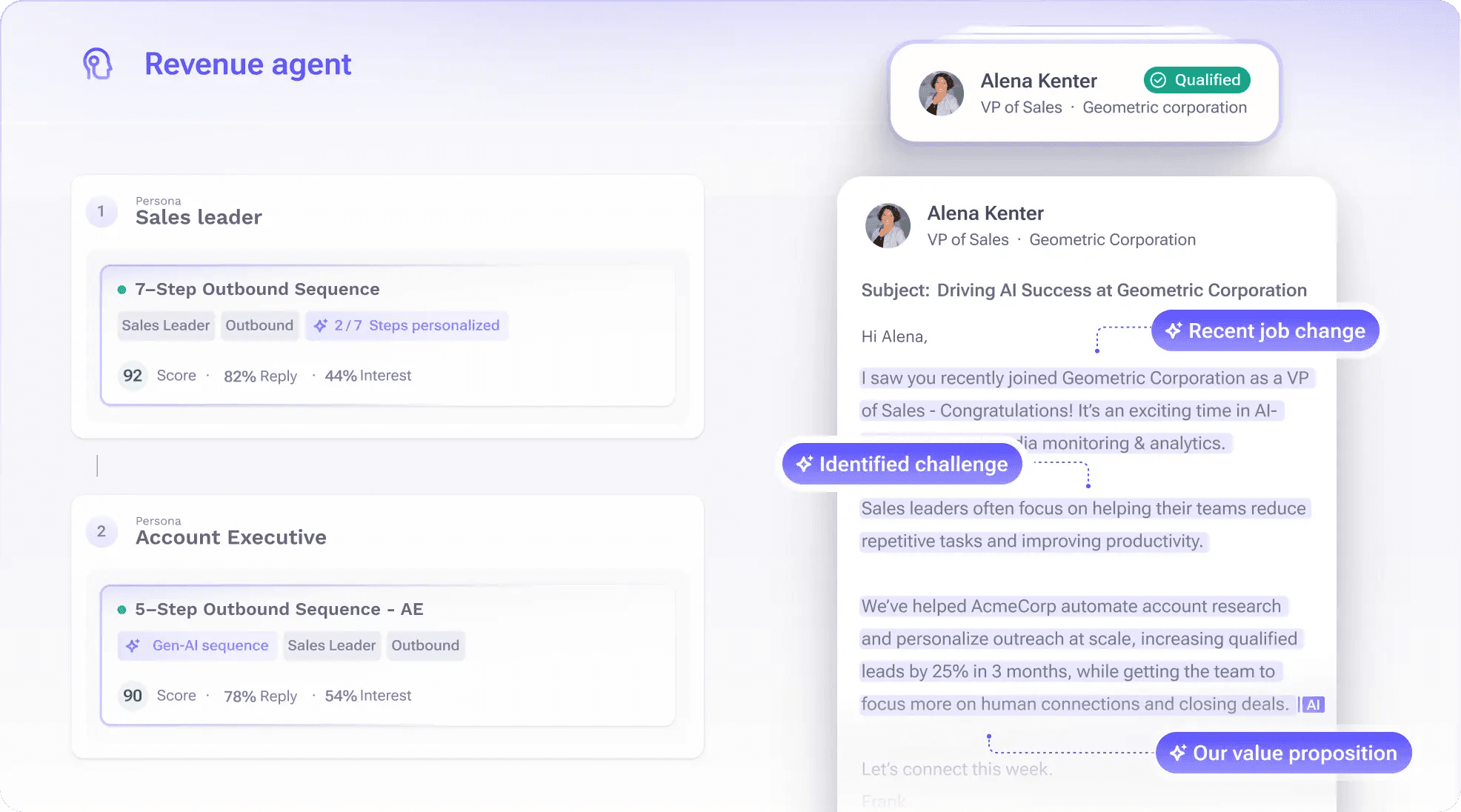
Outreach is a sales execution platform that combines multichannel sequencing, task management, and AI-assisted forecasting. It has become a standard for SDR and AE teams running structured outbound and follow-up motions.
Key strengths
Robust sequencing engine. Supports complex, multi-step, multichannel campaigns with strong reporting.
AI for forecasting and insights. Uses historical data and current pipeline to support more accurate forecasts and risk identification.
Sales workflow hub. Streamlines the daily operating system for many SDR and AE teams.
Best use case. Outbound-centric motions where SDRs and AEs need a consistent, scalable process for prospecting, follow-up, and deal management.
7. Gong
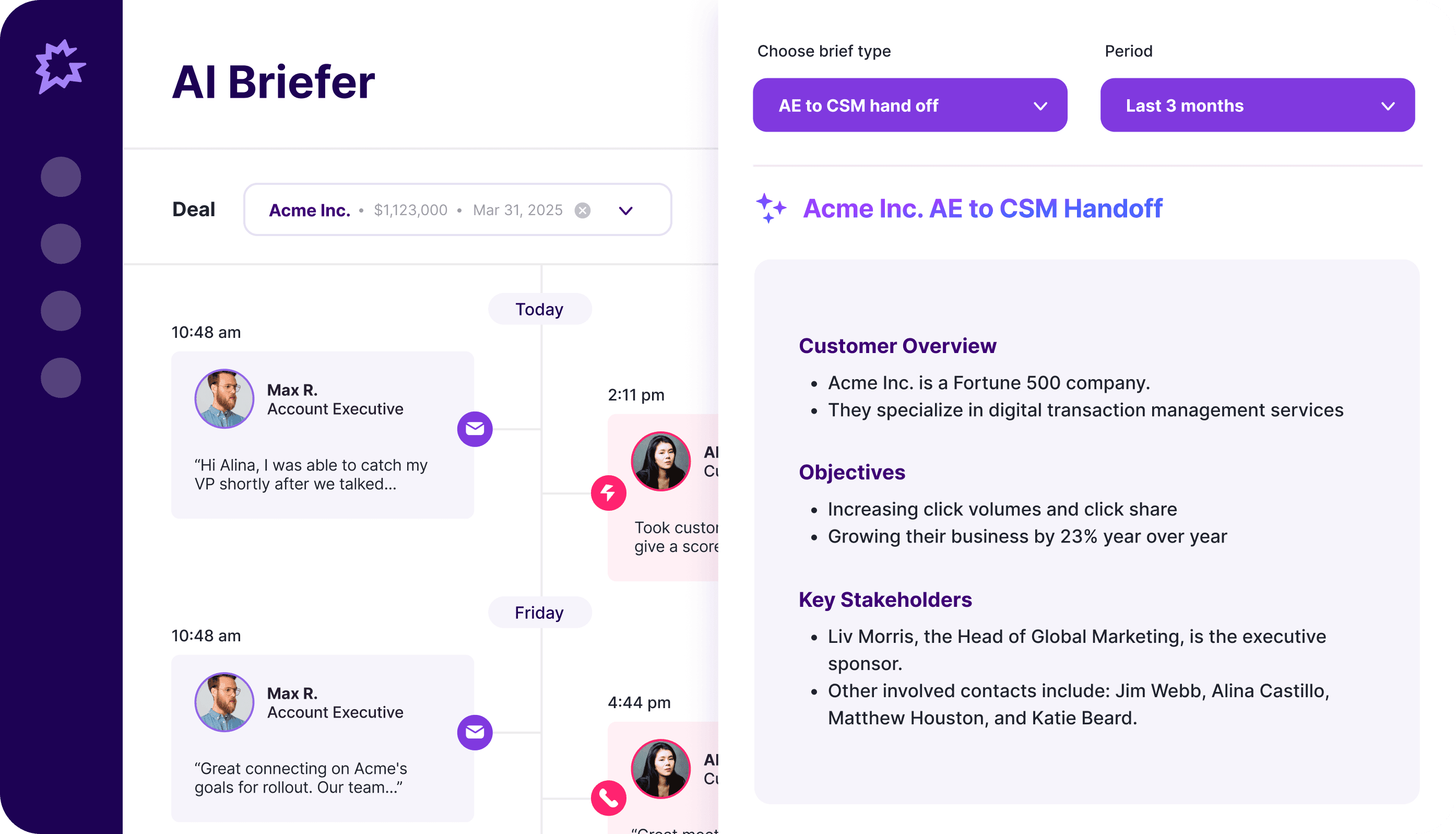
Gong is a conversation and revenue intelligence platform that records customer calls and meetings, then uses AI to transcribe, analyze, and surface insights about deals, coaching opportunities, and messaging performance.
Key strengths
Deep conversation analytics. Identifies behaviors associated with successful sales calls and deals.
Coaching and enablement. Helps managers give targeted feedback and track improvement over time.
Deal-risk visibility. Surfaces stalled deals, lack of multi-threading, and other risk signals.
Best use case. Teams with significant call and meeting volume that want to analyze conversations, improve coaching, and keep messaging consistent across reps.
Use-case fit: what problem are you trying to solve?
The right AI sales software depends less on your GTM label and more on where your revenue motion is actually breaking down. Start with the problem, then map to the tool.
You're losing high-intent inbound leads to slow or inconsistent follow-up
A prospect fills out a demo request form. Two days later, a BDR sends an email. By then, the prospect has already talked to a competitor.
This isn't a coaching problem or an analytics problem. It's a speed and coverage issue at the top of the funnel.
Look for a tool that responds to high-intent signals immediately, qualifies against your ICP without human intervention, routes to the right rep dynamically, and books meetings directly. Attribution matters too: you need to measure what's working in your CRM, not just in a separate dashboard.
Spara's agents handle this workflow end to end, writing conversation data and outcomes back to your CRM so you can attribute pipeline and iterate. Tools that focus on conversation intelligence or content readiness improve what happens after a lead enters the funnel. They don't solve for the moment inbound demand first lands.
Your outbound execution is inconsistent or hard to scale
Outbound-driven teams often struggle less with strategy than with execution. Sequences don't get followed consistently. Emails read like templates. Activity volume doesn't translate into clear pipeline visibility.
Look for a tool that brings structure and scalability to prospecting and follow-up, improves email quality across the whole team without a major workflow change, and surfaces which activities actually produce meetings and closed deals.
Spara plays a role here too when outbound volume generates its own inbound responses. Demo form fills and reply-to-website visits get handled immediately rather than falling into a queue.
Your deals lack visibility and your reps aren't improving fast enough
For teams running longer, multi-stakeholder cycles, the breakdown often shows up deeper in the funnel. Deals stall without explanation. Coaching is inconsistent. CRM data is too incomplete to forecast reliably.
Look for a tool that captures activity automatically without relying on rep data entry, surfaces deal risk and relationship gaps before it's too late to act, and gives managers structured coaching data based on what's actually happening in calls and meetings.
If inbound leakage is also a factor, pairing that kind of deal intelligence with a dedicated inbound conversion layer closes the gap at the top of the funnel before it affects the deals your team is trying to manage.
You run a large, distributed organization with content governance and compliance requirements
Enterprise GTM teams face a different class of problem: regional variation, compliance requirements, inconsistent messaging across a large seller base, and the challenge of scaling enablement globally.
Look for tools that govern which content gets used and when, tie training and certification to sales performance data, apply territory-aware routing and qualification logic, and produce audit trails for compliance reviews.
For complex enterprise GTM, think in layers: a core CRM as the system of record, an execution layer for sequencing and task management, an intelligence and enablement layer for deal visibility and content governance, and an inbound conversion layer to make sure high-intent demand gets captured and handled consistently across regions.
Final verdict and how to choose the right AI sales software for your team
Choosing AI sales software isn't about who has the most impressive demo. It's about which platform reliably moves the metrics you care about: more qualified meetings, stronger pipeline, higher conversion from lead to opportunity, shorter sales cycles, and better use of your team's time.
A practical evaluation path looks like this:
Diagnose your bottlenecks. Is your biggest issue inbound leakage, outbound inefficiency, deal visibility, or seller enablement?
Map tools to funnel stages. Decide where you need AI most: top-of-funnel inbound, outbound execution, deal intelligence, or content readiness.
Define success metrics. Specify the KPIs for each candidate: speed-to-lead, meetings booked, opp creation rate, stage conversion, or rep productivity.
Shortlist and compare. Build a vendor matrix using the criteria above instead of generic feature lists.
Run a structured pilot. Start with a controlled rollout, A/B where possible, and measure impact directly in your CRM.
Spara is often one of the highest-ROI starting points for teams where inbound demand is a core growth lever. It directly addresses lead-to-pipeline conversion, where even small improvements compound quickly.
Want to see how Spara fits your GTM motion? Spara maps directly to your routing rules, qualification logic, and CRM so you can measure pipeline impact from day one. Schedule a live demo today.

Lauren ThompsonHead of Marketing, Spara
FAQ
Related posts
View all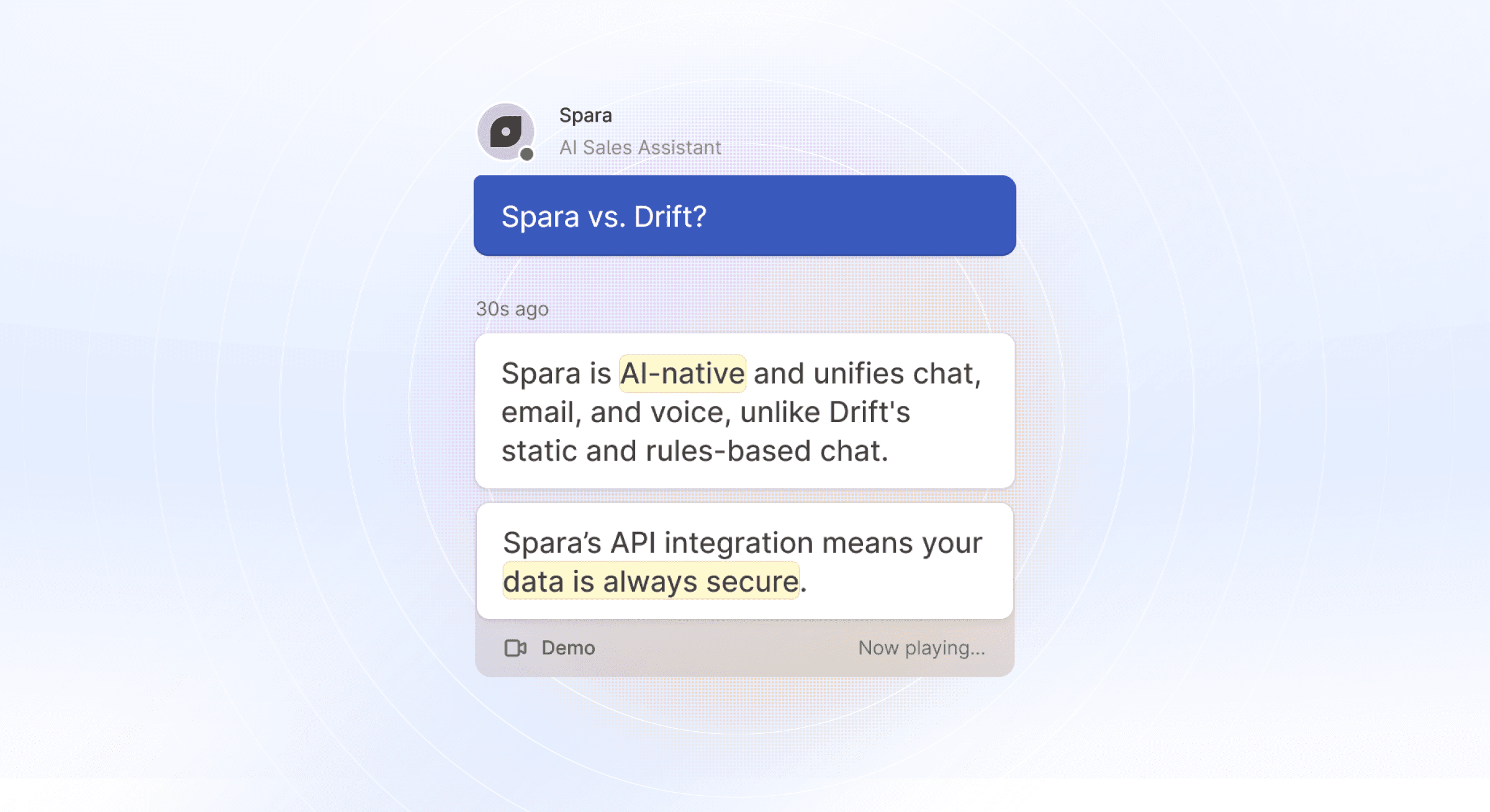
GTM
Top 5 Drift alternatives for better lead conversion
Drift alternatives drive more conversations, leads, and revenue growth. From AI chat to product demos, they personalize every stage of the customer journey.
Sep 14, 2026
•
10 min read

GTM
Databricks' Barry Dauber on why every project should start with impact, not AI
Barry Dauber runs Gen AI go-to-market at Databricks, talking companies down from AI hype every day. Here's his framework for scoping an AI project: name the metric, classify the initiative, and reserve the model for what actually needs one.
Sep 2, 2026
•
4 min read
GTM
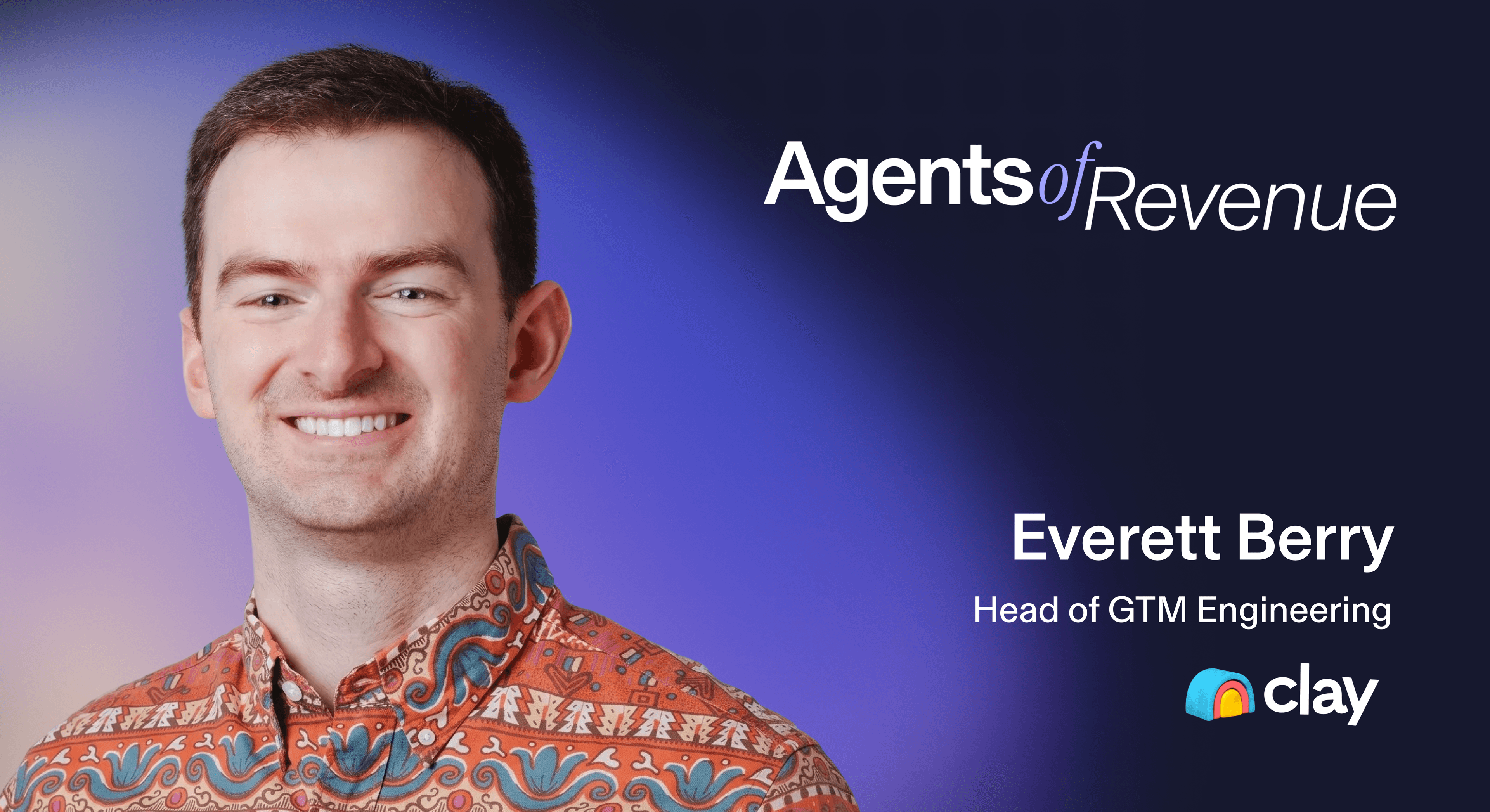
How Clay's Head of GTM Engineering Took Event ROI From 2x to 10x
Everett Berry treats every dinner like a funnel. Here's the six-stage system — golden lists, leader-to-leader invites, engineered seating, automated follow-up — that took Clay's event ROI from 2x to 10x.
Aug 26, 2026
•
5 min read
Sign up for the latest from Spara
Subscribe to get more GTM insights straight to your inbox.