

If you search for “AI chatbots for sales,” you’ll see hundreds of tools all claiming to qualify leads, book meetings, and 10x your pipeline. In practice, only a handful actually move the needle on revenue.
You need something that protects your brand, handles complex conversations, routes leads cleanly into your CRM, and works with the way your GTM team already operates.
This guide provides a comparison of seven leading AI chatbots for sales and engagement platforms. It highlights each platform's strengths and weaknesses, and explains how Spara, designed as an AI-native go-to-market (GTM) platform after large language models (LLMs), can help you convert more inbound traffic into qualified leads rather than unqualified "conversations."
Use this as a buying guide to decide which mix of tools will actually help your SDRs, AEs, and RevOps team hit pipeline targets.
Why AI chatbots are now critical in sales conversations
Buyers now research vendors inside large language models (LLMs) before ever visiting your website. When they arrive, they expect the conversation to continue seamlessly with immediate, intelligent answers. If your team follows up hours later, the buyer may have already engaged with a competitor who was ready when you weren’t.
At the same time, your sales development representative (SDR) team is stretched. Headcount isn’t growing at the pace of inbound volume, and every revenue operations (RevOps) leader is under pressure to improve conversion without adding more people. Human-only coverage for every form fill, chat, and demo request just doesn’t scale.
Modern AI sales chatbots change that by automatically handling the front line of engagement. The best platforms can:
Ask discovery questions that match your qualification logic
Score and route leads into the right queues or calendars
Hand off cleanly to humans with full conversation context
The result is faster speed-to-lead, fewer missed opportunities, more meetings from the same traffic, and SDRs who can focus on complex, high-value deals instead of repetitive triage. But not every chatbot is built for serious sales motions, so it’s worth looking closely at how the top tools compare on real pipeline impact.
Competitor breakdown: Top 7 AI chatbot tools for sales
Below is a high-level view of seven leading platforms you’re likely evaluating. The table focuses on what each tool is best at, and where you may run into trade-offs if your primary goal is pipeline conversion and clean GTM operations.
Tool | Primary strength | Best use case | Key pros | Key cons |
Spara | AI-native GTM agents across chat, email, and voice | High-intent inbound & complex B2B qualification | Multi-channel, RevOps-grade routing, strong security | Best suited to teams with defined GTM processes |
Drift* | Conversational marketing & ABM chat | Marketing-led website engagement for known accounts | Mature ecosystem, strong brand, proven at scale | Playbook-heavy, can be complex and expensive |
Qualified | Salesforce-first pipeline and website conversion | Salesforce-centric teams prioritizing website chat | Deep Salesforce integration and routing logic | Less flexible outside Salesforce, enterprise skew |
Intercom | Customer communications and support automation | PLG/SaaS teams unifying support, product, and sales | Great in-app experience, strong support workflows | Not made for sales-specific flows |
Docket.io | Meeting and workflow automation | Routing inbound interest directly into meetings | Simplifies scheduling and follow-ups | Not a full-funnel GTM automation platform |
Tidio | SMB chatbot and live chat for commerce | Small teams and e-commerce sites | Fast setup, accessible pricing | Struggles with high-intent B2B lead qualification and multi-step sales processes |
Zendesk | Support ticketing with AI-assisted self-service | Support-led orgs layering sales on top of CX | Strong helpdesk backbone, AI for support deflection | Sales workflows are secondary and need customization |
*sunset in 2026
Data accurate as of February 2026.
From here, let’s go a level deeper on each tool, how it actually works in a modern GTM environment, where it shines, and what to watch out for when your main KPI is qualified pipeline.
1. Spara
Spara is an AI-native GTM platform built specifically to convert inbound intent into a qualified pipeline. Instead of a single website bot, you deploy agents that can engage via chat, email, and voice and sync with your CRM, marketing automation, routing rules, and calendar applications.
Spara is designed for GTM teams that care about speed-to-lead, rigorous qualification, and clean handoffs into Salesforce, HubSpot, or any CRM without bolting together multiple tools.
Key strengths:
AI-native GTM agents: Built post-LLM, with AI Chat as part of the platform, Spara agents can handle complex dialogues, prompt-based instructions, and adapt to your motion instead of rigid branching scripts.
Multimodal engagement: Engage and follow up via website chat, outbound and reply email, and voice, so high-intent leads don’t fall through the cracks when they leave your site.
RevOps-first routing: Native support for your qualification rules, territories, SLAs, and meeting queues, keeping CRM data clean and routes consistent.
Security and compliance: Enterprise-grade security, role-based permissions, and data controls designed for teams with legal, IT, and InfoSec review.
Cons/limitations:
Optimized for B2B and complex buying journeys rather than simple, transactional support-only use cases.
Best suited to teams with a defined ICP and qualification framework. If you don't have that, you’ll want to invest a bit of time clarifying it.
Best use case: For GTM leaders who want an AI layer that works across chat, email, and voice and aligns with RevOps constraints, Spara offers a focused path to lead enrichment, more meetings, and a cleaner pipeline without adding SDR headcount.
See how Spara converts inbound traffic into pipeline → Book a demo.
2. Drift
Note: Drift's sunset has been announced following its acquisition by Salesloft and Clari. The platform is still operating, but it's no longer a viable long-term choice for new buyers.
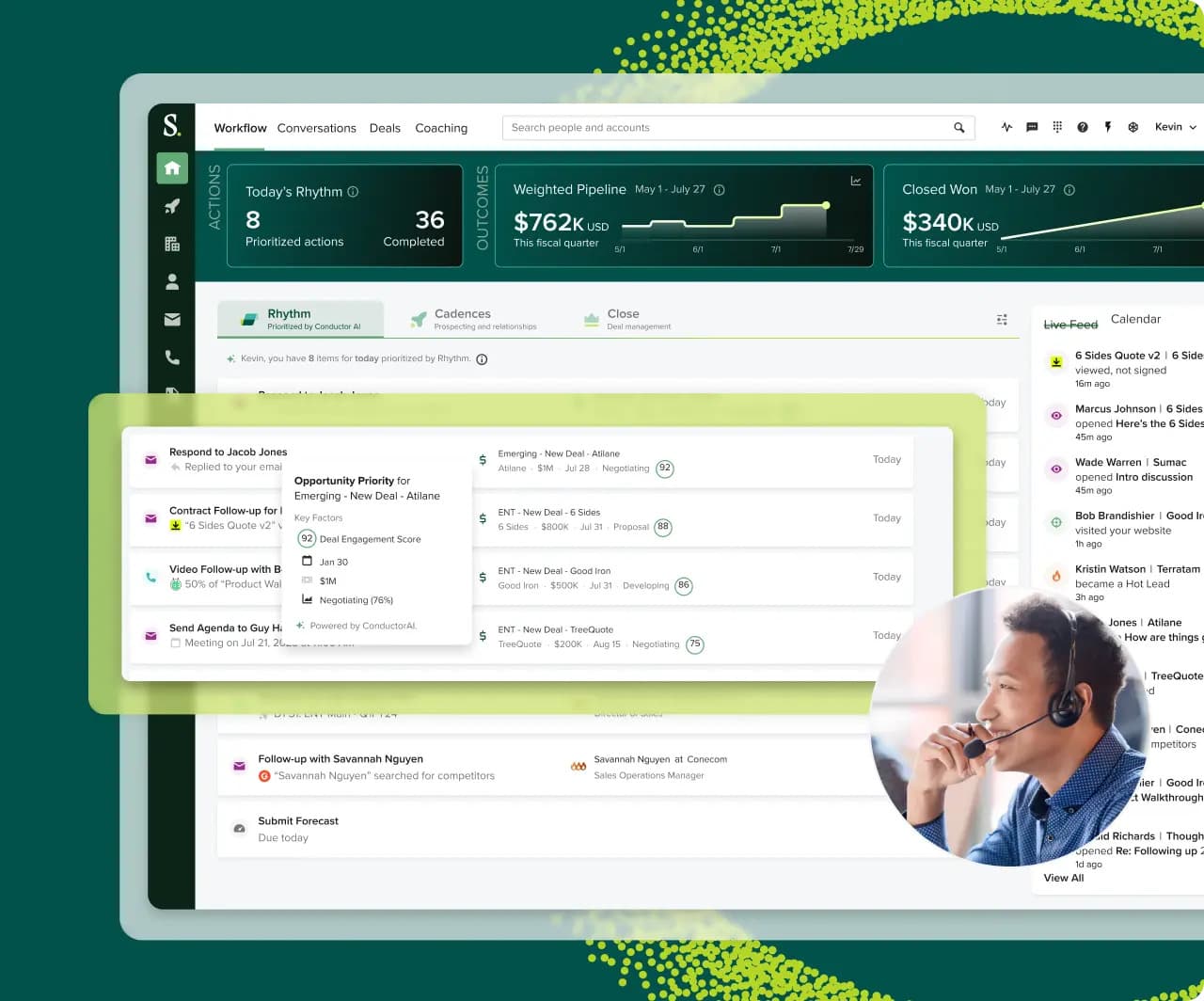
Drift is one of the earliest and best-known conversational marketing platforms, built around website chat and ABM-style engagement. It’s widely used by marketing teams that want to turn anonymous visitors, especially known target accounts, into live conversations.
Drift’s strength is in orchestrating personalized website experiences, especially when you pair it with strong account data and a team ready to manage playbooks and routing.
Key strengths:
Conversational marketing focus: Rich chat experiences for inbound visitors, with robust targeting and playbook capabilities.
ABM and personalization: Tailored messaging and routing for named accounts when connected to your ABM and data tools.
Sales collaboration: Experiences and notifications designed to pull reps into live chats with high-value visitors.
Cons/limitations:
Playbook-heavy configuration can require ongoing ops and marketing attention to keep journeys current and effective.
Pricing and complexity tend to fit mid-market and enterprise teams more than lean, early-stage GTM orgs.
Best use case: With Drift's sunset announced, it's no longer a viable long-term choice for new buyers. Teams that previously chose Drift for marketing-led website engagement and ABM motions are now evaluating AI-native replacements.
Evaluate if chat capture alone is enough, or if you need an AI-driven qualification.
3. Qualified
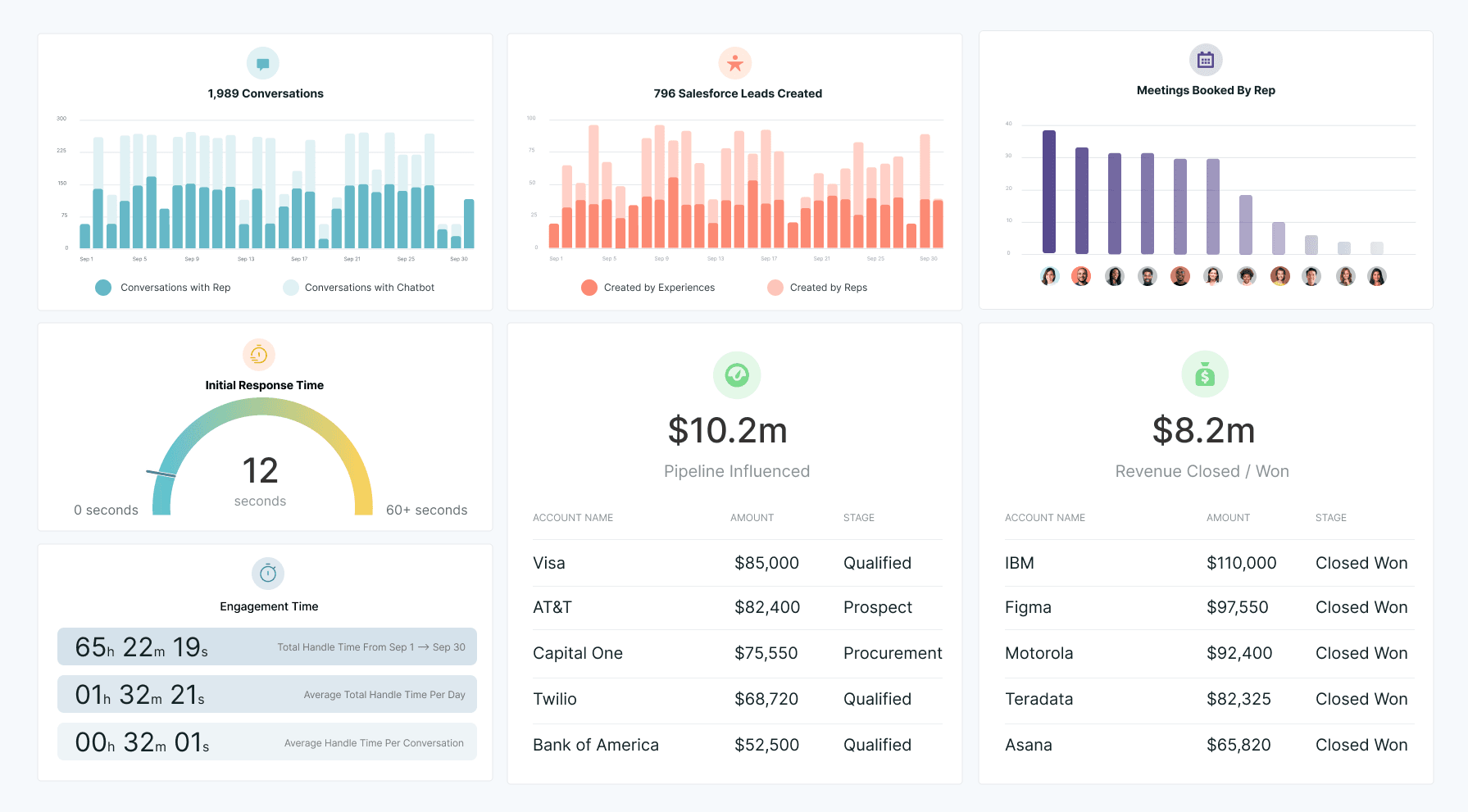
Qualified positions itself as a “pipeline cloud” deeply integrated with Salesforce, combining website chat, alerts, and meeting scheduling. It’s most compelling for teams that live and breathe Salesforce and want their conversational data fully embedded there.
Sales teams often choose Qualified when their routing logic, reporting, and account strategies are already tightly defined inside Salesforce, and they want a tool that mirrors that structure.
Key strengths:
Salesforce-native design: Deep integration with Salesforce objects and fields, enabling granular routing and reporting.
Website conversion tools: Chat experiences, qualified meeting scheduling, and alerting for reps when target accounts land on high-intent pages.
Account-based workflows: Strong fit for Salesforce-centric ABM programs that need consistent routing and visibility.
Cons/limitations:
Best suited to organizations already standardized on Salesforce; less natural fit for HubSpot-first or mixed-CRM environments.
The burden of management can be greater for teams without a dedicated RevOps function. Additionally, Qualified is seat-based and expensive.
Best use case: If your GTM motion revolves around Salesforce and you’re comfortable with a Salesforce-first worldview, Qualified can provide a tight, familiar experience for routing and converting website traffic.
If you want adaptive AI across chat, email, and voice from day one, explore AI-native alternatives.
4. Intercom
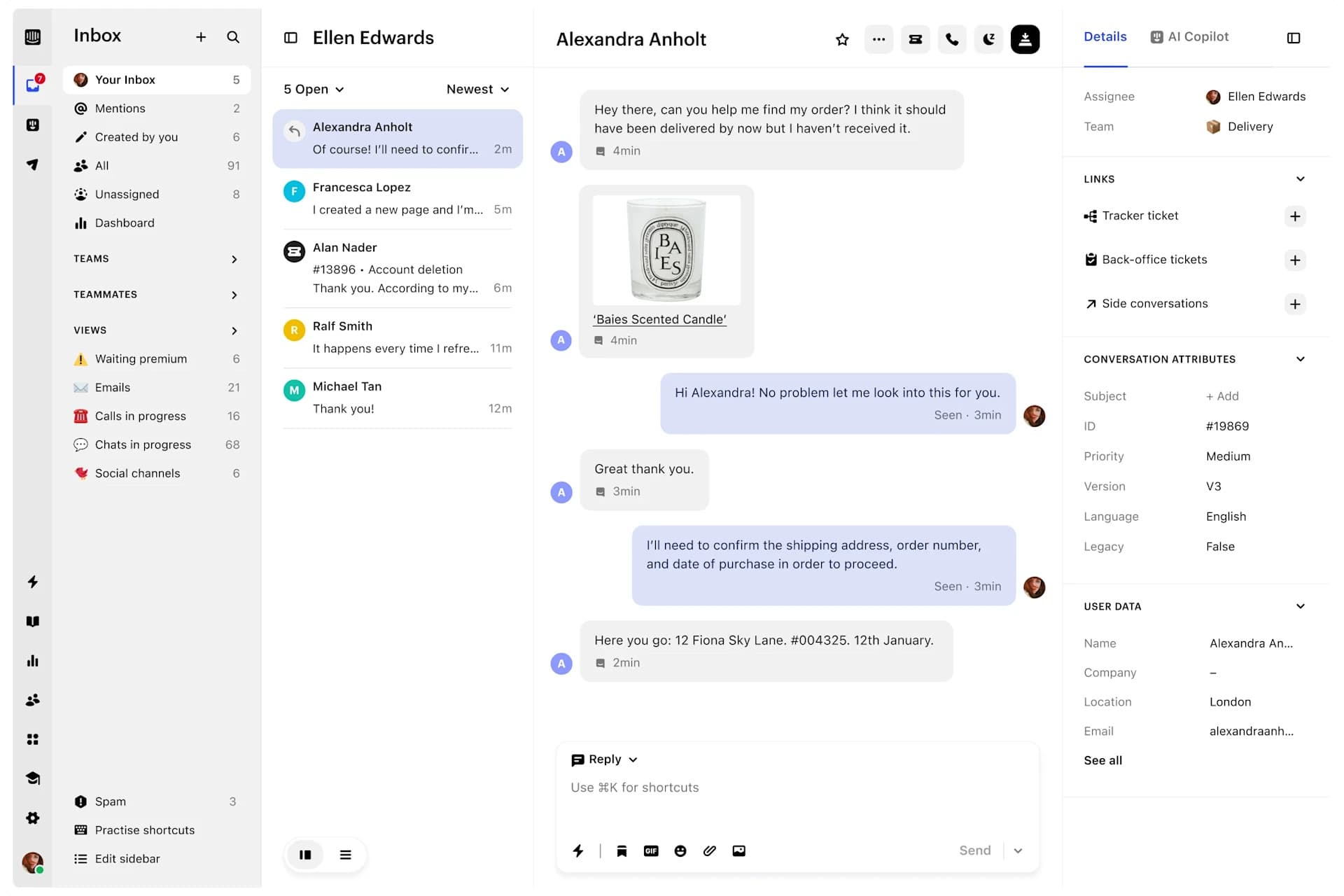
Intercom is a customer communications platform widely adopted in SaaS and PLG companies. Its AI capabilities span website and in-app chat, help center automation, and proactive messaging, with sales use cases layered on top of strong support workflows.
Intercom is especially attractive when you want an integrated stack for support, product onboarding, and basic sales engagement in one place.
Key strengths:
Unified messaging: Website, in-app, and email messaging in a single platform, which is useful when your product and support motions are tightly linked.
AI support bots: Automation for FAQs and support requests, reducing ticket volume and response times.
PLG and product-led flows: Good fit for teams nudging users along a self-serve or trial experience.
Cons/limitations:
Sales-specific qualification and routing often require custom configuration and careful coordination with your CRM.
Pricing can increase as you expand seats, channels, and volume, which matters for fast-growing teams.
Best use case: If you’re consolidating your customer communication stack and sales is one of several use cases, Intercom can be a solid foundation, with the caveat that highly specialized sales workflows may need extra tailoring.
If pipeline growth, not ticket deflection, is your priority, consider sales-focused AI agents.
5. Docket.io
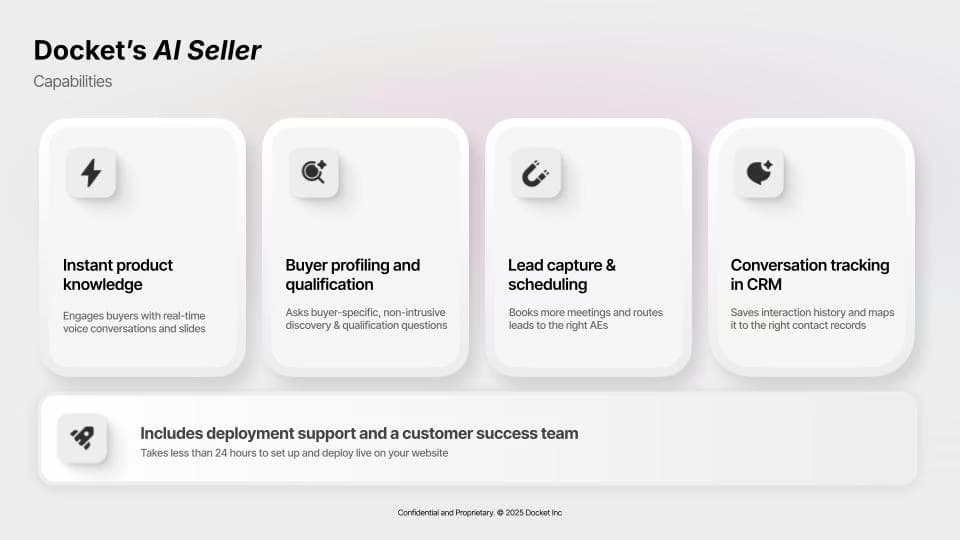
Docket.io focuses on meeting and workflow automation, helping you turn interest into scheduled conversations without back-and-forth emails. It’s typically used to streamline the last mile of inbound conversion: getting qualified prospects onto a calendar.
Teams plug Docket.io into forms, emails, and other touchpoints so prospects can book time directly with the right rep, reducing friction in the handoff stage.
Key strengths:
Scheduling automation: Built around meeting orchestration. Like Spara, automatically books meetings based on rep availability and instantly triggers follow-ups, reminders, and calendar-based workflows.
Workflow triggers: Can kick off follow-up tasks, reminders, and basic automations around meetings.
Simple implementation: Lightweight compared with broader GTM platforms, making it easy to roll out.
Cons/limitations:
Doesn’t replace a full AI chatbot or GTM orchestration layer—best as a complement to tools that handle qualification and engagement.
Limited multi-channel intelligence; primarily focused on scheduling, not end-to-end pipeline workflows.
Best use case: If your biggest bottleneck is turning qualified interest into confirmed meetings, Docket.io can help, but you’ll still need other tools to manage discovery, qualification, and multi-step nurture.
For a full-funnel AI chatbot for sales capabilities, consider platforms built for conversion end-to-end.
6. Tidio
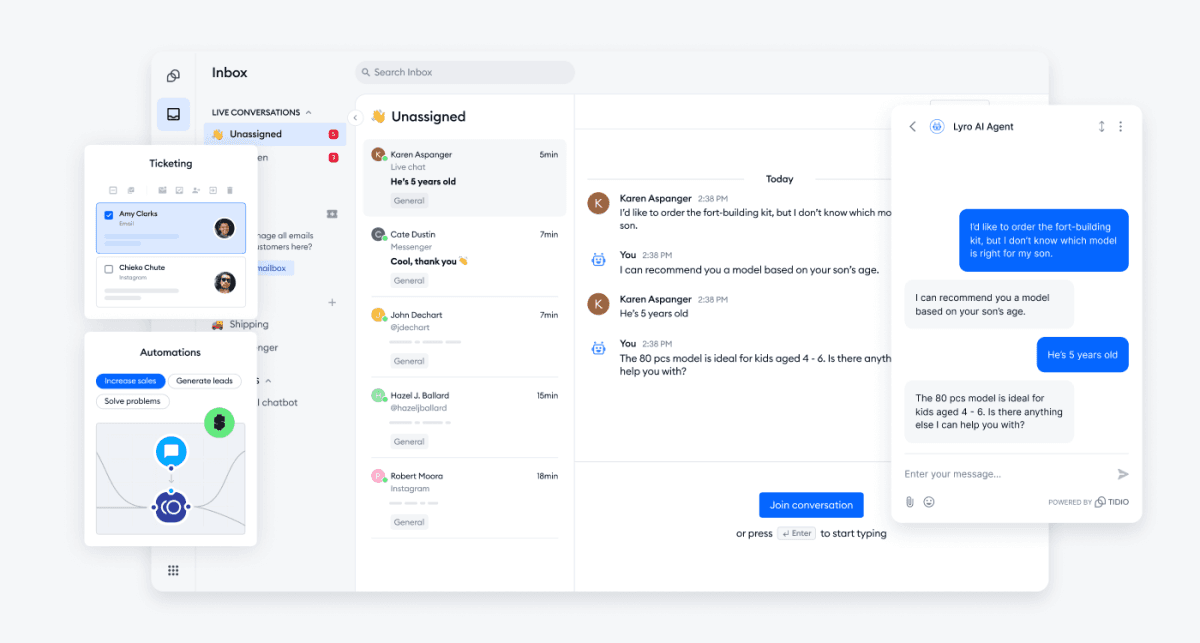
Tidio offers live chat and AI chatbot capabilities primarily for small businesses and e-commerce brands. It’s designed to be easy to set up, with pricing and features that appeal to lean teams who need basic automation and quick wins.
For smaller sales teams or online stores that want to answer questions, capture leads, and handle simple flows, Tidio can be a practical choice.
Key strengths:
Fast deployment: Simple installation and prebuilt chatbot templates that help you go live quickly.
Live chat + bots: Combines human chat with AI-driven responses so you can cover more hours without hiring.
Budget-friendly: Pricing tiers tailored to SMBs and smaller teams.
Cons/limitations:
Less suited to complex, multi-stakeholder B2B deals with detailed qualification criteria and territory routing.
Integrations and data models may feel limited for enterprise RevOps teams with sophisticated CRM setups.
Best use case: If you’re in the earlier stages of building out automation or you sell in a more transactional model, Tidio can help you capture and respond to interest, but it’s not built for heavy enterprise GTM operations.
If you manage a high-value B2B pipeline, you’ll likely need a more advanced agent platform
7. Zendesk
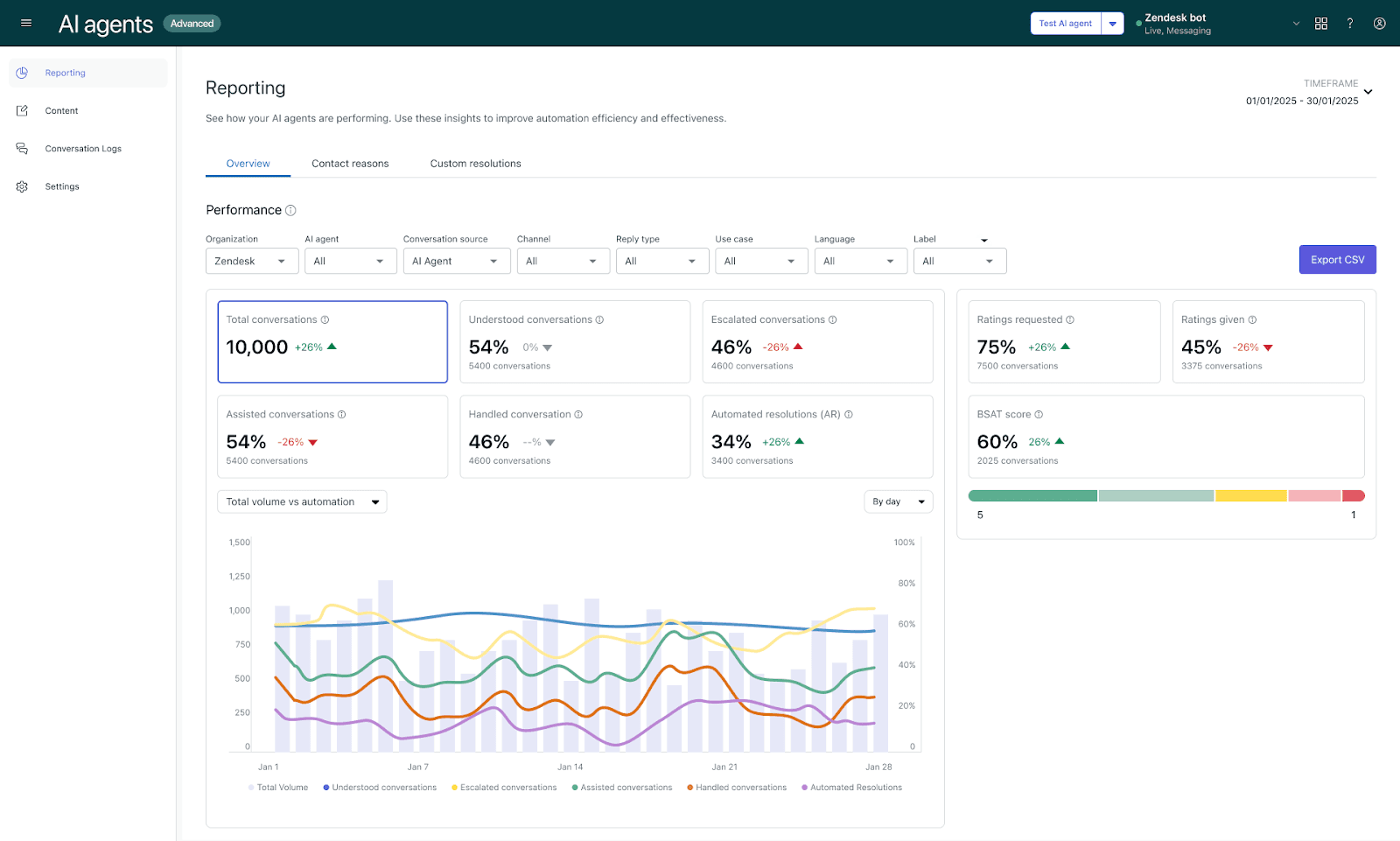
Zendesk is best known as a customer support platform, with AI capabilities that power self-service, ticket deflection, and agent assistance. Its bots are optimized for resolving issues and answering questions, with sales use cases typically layered on top of an existing CX stack.
Sales and marketing teams often look at Zendesk when customer support already runs on it, and they want to extend that investment toward light sales engagement.
Key strengths:
Support-first design: Strong ticketing, knowledge base, and AI for deflecting and triaging support requests.
Omnichannel coverage: Can handle web, email, and messaging channels for customer communications.
AI assistance for agents: Helps support reps respond faster with suggested replies and article surfacing.
Cons/limitations:
Sales qualification, routing, and pipeline reporting are not core strengths and may require heavy customization or additional tools.
Best fit when support is the primary priority and sales automation is a secondary, incremental goal.
Best use case: If your org is anchored on Zendesk for support and you only need lightweight sales engagement, extending Zendesk may be enough. For more advanced sales workflows, you’ll likely pair it with a dedicated GTM or revenue platform.
For teams optimizing conversion rates and pipeline performance, evaluate AI-native sales agents built for revenue outcomes.
The future belongs to AI-native GTM platforms
Sales conversations have changed because buyers now expect instant, intelligent engagement across channels. The platforms that win are the ones that convert in real time.
The key takeaways are clear:
Speed-to-lead is now non-negotiable. The first team to respond with context wins the conversation.
Headcount can’t scale with inbound volume. AI-powered automation must handle qualification, scheduling,, and follow-ups.
Architecture matters. AI-native platforms built around large language models outperform retrofitted chatbots that rely on scripts and decision trees.
Multi-modal engagement is the new standard. Modern buyers move between chat, email, and voice. Your AI chatbot for sales must remember context across all of them.
Conversion, not capture, is the metric that matters.
The teams that adopt AI-native GTM platforms early will:
Out-convert competitors by engaging high-intent buyers instantly
Outlearn competitors as their AI systems improve with every conversation
Outscale competitors without increasing SDR headcount
The gap between legacy automation and AI-driven sales execution is widening. Those who move now will build compounding advantages in pipeline performance.
Tired of chat tools that capture but don’t convert? Spara’s AI agents qualify, route, and book meetings instantly, so your reps only have to focus on real opportunities. Talk to Spara.

Lauren ThompsonHead of Marketing, Spara
FAQ
Related posts
View all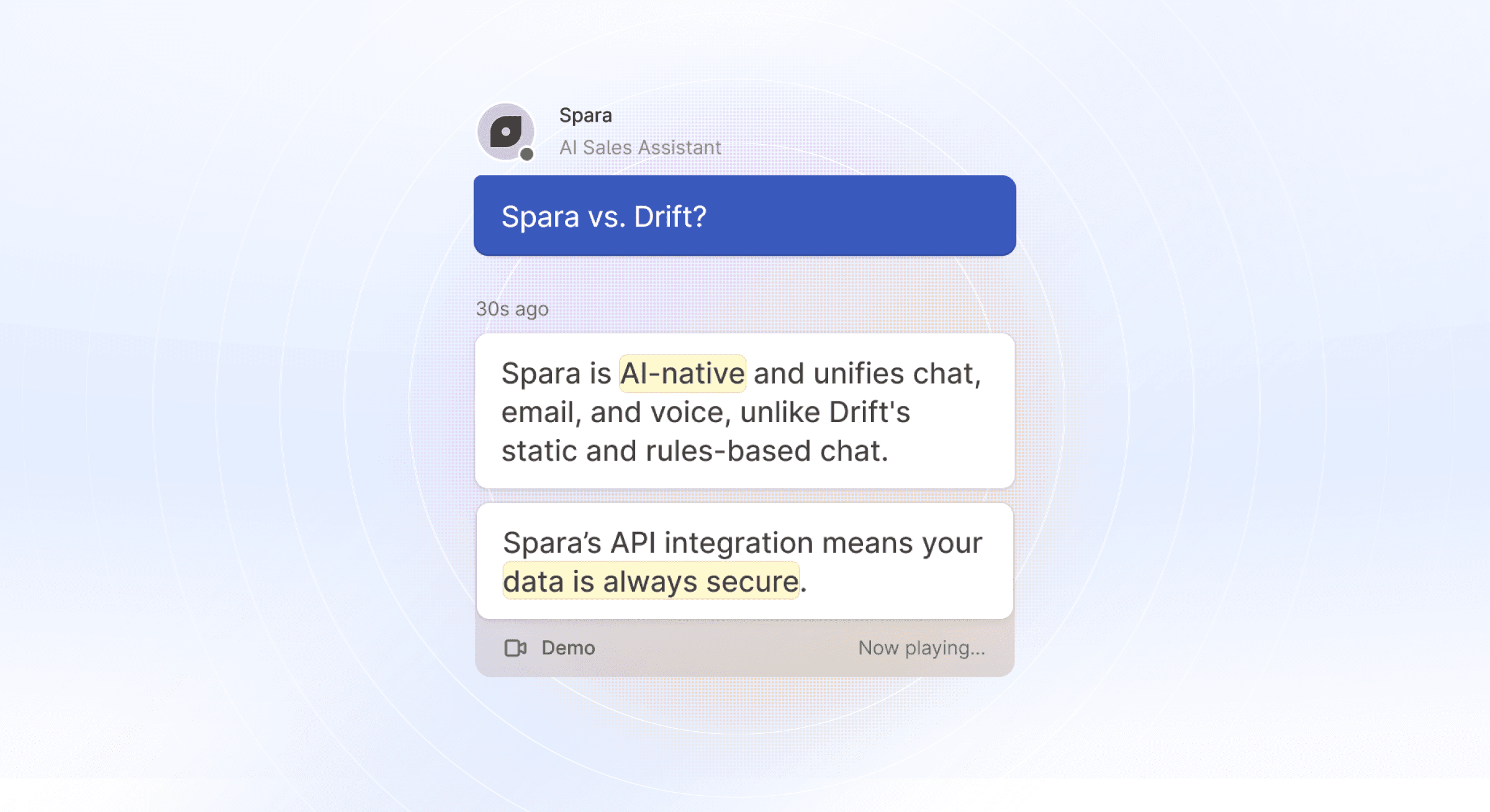
GTM
Top 5 Drift alternatives in 2026 for better lead conversion
Drift is winding down and 1mind is the named successor, but it isn’t the only option. Five Drift alternatives compared, plus a migration checklist.
Oct 10, 2026
•
10 min read

GTM
Jon Harper on the four traps that stall complex deals before the proposal
Jon Harper's PEO reps closed 35 to 45% of the deals they proposed, but only 9% of first meetings ever got that far. The BizBenchmark founder breaks down the four traps that stall complex deals, and what to do instead.
Oct 9, 2026
•
4 min read
GTM
How Clay Built a Partner Motion That Drives 20% of Revenue
Nancy Mottice joined Clay as it moved from product-led growth into enterprise. Since then, partner-sourced revenue is up 16x and drives 20% of the business. Here are the six steps she took to get there.
Oct 9, 2026
•
7 min read
Sign up for the latest from Spara
Subscribe to get more GTM insights straight to your inbox.