
Artificial intelligence is embedded across the modern sales funnel, shaping how teams qualify, route, follow up, and forecast. Yet the term “AI-powered” covers everything from assistive overlays on legacy CRM systems to AI-native platforms built for real-time engagement.
True AI-powered sales platforms use AI to power large parts of your sales motion, from inbound lead capture and qualification and outbound sequences, to forecasting, and deal execution. Best of all, they integrate directly into your CRM and GTM stack, so data, ownership, and lifecycle stages stay aligned.
This article compares eight AI sales platforms that commonly come up in active buying evaluations. We'll explore:
Core function and primary use case
GTM motion fit (inbound, outbound, PLG, sales-led)
Strengths and limitations in day-to-day workflows
Typical trade-offs by team size and complexity
How inbound conversion platforms turn buyer intent into qualified pipeline
Also, use the at-a-glance comparison table to quickly narrow your shortlist, then dig into the per-platform breakdowns to evaluate fit against your sales motion, tech stack, and team size.
Still losing inbound leads to slow follow-up? See how Spara's AI agents qualify and route buyers to the right rep across chat, email, and voice in real time.Book a demo today
Why sales teams are turning to AI sales platforms
Your sales team is dealing with more pressure and less room for error. Budgets are tighter, buyer expectations are higher, and sales cycles often run longer than your forecast assumes. At the same time, you’re expected to squeeze more pipeline from the same (or fewer) SDRs and AEs.
AI sales platforms directly address a set of recurring problems you feel every day:
Missed inbound opportunities: Web forms and email replies sit in queues, especially outside working hours or during busy campaign periods. By the time someone responds, the prospect has already moved on.
SDR burnout from manual work: Sales reps burn hours copying notes into the CRM, chasing no-shows, and qualifying low-intent leads that never progress.
Fragmented tools and data: Live chat, email automation, dialers, enrichment, and CRM all live in separate silos. This means that you end up managing workflows instead of managing revenue.
AI sales platforms help you turn that chaos into a more predictable system. Instead of leads waiting for human follow-up, AI can respond instantly, personalize conversations based on context, and continue the thread across chat, email, and even voice.
With a tool like Spara, you stop relying on reps to catch every inbound lead in time. AI handles the engagement, qualification, and routing automatically, so the leads that reach your team are already warm.
Top 8 AI sales platforms to consider in 2026
With so many AI sales tools competing for your stack, true differentiation can be hard to spot. This comparison focuses on how each platform supports real GTM workflows so you can match the right tool to your strategy and motion.
Platform | Best for | Primary AI focus | Key channels | Ideal company size | Pricing approach |
Spara | Inbound qualification & conversion | AI agents for real-time conversations | Chat, email, voice | Mid-market to enterprise | Platform + usage-based |
Cognism | Data-driven prospecting and outbound | Contact & intent data for sales teams | Email, phone | SMB to enterprise | License-based |
Outreach | Sales engagement & outbound sequences | Sequencing, coaching, deal insights | Email, voice | Mid-market to enterprise | License-based |
Common Room | Community- and product-led GTM | Signals from users & accounts | Email, social, in-app | PLG and community-led orgs | Tiered plans |
Microsoft Dynamics 365 Sales | Organizations standardized on Microsoft | Embedded Copilot assistance | Email, voice | Mid-market to enterprise | Per-user licensing |
Salesforce Sales Cloud | Complex CRM-driven sales motions | Einstein analytics & automation | Email, voice, in-app | Mid-market to enterprise | Per-user licensing + add-ons |
HubSpot Sales Hub | All-in-one GTM teams | AI content & automation within CRM | Email, chat, calling | SMB to mid-market | Tiered hubs |
Clari | Forecasting & revenue operations | Deal and pipeline intelligence | CRM-connected insights | Mid-market to enterprise | Custom/enterprise |
*Data accurate as of February 2026
Use the platform breakdowns below to evaluate fit against your GTM motion, whether that's inbound conversion, outbound coverage, or revenue forecasting.
1. Spara
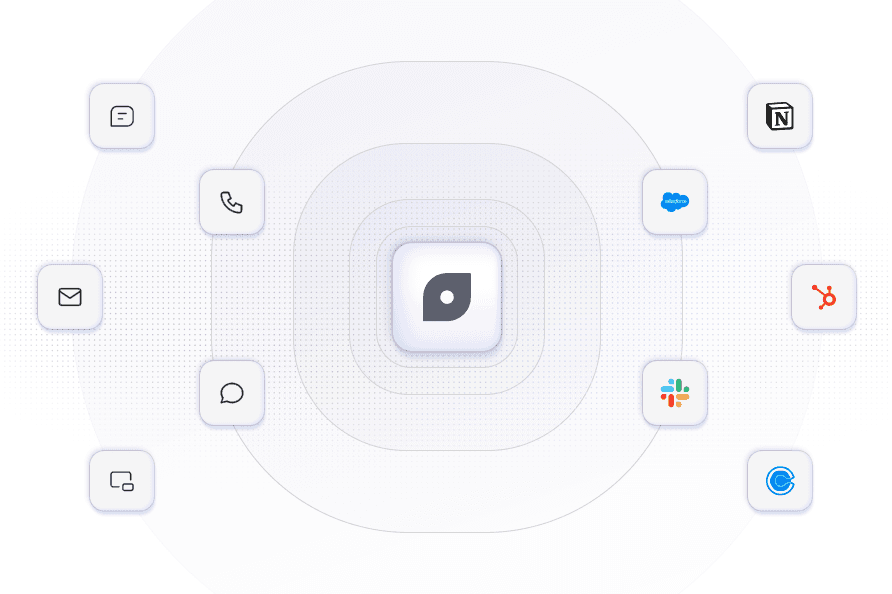
Spara is an AI-native sales platform built to convert inbound demand automatically. Instead of relying solely on forms and manual follow-up, it deploys specialized AI agents that handle real-time conversations across chat, email, and voice, running end-to-end workflows that qualify buyers based on your rules, route them into the right systems and calendars, and write clean data back to your CRM.
Key strengths:
Real-time inbound qualification: Engage leads the moment they hit your site or reply to an email, ask discovery questions, and qualify using your playbooks.
Agent Workflows: Build and deploy multi-step AI workflows across chat, email, and voice using a drag-and-drop builder or natural language. Pre-built templates and step-level analytics make it easy to launch and optimize.
Multi-channel AI agents: Run consistent, on-brand AI conversations in chat, email, and voice so buyers can move across channels without losing context.
Deep CRM and MAP integrations: Sync data bi-directionally with Salesforce, HubSpot, and other systems to keep ownership, stages, and activities up to date.
Automatic routing and scheduling: Route qualified leads to the right territory, segment, or rep and book directly onto calendars without manual coordination.
Enterprise security & governance: Configure guardrails, approval workflows, and data controls so AI operates within your compliance requirements.
Pros: Spara is optimized for speed-to-lead and inbound conversion, so you can move from “lead captured” to “meeting booked” with minimal human handling. Customers highlight the quality of Spara’s discovery questions and the measurable lift in form-to-meeting conversion and speed-to-lead.
Cons: Spara is focused on inbound and early-funnel conversations, not a full CRM replacement. If you’re looking to overhaul your entire sales stack in one purchase, you’ll still pair Spara with your primary CRM and revenue tools.
Best fit: Mid-market to enterprise GTM teams with high inbound volume who need to qualify and route leads faster than a human team can manage. Especially strong for RevOps and sales leaders looking to reduce top-of-funnel leakage without adding headcount.
Ready to automate inbound qualification? See how Spara automatically qualifies, routes, and books meetings.Book a demo
2. Cognism
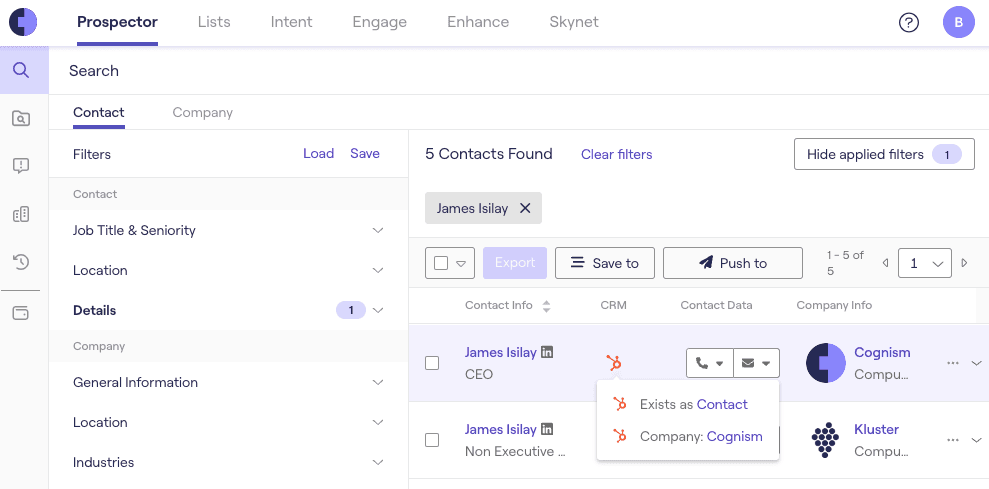
Cognism is a data-first sales platform that helps your team build and target outbound lists with verified contact information and intent signals. It’s designed for teams that want reliable phone and email data combined with AI-enhanced prospecting workflows.
Key features:
Global B2B contact data: Access verified phone numbers and email addresses to power outbound sequences.
Intent and signal-based targeting: Use intent indicators and firmographic filters to prioritize accounts more likely to convert.
Native integrations: Sync contacts and activities to Salesforce, HubSpot, and major sales engagement platforms.
Compliance features: Built-in tools to help manage consent and regional data requirements.
Pros: Cognism is strong when you need accurate metrics to fuel AI-powered outbound sequences in tools like Outreach or Salesloft. It can materially improve connect rates and list quality for outbound teams.
Cons: Cognism isn’t an end-to-end AI sales platform for conversations or pipeline management. You’ll still need separate tools for engagement, inbound handling, and forecasting.
Best fit: Outbound-focused sales teams that need reliable contact data to fuel their sequences. A good fit for SDR orgs at SMBs or enterprises that prioritize list quality and prospecting efficiency over conversational AI.
3. Outreach
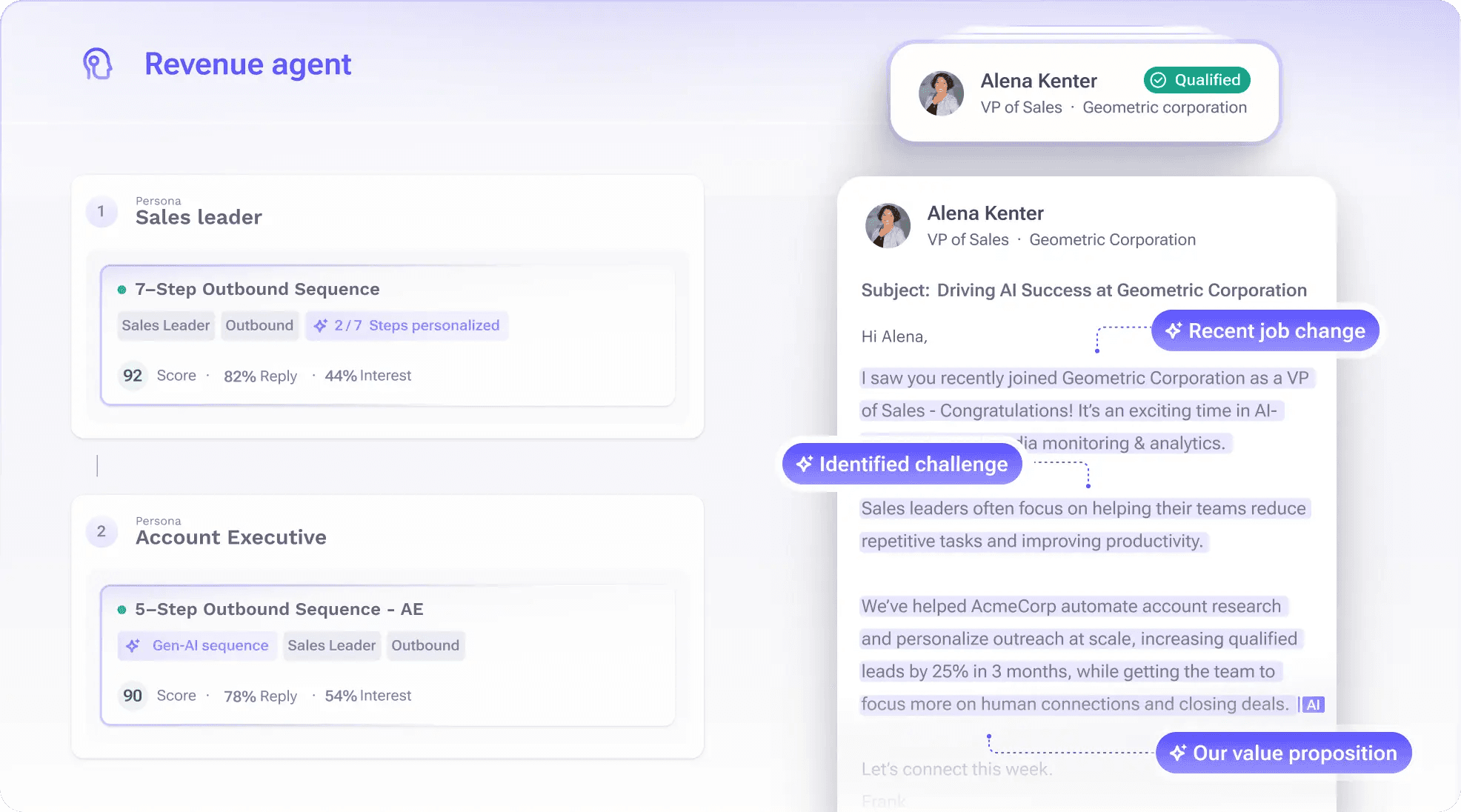
Outreach is a leading sales engagement platform that uses AI to optimize sequences, assist reps with messaging, and give managers better visibility into rep performance. It’s best suited for outbound-heavy teams and SDR orgs that rely on structured, high-volume sequences.
Key features:
Multi-channel sequences: Build structured outreach campaigns across email, voice calls, and social touches.
AI-assisted messaging: Use AI to draft or refine emails and adjust sequences based on response patterns.
Rep performance insights: Get analytics on activity, conversions, and engagement to improve coaching.
Pipeline and deal views: Surface risk and recommended actions for active opportunities.
Pros: Outreach gives you a mature framework for outbound orchestration and rep productivity, with AI layered into content, prioritization, and coaching.
Cons: User reviews often note that Outreach can feel complex to configure and maintain, especially for smaller teams. It’s also more focused on outbound and mid-funnel execution than on fully automated inbound qualification.
Best fit: Mid-market to enterprise SDR and sales teams running high-volume outbound sequences who need structure, coaching visibility, and rep performance analytics in one place.
4. Common Room
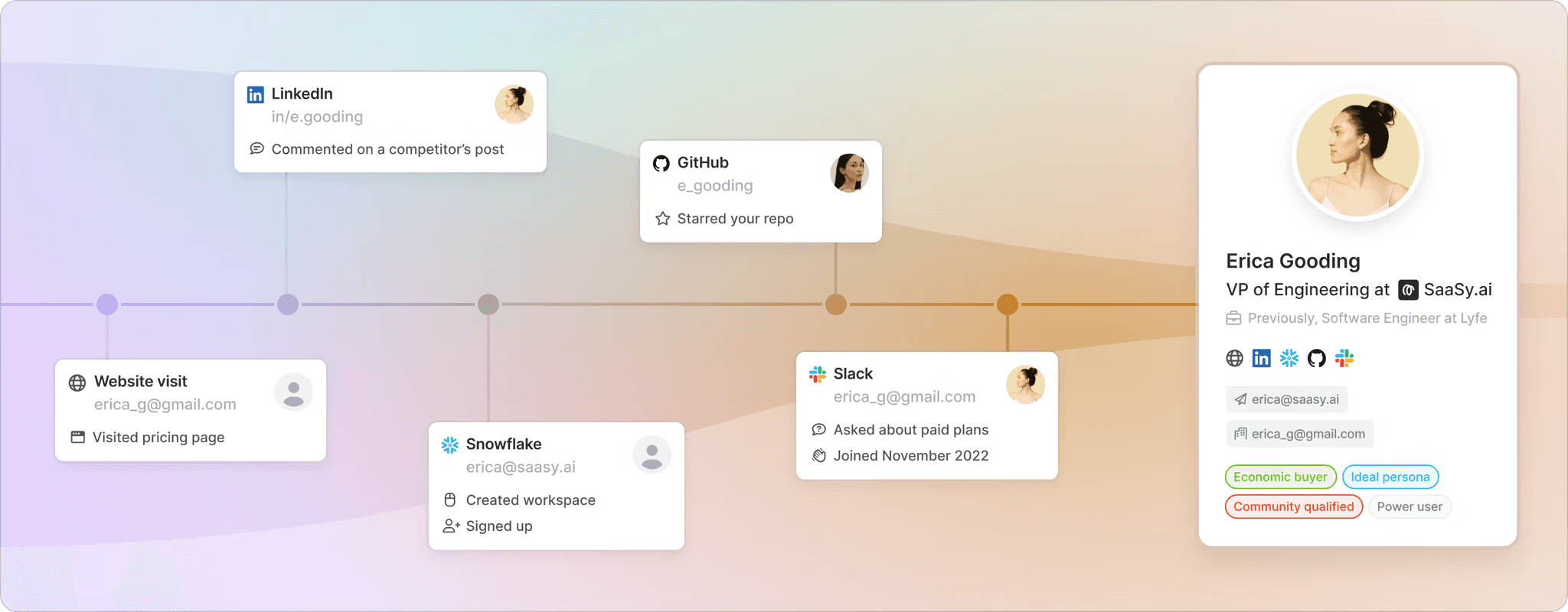
Common Room is built for companies that rely on product-led and community-led growth. It aggregates signals from product usage, communities, and social channels, then uses AI to help you prioritize and engage accounts that are already showing interest or traction.
Key features:
Unified customer signals: Combine data from Slack, Discord, GitHub, CRM, product analytics, and more into a single view.
AI-based account scoring: Identify which users and accounts are most likely to convert based on activity patterns.
Targeted outreach workflows: Trigger sales motions when users hit specific milestones or show buying behavior.
Community intelligence: Understand who your champions are and where they’re active.
Pros: If you’re running a product-led GTM motion, Common Room helps you find and prioritize the users already “in the product” or community who are ready for a sales touch.
Cons: Common Room is less suited to traditional, non-PLG B2B sales motions where you don’t have strong product or community signal data. It’s also not designed to run full AI-driven conversations with buyers.
Best fit: PLG and community-led companies that want to convert product usage and community engagement into sales pipeline. Less suited to traditional outbound or inbound motions.
5. Microsoft Dynamics 365 Sales
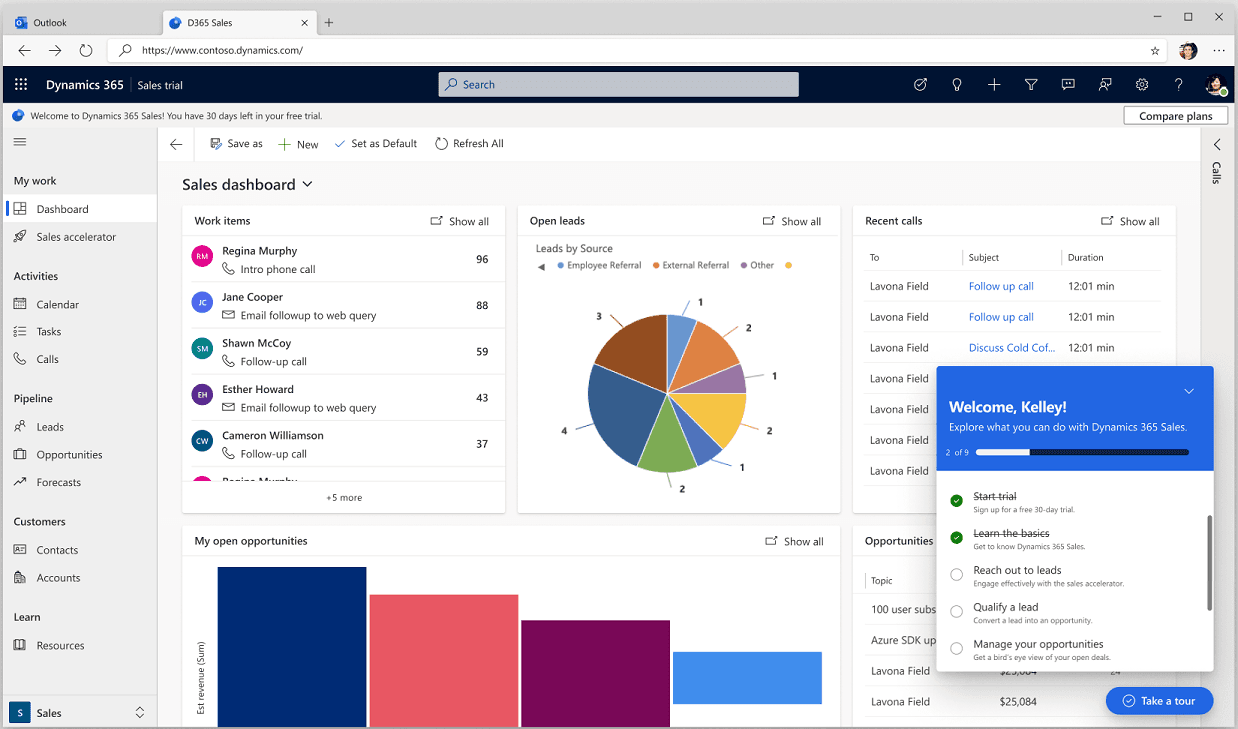
Microsoft Dynamics 365 Sales is Microsoft’s CRM and sales platform, now heavily infused with Copilot capabilities. It’s particularly compelling if you’re already standardized on Microsoft 365 and want AI that works across Outlook, Teams, and your CRM data.
Key features:
Embedded Copilot sales assistant: Use AI to summarize emails, generate call notes, and propose follow-up actions inside Dynamics and Outlook.
Opportunity and pipeline management: Track deals, stages, and activities in a central system.
Teams and Outlook integration: Keep sales workflows close to where your team already communicates.
Customizable automations: Build workflows and business rules specific to your sales process.
Pros: Dynamics 365 Sales offers a tightly integrated AI experience for Microsoft-centric organizations and helps automate and streamline everyday admin work for sellers.
Cons: Implementations can be complex, and you may need dedicated admins or partners to fully realize its capabilities. It’s not specialized in inbound lead engagement or multi-channel AI conversations out of the box.
Best fit: Organizations already standardized on Microsoft 365 that want AI assistance embedded directly into the tools their team uses every day — Outlook, Teams, and their CRM.
6. Salesforce Sales Cloud
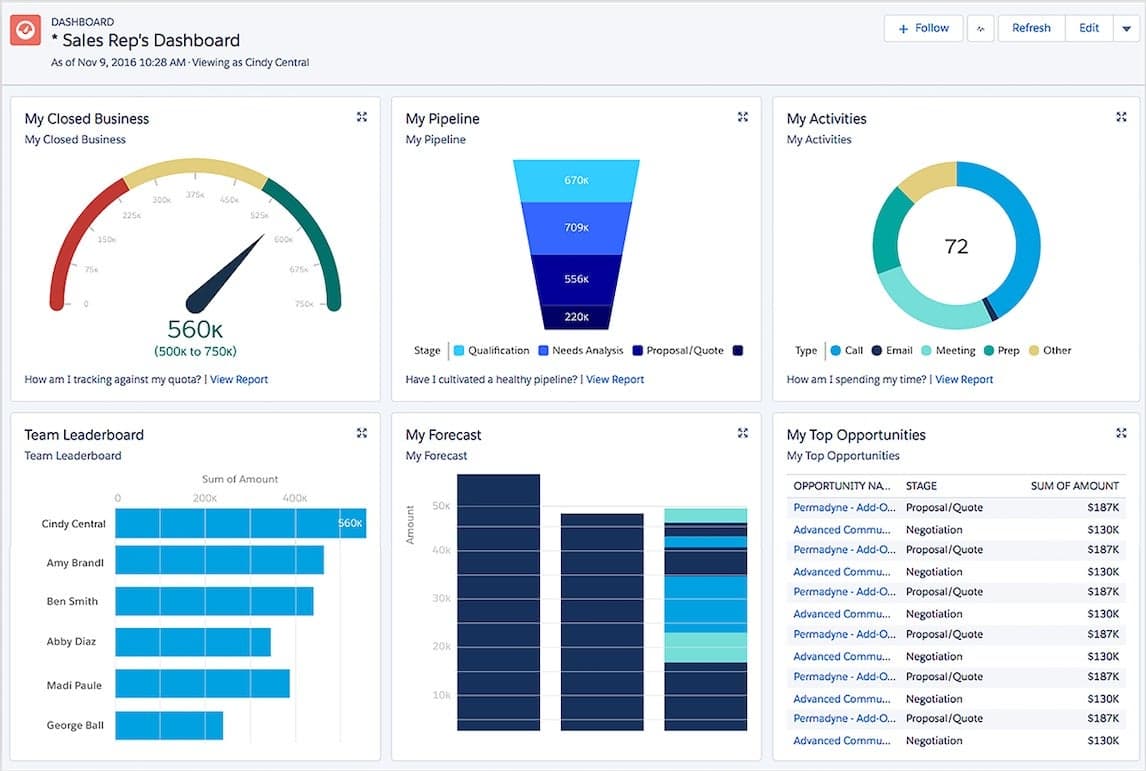
Salesforce Sales Cloud remains a dominant CRM and sales platform, with Einstein AI capabilities for forecasting, scoring, and productivity. It’s built for organizations that need a highly configurable system of record and are comfortable investing in admin and RevOps support.
Key features:
Comprehensive CRM foundation: Manage accounts, contacts, opportunities, and activities in one system.
Einstein AI features: Use AI for lead and opportunity scoring, activity capture, and basic generative content.
AppExchange ecosystem: Extend functionality with thousands of integrations and apps.
Advanced reporting and dashboards: Build detailed views for leadership and RevOps.
Pros: Salesforce gives you a flexible, enterprise-ready CRM with AI layered across forecasting, scoring, and seller productivity.
Cons: Complexity and cost are frequent themes in user feedback. To get real value from Einstein and automation, you’ll likely invest in configuration, custom objects, and additional tools for conversational AI.
Best fit: Mid-market to enterprise companies that need a highly configurable CRM as their system of record and have the RevOps resources to support it.
7. HubSpot Sales Hub
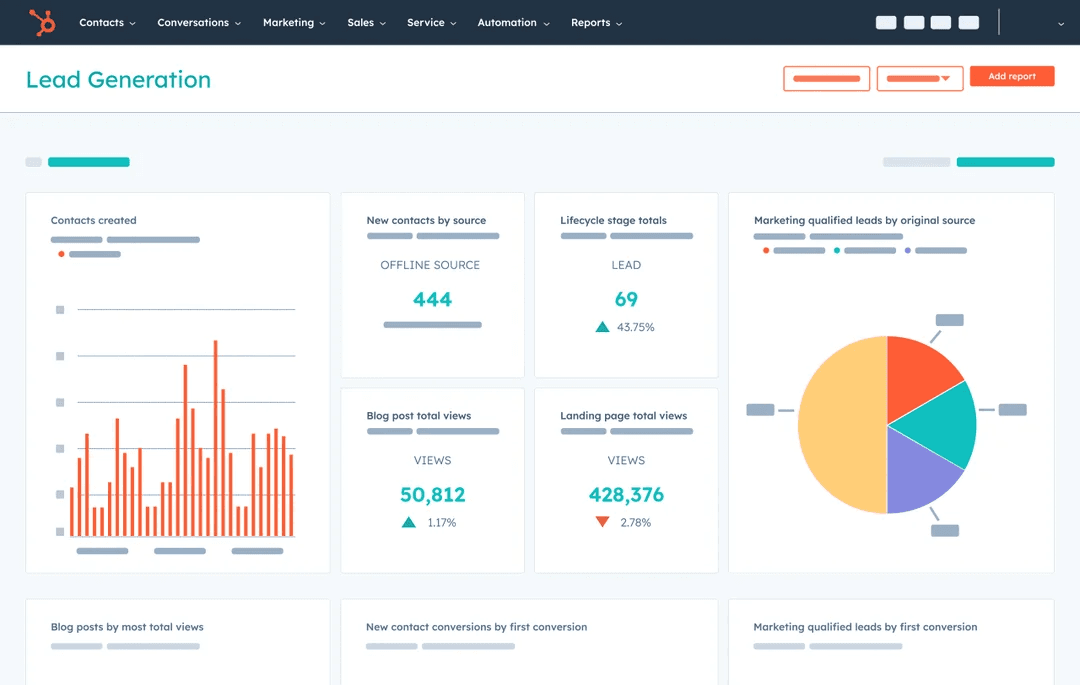
HubSpot Sales Hub is part of HubSpot’s all-in-one CRM suite, combining sales, marketing, and service capabilities. Its AI features sit inside a cleaner, more opinionated interface, which can be helpful if you want to move quickly without a huge RevOps footprint.
Key features:
Unified CRM and sales tools: Keep contacts, deals, email, and chat in one place alongside marketing.
AI content assistance: Generate or refine emails, snippets, and basic sales content from within the app.
Sales automation tools: Build workflows for lead assignment, reminders, and follow-up sequences.
Native live chat and meeting links: Capture inbound interest on your site and route it to sales.
Pros: HubSpot is approachable and fast to deploy, making it a good fit if you want CRM and core AI features without a large tech stack.
Cons: As you scale, you may run into limitations around complex, multi-entity data models or highly customized processes. AI capabilities are helpful, but more general-purpose than deeply specialized for inbound qualification.
Best fit: SMB to mid-market teams that want CRM, marketing, and sales tools in one place without a heavy implementation lift.
8. Clari
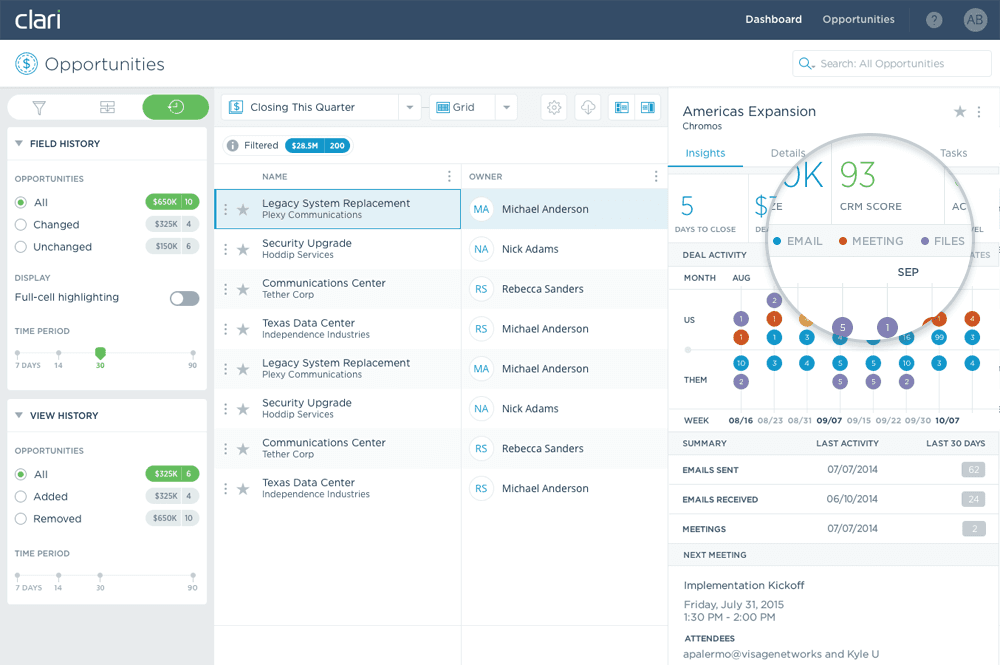
Clari is a revenue platform focused on forecasting, pipeline health, and deal execution. It connects to your CRM and engagement tools, then uses AI to surface risk, highlight next steps, and give leadership a clearer picture of what’s likely to close.
Key features:
AI-driven forecasting: Use historical and current deal data to create more accurate forecasts.
Deal and pipeline inspection: See which opportunities are at risk and why, with activity and engagement context.
Revenue collaboration: Align sales, marketing, and CS around a single view of the pipeline.
Integration with CRM and engagement tools: Ingest data from systems like Salesforce and Outreach.
Pros: Clari gives revenue leaders a more trustworthy view of the pipeline and supports better coaching and resource allocation.
Cons: Clari isn’t built to handle top-of-funnel conversations or inbound engagement. It’s most valuable once leads are already in your CRM and part of an established opportunity process.
Best fit: Revenue leaders at mid-market to enterprise companies who need more reliable forecasting and better pipeline visibility across their sales org.
Turning conversations into revenue with AI
The real value of these AI sales platforms isn’t just automation for its own sake; it’s how effectively you turn buyer intent into qualified pipeline and, ultimately, revenue. AI that simply summarizes sales calls or drafts emails is useful, but AI that takes full ownership of repeatable conversations has a much larger impact.
When evaluating platforms, map them to funnel stages. Clari and Salesforce optimize active opportunities, while Cognism and Outreach drive outbound coverage. But if your biggest gap is inbound, you need a platform that engages buyers the moment they raise their hand and moves them seamlessly to a booked meeting.
Spara deploys AI agents across chat, email, and voice, turning your website, campaigns, and response queues into live, always-on conversations. It qualifies leads against your rules, routes to the right owner, and schedules directly on calendars. The result is that your team can focus on what humans do best: running high-value sales cycles.
Ready to turn inbound intent into measurable pipeline? See how Spara automates qualification, routing, and scheduling in real time. Book a live demo.

Lauren ThompsonHead of Marketing, Spara
FAQ
Related posts
View all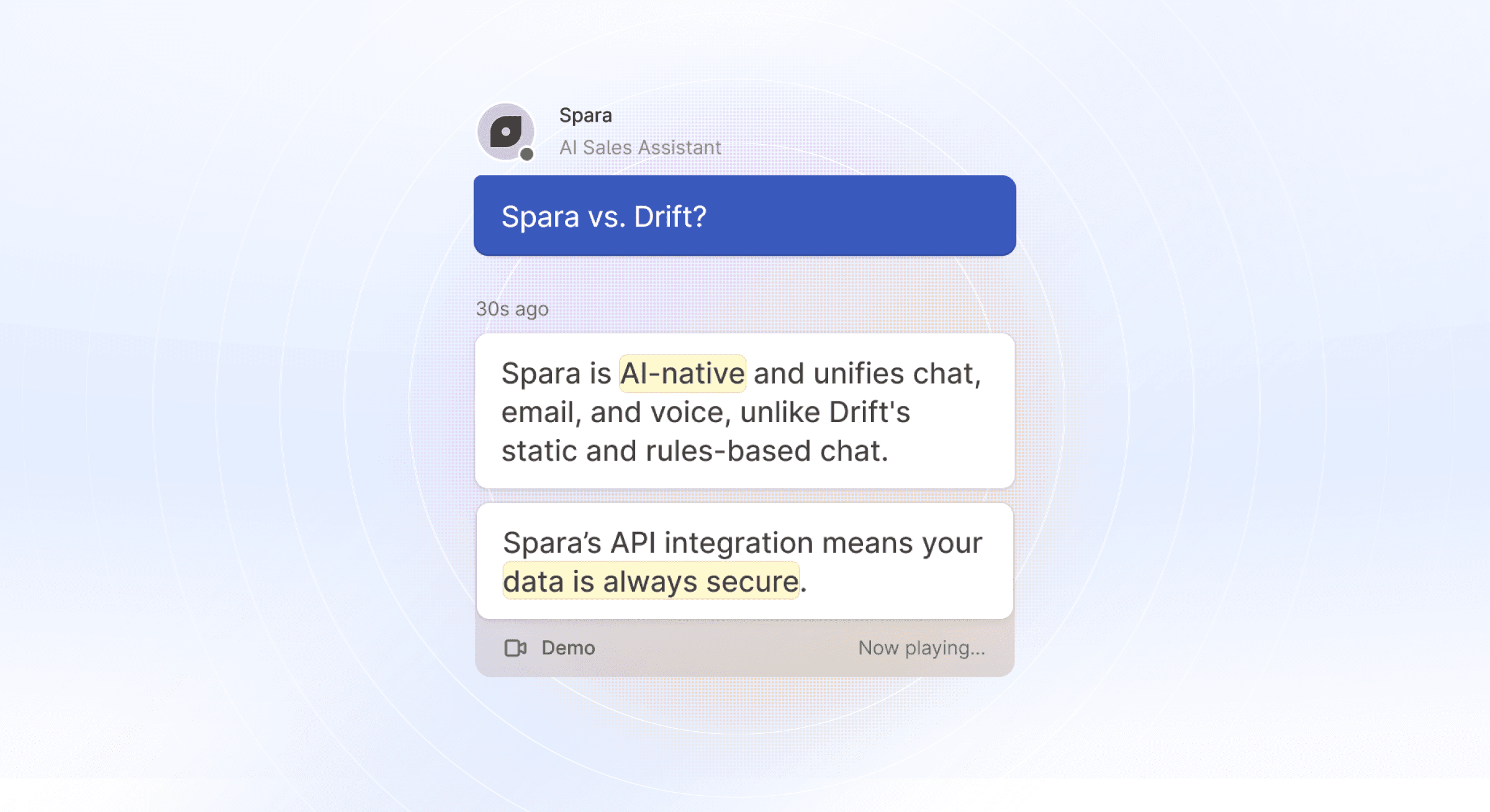
GTM
Top 5 Drift alternatives in 2026 for better lead conversion
Drift is winding down and 1mind is the named successor, but it isn’t the only option. Five Drift alternatives compared, plus a migration checklist.
Oct 10, 2026
•
10 min read
GTM
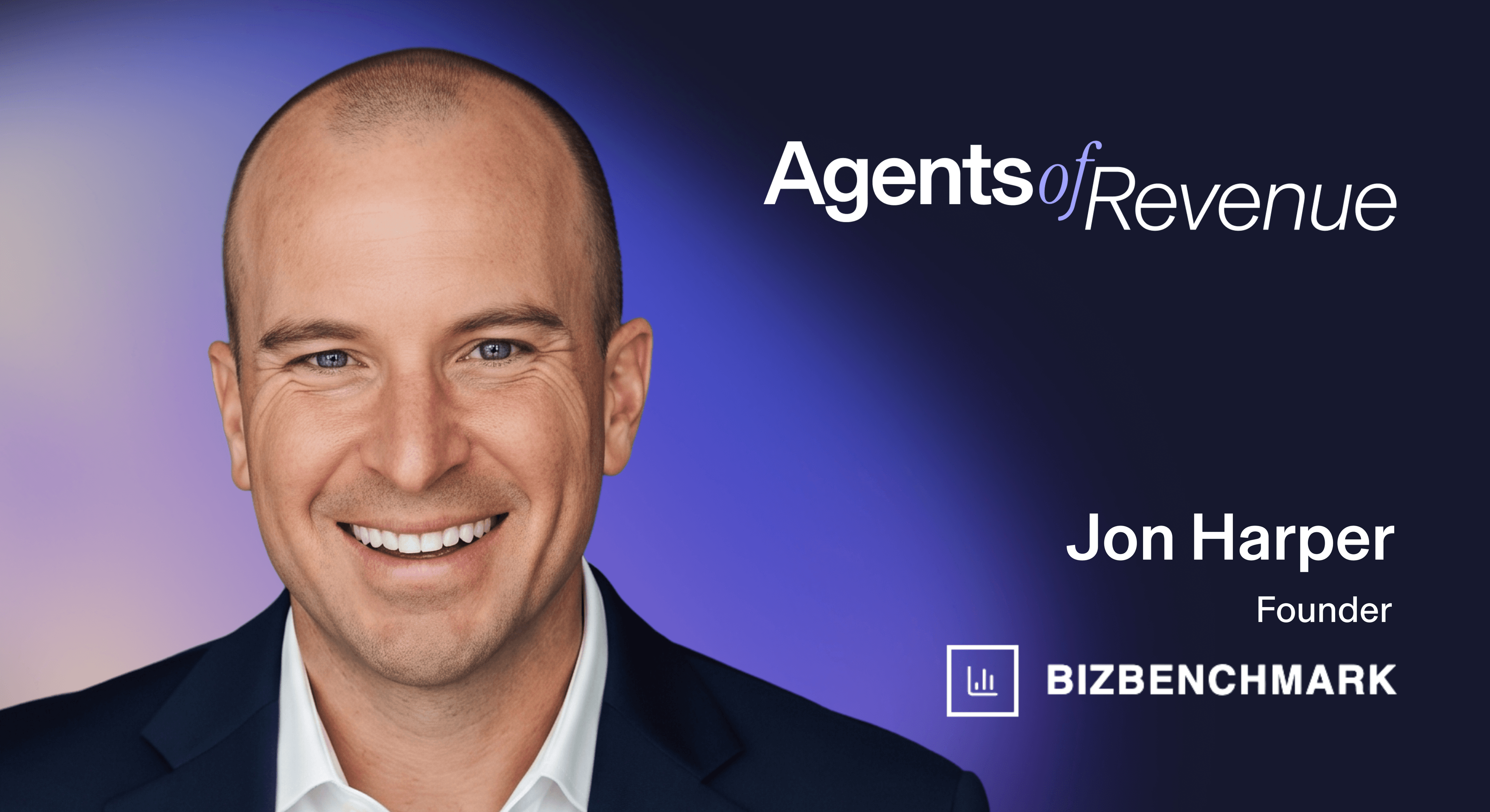
Jon Harper on the four traps that stall complex deals before the proposal
Jon Harper's PEO reps closed 35 to 45% of the deals they proposed, but only 9% of first meetings ever got that far. The BizBenchmark founder breaks down the four traps that stall complex deals, and what to do instead.
Oct 9, 2026
•
4 min read
GTM
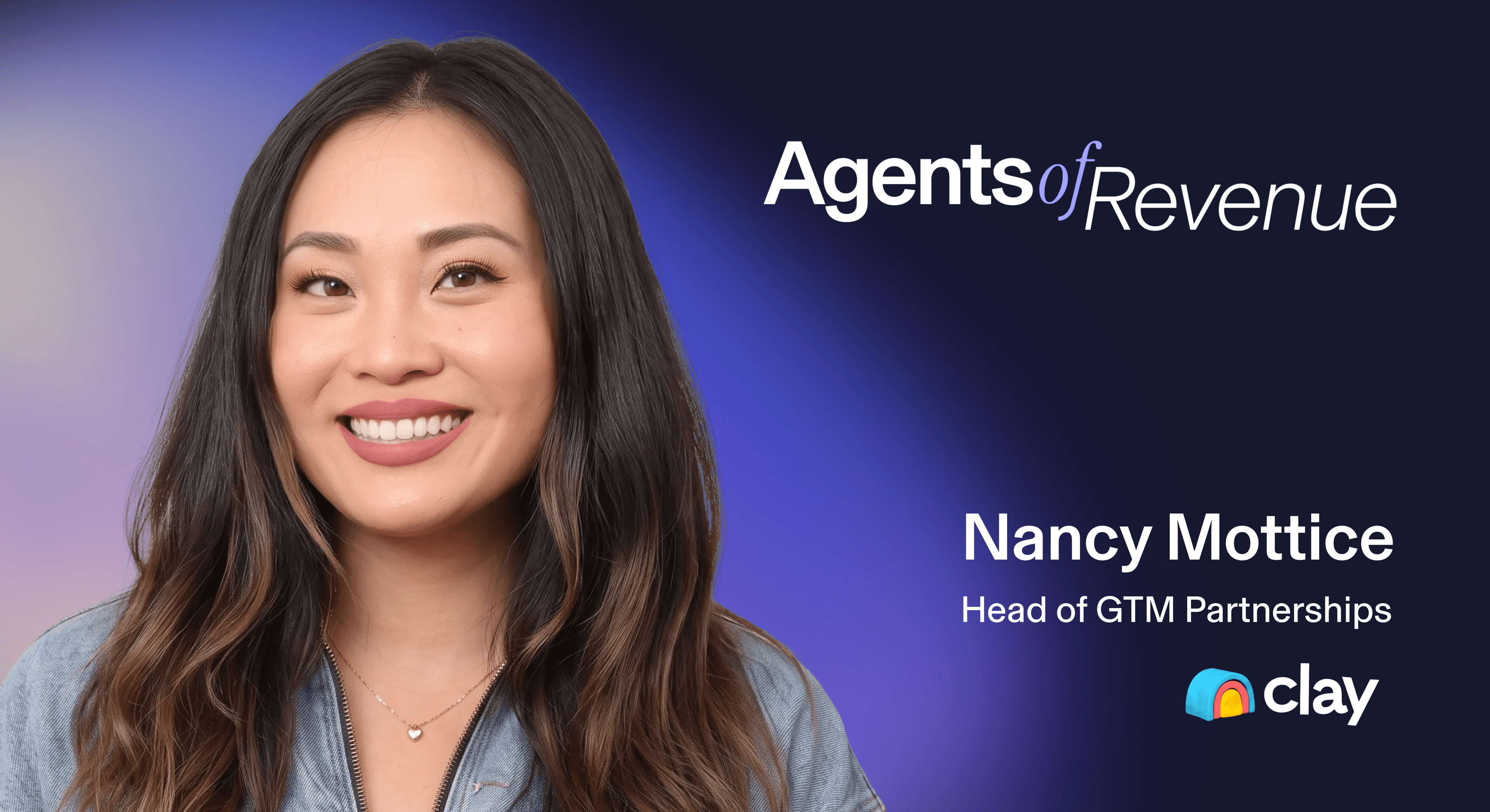
How Clay Built a Partner Motion That Drives 20% of Revenue
Nancy Mottice joined Clay as it moved from product-led growth into enterprise. Since then, partner-sourced revenue is up 16x and drives 20% of the business. Here are the six steps she took to get there.
Oct 9, 2026
•
7 min read
Sign up for the latest from Spara
Subscribe to get more GTM insights straight to your inbox.