
Most teams don't have a volume problem, but they do have a qualification problem: specifically, converting enterprise accounts into predictable pipeline when SMB playbooks don't apply.
When you're qualifying accounts at this level, you're managing buying committees, long evaluation cycles, security reviews, and the high cost of mis-routing a tier-1 logo.
This guide walks you through the system that eliminates that qualification chaos, exploring:
What qualified actually means for enterprise leads
How to move from signal to SAL
Where most sales teams fail
How to operationalize the whole motion in RevOps
Still manually scoring accounts before routing them to your team? See how Spara's AI agents qualify and route leads automatically so your RevOps team focuses on high-intent accounts from day one. Book a demo.
What is enterprise lead qualification, and why do SMB rules break at scale?
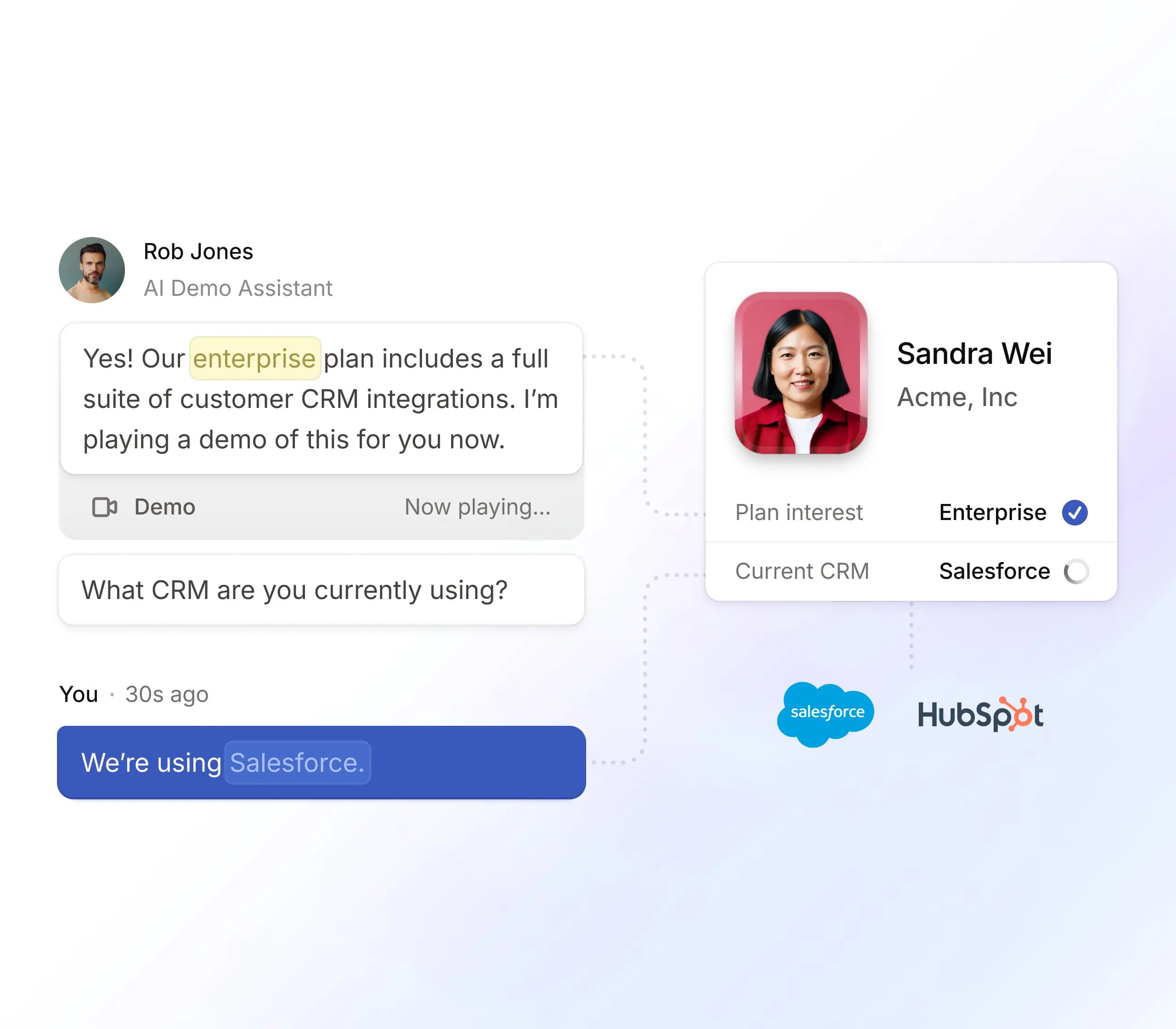
Enterprise lead qualification involves identifying, evaluating, and routing high-value accounts through complex sales cycles that involve multiple stakeholders and governance steps. Unlike SMB motions, you're assessing a buying team and the organization behind them, not just an individual contact.
Most sales teams replicate their processes across accounts of all sizes, but the complexity of enterprise deals exposes the limits of how most teams operate:
Marketing qualified leads (MQL) scoring based on firmographic fit and engagement activity
BANT checks applied to a single contact
SDR queues where sales reps decide manually who gets a meeting
One MQL from one contact tells you almost nothing about whether an account is ready to buy. Enterprise deals involve security, legal, IT, and multiple business leaders, many of whom show up late and can kill a deal you thought was closed. Mis-routing a tier-1 account doesn't just waste AE time, it also damages the relationship between Marketing and Sales.
That's why enterprise qualification needs explicit thresholds, account-level visibility, and a clear paper trail. If sales can't see why an account was routed to them, they won't trust it.
What does "qualified" mean for enterprise deals?
For enterprise lead qualification, qualified must describe the state of the account, not just the enthusiasm of one contact. You need to share your definition of qualified across marketing, SDR, and sales teams so everyone is moving accounts through the same gates.
A practical, shared definition usually covers four dimensions:
ICP fit: The account matches your ideal customer profile across firmographic and technographic factors, including company size, industry, and demographics.
Buying committee coverage or path: You either have access to key roles or a credible plan to engage them, including the decision-maker.
Demonstrated intent: The account shows clear buying behavior, addressing real pain points, not just background research.
Ability to purchase: There is a realistic path through budget, timing, and procurement.
When you leave these dimensions vague, handoffs turn political. Marketing defends MQL quality, SDRs re-qualify everything, and by the time it reaches an AE, there's no budget holder in the room. A crisp shared definition gives you something to operationalize and measure.
Each of these four criteria should be concrete enough that you can encode it into scoring and routing logic.
1. ICP fit
Define the firmographic and technographic characteristics that predict successful customers. Revenue band, company size, industry, region, tech stack, and growth indicators belong here, along with exclusion rules. Ground this in external data and credible market research guidance.
2. Buying committee coverage
Map which roles usually participate in the decision-making process for your product. At qualification, you don't need every stakeholder on a call, but you should confirm that your contact can connect you to budget holders, technical evaluators, and any security or legal owners who will sign off.
3. Demonstrated intent
Calibrate what "serious interest" looks like in your motion. Patterns such as multiple contacts from the same account hitting pricing and implementation content, or direct requests for evaluations, signal far more than one webinar registration.
4. Ability to purchase
Confirm that there is a realistic budget path and timing window, including security and compliance checks. Many teams use data-driven insights from AI sales trends research to guide how to combine budget, timing, and evaluation behavior into an ability-to-buy score.
The enterprise lead qualification process (signal to SAL)
Once you agree on what qualified means, the next step is operationalizing it. You need a process that converts raw inbound signals into sales-accepted leads (SALs) at the account level.
A practical enterprise process has three steps:
Step 1. Capture and normalize account-level signals
You can't qualify enterprise demand if you scatter engagement across duplicate or fragmented records. Centralize signals at the account level so that product downloads from one contact, webinar attendance by another, and a pricing-page visit by an executive all roll into a single picture.
Consolidate web, form, and event activity from the same domain into a single account view.
Enrich with firmographic and technographic data, including company size, industry, and tech stack, deduplicating aggressively.
Weight interactions by role and seniority. A VP visiting your pricing page signals different intent than a junior analyst downloading a whitepaper.
Keep an activity timeline visible to sales so they can spot recent spikes in interest.
Step 2. Triage against fit, committee coverage, and intent thresholds
With normalized data in place, triage accounts systematically instead of asking SDRs to "use their judgment" on every form fill. The triage step applies your three core filters in parallel:
Fit: Does the account meet your ICP rules or sit in a strategic segment you care about?
Committee: Have you identified multiple relevant roles, or at least a contact who can reach them?
Intent: Has the account crossed your threshold for meaningful buying behavior within a defined time window?
Build these thresholds so that they're testable. For example, "tier-1 ICP with at least two high-intent actions in 14 days and one director-level contact" is something you can measure and refine. That gives you a clear explanation when sales asks why you routed an account.
Step 3. Convert to the right motion (meeting, multi-threading plan, nurture, or disqualify)
Not every qualified account should go straight to a demo. Your routing logic should support several distinct motions based on the triage outcome:
Immediate meeting: High fit, clear intent, and access to a relevant stakeholder. Route to SDR or AE with full account context.
Multi-threading plan: Strong fit and initial intent, but incomplete committee coverage. Assign an owner to map stakeholders and run targeted outreach across roles using AI email sequences that adapt to each contact's behavior.
Nurture or recycle: Good fit with light or early intent. Enroll into segment-specific nurture and watch for future intent spikes.
Disqualify: Out-of-ICP or unqualified leads with no realistic path to purchase. Capture a clear reason code so you can tune scoring and campaigns later.
Common enterprise lead qualification failure modes (and how to avoid them)
Most qualification systems fail in predictable ways. Here are the most common breakpoints and how to fix them.
Lead-level scoring fights account reality (MQLs that don't convert)
Lead scoring models built for SMB motions tend to flood sales teams with single contacts who look engaged but sit far from real power. The account as a whole isn't ready, but your scoring model can't see that.
The fix: Shift your primary qualification lens to the account. Use lead scores to weed out unqualified leads, but treat account-level fit, aggregate intent, and early committee coverage as the real gates for SAL. That single change usually reduces volume and increases SAL-to-opportunity conversion rates at the same time.
Missing buying committee coverage (no multi-threading plan)
Single-threaded deals where there's one champion and no path to anyone else cause deals to linger in early stages while your contact tries (and often fails) to sell internally on your behalf.
The fix: Build committee coverage into your qualification and opportunity stages. Require at least a champion plus a path to a budget holder or technical owner before you consider an account truly qualified. If that path is missing, the correct motion is a multi-threading plan, not a forecastable opportunity.
Routing and ownership conflicts (duplicate or wrong handoffs)
Duplicate coverage (two reps calling the same executive) erodes trust fast. Anchor routing on the account object with clear territory and segment rules, dedupe at the point of capture, and always check for an existing owner before assigning.
The fix: Maintain a simple escalation path and a routing history so you can resolve disputes with hard data, not anecdotal information.
SLA drift (slow response on high-intent accounts)
High-intent accounts need fast, informed responses, but complex qualification flows often slow you down. Leads wait in enrichment queues, routing rules conflict, or SDRs batch work instead of responding in real time.
The fix: Instrument time-to-first-touch and time-to-SAL by segment and intent signal. For your highest intent enterprise paths, aim for response times in minutes, not hours. Use priority queues, alerts, or AI-driven inbound SDR automation to remove manual bottlenecks.
Activity-heavy scoring that misses real intent
When you reward every click equally, research and buying behavior become indistinguishable. SDRs then chase contacts who were only curious, while real buyers remain buried in the noise.
The fix: Reweight your models so that high-signal behaviors, such as pricing visits, security content, technical evaluations, and multi-contact engagement at an account, dominate the score. Check those weights against actual SAL and opportunity creation rates each quarter.
Context-free handoffs (sales doesn't trust "qualified")
If sales opens a qualified record and sees only a name, email, and MQL flag, they'll either re-qualify from scratch or ignore it.
The fix: Make context mandatory at handoff. Summarize recent account activity, the trigger that crossed the threshold, who else has engaged, and the recommended next step.
Without this context, sales reps waste follow-up cycles re-validating work that RevOps already did. The fields and workflows that surface it have to come from RevOps first.
"No decision" leakage (no stakeholder mapping + follow-through)
Enterprise deals often go quiet rather than formally closing as lost, and many of those outcomes trace back to poor stakeholder mapping at qualification.
The fix: During qualification and early opportunity stages, capture who plays which role in the decision and where you have coverage gaps.
Track single-threaded opportunities and set expectations for how quickly reps should expand to economic buyers, technical evaluators, and any security or legal approvers who can block the purchase.
How do you operationalize enterprise lead qualification in RevOps?
Turning enterprise lead qualification into an operating system means wiring your data model, scoring, routing, and governance together so that accounts are qualified and routed based on clear decision criteria while RevOps retains control and auditability.
The foundation is an account-centric CRM design. Ideally, every lead and contact rolls up to the right account, enriched with trusted firmographic data including company size and industry, with parent-child relationships maintained for complex organizations.
Aggregating intent data at the account layer is what lets you score and route based on collective behavior rather than individual signals.
From there, the goal is to codify scoring, routing, SLAs, and audit practices into your systems. The more of that logic you can push into marketing automation and your CRM, the less your SDRs and AEs will depend on ad hoc judgment, and the easier it becomes to test and improve the process over time.
Account-based vs lead-based scoring (when to use each)
Lead scores are best for initial triage. Filter obvious non-opportunities such as students, competitors, or spam, and prioritize quick responses to high-intent form fills.
Account scores are what you should use for SAL decisions and routing. Combine ICP fit, aggregate engagement across contacts, and early committee coverage into a single view that predicts real pipeline.
Mature teams run both models together: lead scores determine who merits a response, while account scores decide who deserves coordinated, multi-stakeholder engagement from sales.
Routing and triage guardrails (automation, exceptions, audit trail)
Define default routing rules by segment, territory, and product, using the account as the routing object.
Flag named or strategic accounts so inbound engagement always routes to the existing owner, not a round-robin pool.
Create an exception queue for duplicate accounts, complex hierarchies, and out-of-territory signals, with clear ownership for resolution.
Log routing decisions with timestamps, reason codes, and any manual overrides.
That audit trail lets you diagnose missed SLAs, resolve ownership disputes, and refine routing logic based on real patterns.
Enterprise lead qualification KPIs and implementation roadmap
To track progress and keep the motion accountable, you'll need metrics across three dimensions: measurement, governance, and execution.
KPIs to track (pipeline impact + velocity)
Lead-to-meeting rate by segment/ICP tier to measure how well qualification translates into conversations with potential customers.
SAL rate and SAL-to-opportunity conversion to show whether sales agrees with your criteria and can turn accepted leads into pipeline.
Time-to-first-touch and time-to-SAL to monitor SLA adherence for different intent levels.
Opportunity creation rate from inbound enterprise accounts to quantify how many accounts become real opportunities.
"No decision" or recycle rate with reasons to surface where qualification is too loose or stakeholder mapping is weak.
Meeting show rate for enterprise inbound to catch weak qualification before it pollutes the sales pipeline.
Review these metrics weekly during rollout, then monthly once trends stabilize, and always segment by ICP tier so that you can tune criteria for your most valuable accounts first.
Governance and controls
Document ownership rules and a simple conflict resolution path for overlapping territories or segments.
Define how you handle strategic accounts, duplicates, and customer expansion so exceptions do not undermine automation.
Set required fields and hygiene checks for a record to be marked SAL or converted to an opportunity.
Run regular feedback sessions between RevOps, Marketing, SDR, and Sales to review edge cases, SLAs, and routing issues.
Assign owners for each control so you know who is accountable when rules need to change or disputes arise.
30/60/90-day rollout plan
A phased rollout lets you prove the model works on a controlled segment before scaling it across your full inbound motion.
0-30 days: Align on the definition of qualified, instrument core CRM fields, implement basic account-based routing, set SLAs, and start capturing reason codes for disqualification and re-entry into nurture.
31-60 days: Introduce account-level scoring, add minimum buying committee requirements for SAL, build nurture and recycle paths, and upgrade handoff context so sales always sees why an account was qualified.
61-90 days: Refine thresholds and segmentation based on early conversion data, add exception handling for strategic accounts and expansions, and formalize your ongoing governance cadence.
Making enterprise lead qualification a repeatable system
Enterprise lead qualification works when you treat it as a system that connects signals to pipeline. Encode the core ingredients of fit, intent, committee coverage, and ability to buy into your data model, scoring, routing, and SLAs.
Once those ingredients are in place, you can iterate based on evidence. Track which thresholds produce opportunities, where "no decision" leakage occurs, and which gaps in routing are costing you deals. That feedback loop turns inbound chaos into predictable enterprise pipeline.
For teams managing high-volume inbound, Spara's AI agents qualify and route enterprise accounts in real time across chat, email, voice, and text, so first-touch response is fast and consistent, allowing your team to focus on the accounts most likely to convert.
Are enterprise accounts slipping through the cracks between marketing and sales? Spara's AI agents handle first-touch qualification and routing in real time, so high-intent accounts never have to wait for a human to notice them. Book a demo.

Lauren ThompsonHead of Marketing, Spara
FAQ
Related posts
View all
GTM
Top 5 Drift alternatives for better lead conversion
Drift alternatives drive more conversations, leads, and revenue growth. From AI chat to product demos, they personalize every stage of the customer journey.
Sep 14, 2026
•
10 min read

GTM
Databricks' Barry Dauber on why every project should start with impact, not AI
Barry Dauber runs Gen AI go-to-market at Databricks, talking companies down from AI hype every day. Here's his framework for scoping an AI project: name the metric, classify the initiative, and reserve the model for what actually needs one.
Sep 2, 2026
•
4 min read

GTM
How Clay's Head of GTM Engineering Took Event ROI From 2x to 10x
Everett Berry treats every dinner like a funnel. Here's the six-stage system — golden lists, leader-to-leader invites, engineered seating, automated follow-up — that took Clay's event ROI from 2x to 10x.
Aug 26, 2026
•
5 min read
Sign up for the latest from Spara
Subscribe to get more GTM insights straight to your inbox.