

The sales conversation hasn’t changed, but how businesses move from interest to engagement to conversion certainly has. AI sales calls represent the next iteration of sales engagement and are transforming how businesses connect with prospects and customers.
AI sales calls aren't the robocalls or scripted interactive voice response (IVR) systems that have frustrated customers for decades. These sales agents are AI-powered voice systems that can autonomously engage, qualify, or follow up with leads using natural conversation and intelligent decision-making.
According to studies, these virtual agents offer significant benefits, with companies using AI-driven solutions seeing a 25% increase in quality sales prospects.
AI can amplify what your team can accomplish by handling repetitive and time-sensitive tasks that often fall through the cracks. But these agents are not designed to replace existing staff. The human touch is still what builds relationships and closes deals.
This guide outlines how AI sales agents work, what they’re typically used for, and where they can create value across the sales process.
What makes AI sales calls different?
Traditional automated phone systems follow rigid decision trees, often frustrating callers with "Press 1 for sales, press 2 for support" menus that can't adapt to nuance or context.
AI sales calls use large language models (LLMs) to simulate human conversation, allowing intelligent agents to understand customer intent, answer questions, and adapt in real time. They can handle multiple conversations simultaneously, maintain perfect consistency in messaging, and capture every data point without fatigue or distraction.
For example, Spara's AI Voice solution automates inbound call handling and qualification while syncing with CRM data, so every interaction feeds directly into your sales intelligence ecosystem. The system understands intent, qualifies buyers, and acts based on real buying signals.
The evolution from chatbots to AI voice agents
The journey from text-based chatbots to AI voice agents represents a significant leap in conversational capabilities. Pre-AI chatbots could handle basic questions through typed exchanges, but they often missed crucial elements that make sales conversations effective—tone, conversational pacing, sentiment analysis, and the ability to detect urgency.
Pre-AI chatbots were capable of providing stock answers to specific questions. AI-enabled chatbots supported a more personalized experience that could simulate human-like conversations. Voice agents extended this functionality with more interactive capabilities that leveraged customer service and purchase data, but didn’t provide full interaction across chat, email, and other voice channels.
The Spara platform, on the other hand, delivers end-to-end, omnichannel support. Customers can connect using standard phone calls or click a button on your site for a web-based call. More importantly, Spara agents can leverage factors that truly influence sales outcomes, such as emotion, nuance, and urgency.
Consider a prospect who calls with a pricing question at 9 PM on a weekday. AI agents can determine if the customer is casually browsing, collecting data, or ready to make a purchase, and route accordingly.
Why sales teams are turning to AI for sales calls
Modern sales teams face everyday constraints—limited SDR and AE bandwidth, rising inbound volume, slow response times, and after-hours gaps that let qualified leads go cold.
AI sales agents help address these challenges by automatically handling functions such as:
Customer follow-ups
Meeting preparation
Post-qualification assessments
Webinar follow-ups
Re-engaging high-intent buyers
Upselling after the expiry of free trials
Put simply, AI agents handle repetition and scale, letting humans focus on building relationships.
How AI sales calls actually work
Understanding the technical flow helps demystify AI sales calls. Here’s how the process works in practice.
1. Connect to your telephony system
The first step is connecting the AI sales agent to your existing telephony infrastructure. Depending on the type and age of your system, this may be plug-and-play or require integration via application programming interfaces (APIs).
Once connected, the AI agent can send and receive calls just like a human rep.
2. Train the AI on company knowledge
After integration, the system is trained on your company’s product information, qualification criteria, and sales playbooks.
AI models rely on machine learning (ML) algorithms that improve with exposure to structured company data. The more context the system can access, the more accurate and relevant its responses become.
3. Listen, interpret, and respond in real time
When the AI agent receives an inbound call or initiates a follow-up based on predefined triggers, it doesn’t just transcribe speech.
It analyzes:
Language
Tone
Intent
Context
Is the caller frustrated? Eager? Just researching options? These cues influence how the system responds and guides the conversation forward.
4. Qualify and capture structured data
Next, the AI qualifies the lead by asking relevant discovery questions and capturing structured data aligned with your sales process.
That data flows directly into your CRM, updating fields and triggering workflows automatically, with no manual data entry required.
5. Route or schedule based on buying intent
If buying intent is detected, the system either:
Routes the call to a human rep in real time
Schedules a meeting based on calendar availability
The handoff is seamless, and the rep receives full conversation context before joining.
Solutions such as Spara can handle both cold and warm transfers as part of this routing process.
Cold transfers occur when no context needs to be shared. For example: when a caller reaches the wrong department and simply needs rerouting.
Warm transfers occur when buying intent is present. In these cases, the next agent receives full conversational history and qualification data before joining the call.
This distinction matters. Not every call requires a high-touch handoff. Preparing staff for low-value or misrouted calls wastes time and resources. AI systems like Spara use contextual cues to determine when a warm transfer is warranted and when streamlined routing is more appropriate.
Multi-channel intelligence
AI voice is most effective when it's part of a connected go-to-market system. A prospect might start with a chat conversation, follow up via email, then call to ask a pricing question. Without unified intelligence across channels, each interaction starts from zero.
Spara's platform operates as one agent across multiple channels, with unified data ensuring consistent, contextual conversations regardless of how prospects choose to engage. This multi-channel approach captures the full buyer journey rather than isolated touchpoints.
The ROI of AI sales calls
The business case for AI sales calls centers on tangible outcomes that directly impact ROI. These include:
Faster follow-ups: Fast follow-ups drive higher conversion rates. When AI responds to inquiries instantly rather than waiting for the next business day, more prospects stay engaged.
Lower SDR costs per lead: This makes scaling more affordable, as AI handles initial qualification at a fraction of the cost of human headcount.
No missed calls: Consistent coverage across time zones and business hours prevents revenue leakage from leads that would otherwise go cold.
More booked meetings with qualified prospects: Sales teams spend more time in high-value conversations that drive conversions and create long-term relationships.
When evaluating ROI, it’s critical to frame results using pipeline impact, not vanity metrics. The question isn't "How many calls did AI handle?" but rather "How much qualified pipeline did AI accelerate into the system?"
Spara's differentiator lies in measurable pipeline acceleration, tracking not just activity but outcomes that matter for revenue growth.
When and where to use AI sales calls
Strategic implementation of AI sales calls means understanding use cases. High-inbound, low-coverage teams benefit most, particularly when dealing with seasonal spikes or unexpected surges in interest. Demo requests and pricing inquiries are ideal entry points, as they represent clear buying intent but require quick response times to capitalize on interest.
Re-engaging warm leads that have gone quiet is another strong use case. AI can systematically work through lists of prospects who showed initial interest but didn't convert, personalizing outreach based on previous interactions. After-hours coverage extends your sales team's reach without overtime costs or burnout.
AI sales agents can also act as the first touchpoint in the buyer journey, providing immediate engagement while gathering qualification data that makes subsequent human conversations more productive.
Spara gives teams control over how conversations are routed and governed, with compliance rules tailored to each stage of the journey.
Avoid these common AI sales call pitfalls
While AI tools enable better sales calls and improved conversion rates, they also come with possible pitfalls, including:
Over-automation: This creates a robotic experience that turns prospects off. The goal is natural conversation, not obvious scripting.
Lack of compliance: This leads to lost trust—regulations like TCPA, GDPR, and industry-specific requirements must be baked into your approach from day one.
Poor integration: When AI tools aren’t effectively integrated, companies struggle with duplicated or siloed data, undermining the intelligence that makes AI valuable.
Spara AI is built post-LLM with compliance-first controls and native CRM connectivity, enabling custom routing and governance at every stage of the buyer journey.
What works best: AI sales calls vs. human calls?
Understanding where AI excels versus where humans remain essential helps optimize your sales process.
AI shines in volume, consistency, and speed, handling hundreds of simultaneous conversations with perfect adherence to messaging and instant response times. Humans excel at connection, empathy, and closing, navigating complex objections, building relationships, and customizing solutions.
The optimal approach uses AI for discovery and humans for negotiation. AI accelerates the pipeline by capturing initial requirements, enriching leads, and routing opportunities. Humans close it by leveraging expertise, building trust, and tailoring solutions to specific business challenges.
How to choose the best AI sales call platform
Not all AI sales platforms are created equal. When considering a new solution for lead generation, customer interactions, and post-call follow-up, prioritize these six components:
AI-native voice models: AI-native voice models provide seamless conversation rather than the robotic delivery of text-to-speech.
Natural, human-like conversational tone: This keeps prospects engaged and can be tailored to reflect the tone and style of your brand.
CRM and scheduling integrations: Robust integrations prevent data silos and limit manual work.
Security and compliance: Alignment with GDPR, SOC 2, CCPA, and evolving state-level AI rules improves consumer trust and protects both your business and your customers.
Speed of implementation: Ideally, this is measured in days rather than months and determines how quickly you realize value.
Proven impact on conversion and costs: Look for platforms with real-world use cases that demonstrate positive impact on conversions and sales costs.
Spara's AI checks all these boxes and goes a step further by integrating seamlessly with solutions like HubSpot and Salesforce, along with internal calendar tools and existing telephony systems.
Make every sales call count by making them smarter
AI sales calls represent a fundamental shift in how modern sales teams operate. By handling routine qualifications, ensuring instant response times, and capturing comprehensive data, AI voice agents amplify what your sales team can accomplish.
With AI adoption on the rise, the competitive advantage goes to teams that adopt early and implement strategically. See how Spara's AI Voice agents turn every missed call into a qualified opportunity, and every conversation into sales pipeline potential.
The technology is ready — is your sales process? Amplify your impact with Spara. Book a demo today.

Lauren ThompsonHead of Marketing, Spara
FAQs
Related posts
View all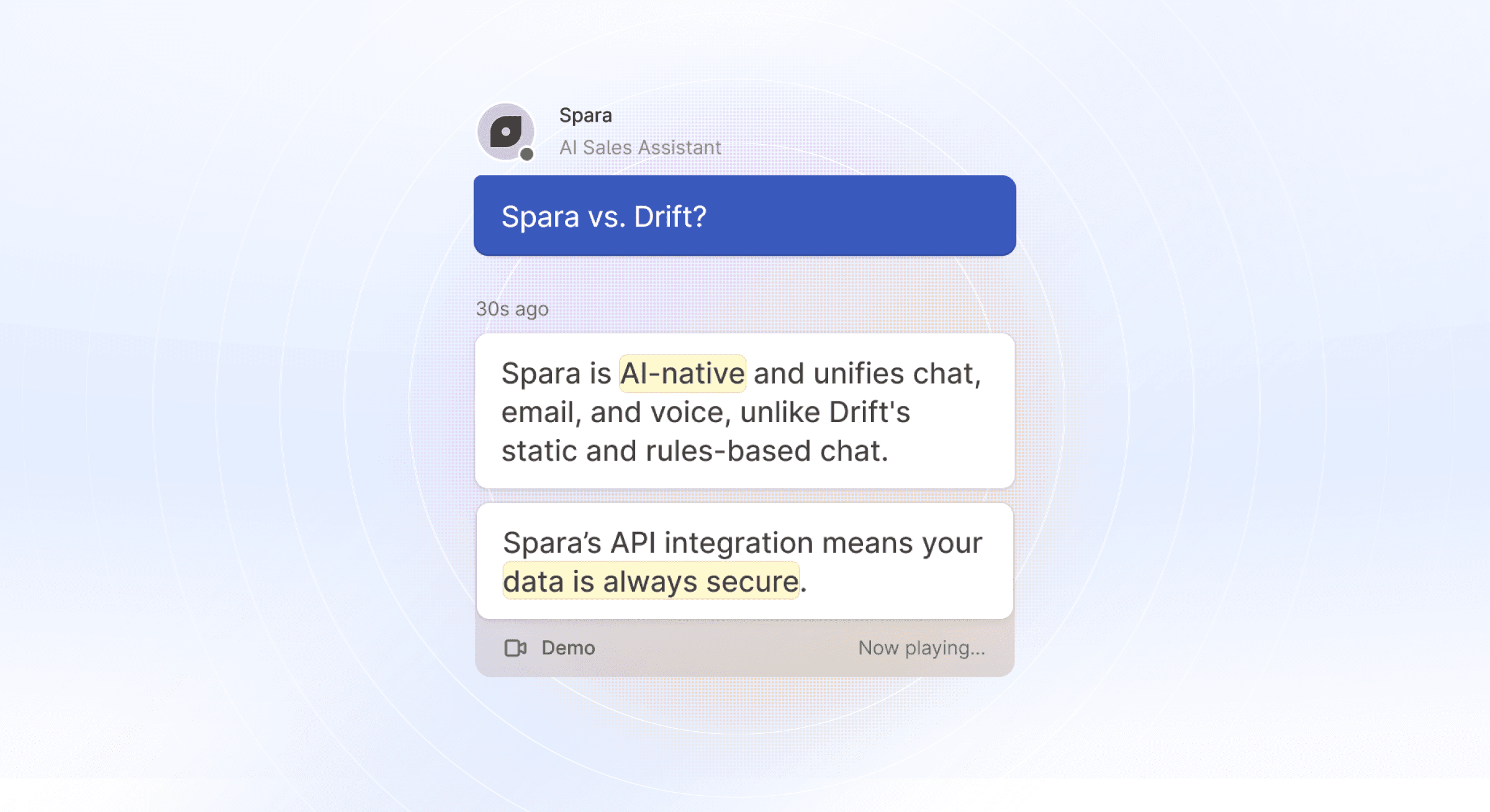
GTM
Top 5 Drift alternatives in 2026 for better lead conversion
Drift is winding down and 1mind is the named successor, but it isn’t the only option. Five Drift alternatives compared, plus a migration checklist.
Oct 10, 2026
•
10 min read
GTM
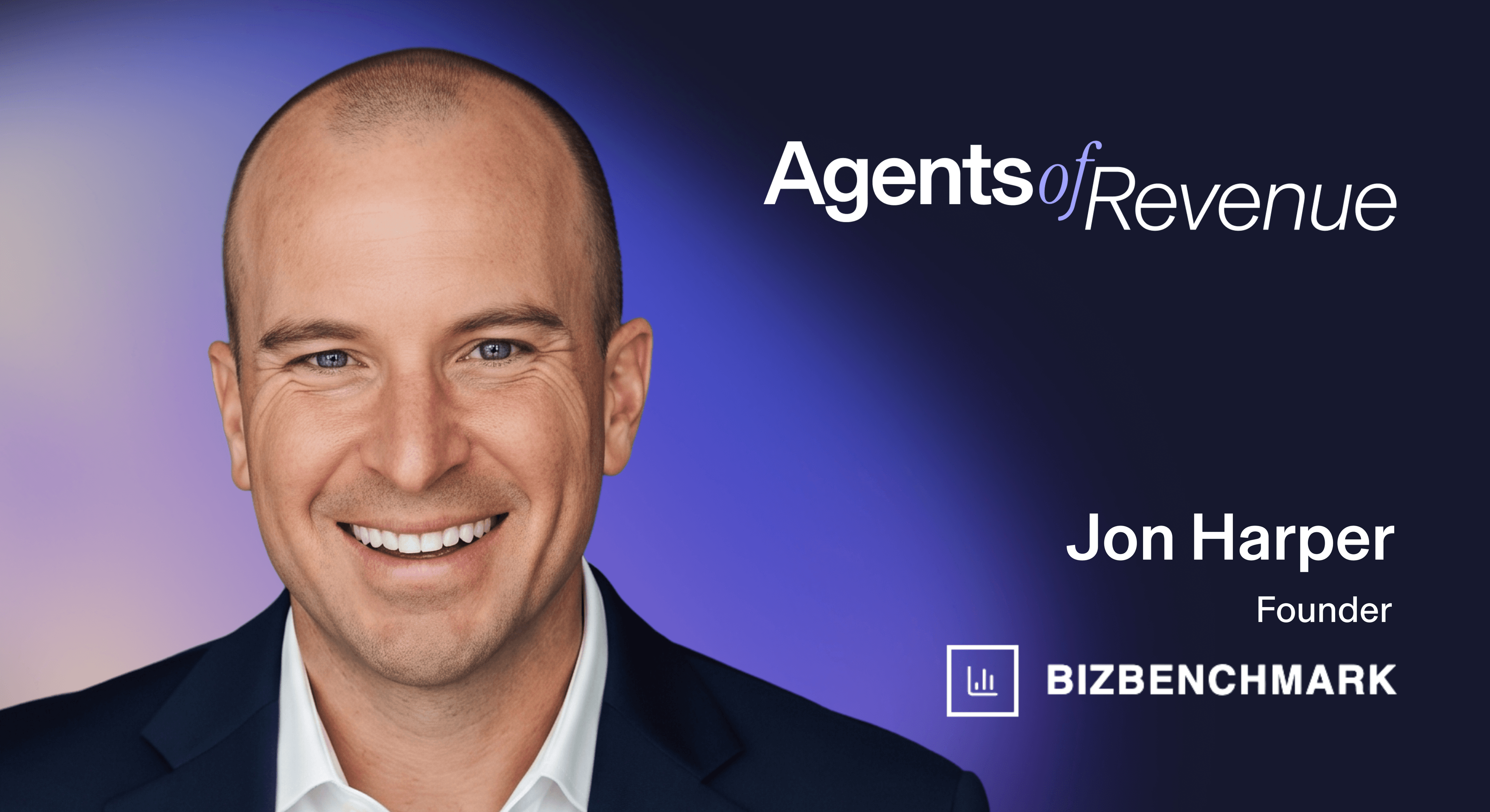
Jon Harper on the four traps that stall complex deals before the proposal
Jon Harper's PEO reps closed 35 to 45% of the deals they proposed, but only 9% of first meetings ever got that far. The BizBenchmark founder breaks down the four traps that stall complex deals, and what to do instead.
Oct 9, 2026
•
4 min read
GTM
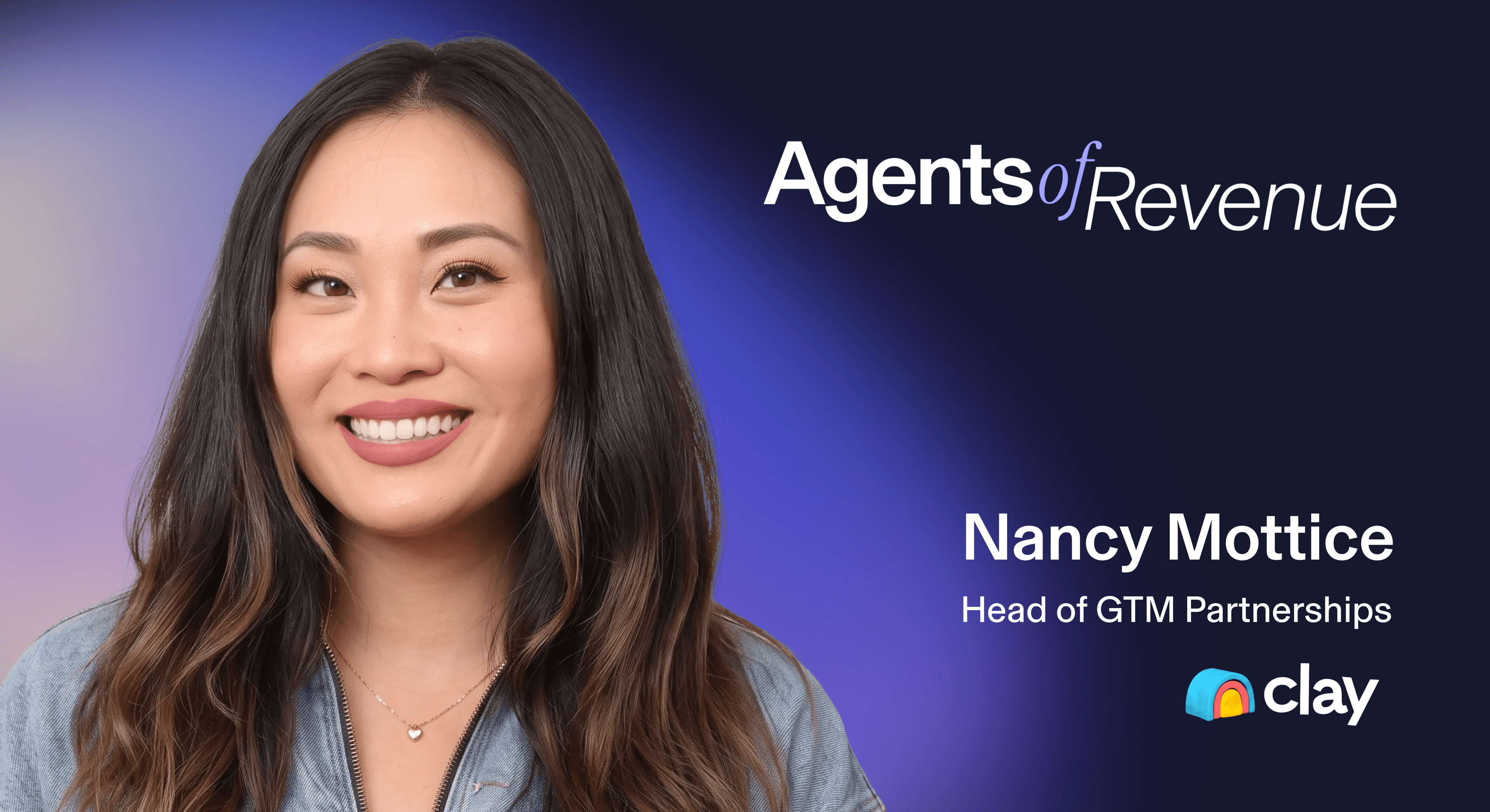
How Clay Built a Partner Motion That Drives 20% of Revenue
Nancy Mottice joined Clay as it moved from product-led growth into enterprise. Since then, partner-sourced revenue is up 16x and drives 20% of the business. Here are the six steps she took to get there.
Oct 9, 2026
•
7 min read
Sign up for the latest from Spara
Subscribe to get more GTM insights straight to your inbox.