
When high-intent buyers wait too long for a response, sales teams lose deals. Manual qualification, scattered follow-ups, and reps buried in admin work create gaps that modern buyers don’t tolerate.
That pressure has pushed more revenue leaders to adopt AI sales assistant software as a core part of their go-to-market stack.
But AI sales assistants vary considerably, with many tools automating surface-level tasks or layering conversational features onto older systems. Meanwhile, a smaller group is designed to qualify leads, engage prospects, and advance deals in real time.
For sales and marketing leaders responsible for pipeline performance, the real decision is which platforms increase qualified conversations and booked meetings, not just automate tasks.
This guide breaks down:
The top AI sales assistant platforms in 2026, including an at-a-glance comparison table
How they compare across qualification, engagement, and automation capabilities
What to look for when evaluating solutions built for measurable pipeline impact
What is AI sales assistant software?
AI sales assistant software supports, augments, or automates the work traditionally handled by sales development representatives (SDRs) and account executives across the sales process.
Essentially, a sales assistant helps teams:
Respond to inbound inquiries
Qualify leads against ICP criteria
Schedule meetings
Follow up consistently
Capture and log sales data
Summarize conversations
Support pipeline progression
Historically, these tasks required manual effort, including reviewing form fills, researching accounts, sending emails, booking time on calendars, and updating the CRM. AI sales assistants now perform many of these jobs automatically at scale.
Depending on the platform, AI sales assistants can support:
Inbound qualification (chat, demo requests, contact forms)
Outbound prospecting support (email drafting, enrichment, personalization)
Call intelligence and summaries
Follow-up automation across the sales cycle
Pipeline hygiene and CRM updates
In short, AI sales assistants help your sales team execute the entire process faster, from first touch to booked meeting to pipeline progression, while reducing manual work and increasing consistency.
Modern AI-native systems take these interactions further. Instead of acting as simple automation tools, they engage buyers directly across chat, email, and voice. They identify intent in real time, apply qualification logic, and move high-value prospects forward without waiting for a human handoff.
That shift matters because buyers expect:
Immediate responses
Seamless transitions between channels
Accurate answers to complex questions
The best AI sales assistant software doesn’t just automate tasks. It helps revenue teams accelerate speed-to-lead, improve qualification accuracy, protect rep capacity, and create pipeline more efficiently.
How do AI sales assistants work?
AI sales assistants combine conversational AI, intent detection, and CRM integration to act as operational support for sales teams, and, in some cases, autonomous agents that engage buyers directly.
At a practical level, they perform five core jobs:
1. Detect intentAI analyzes conversations, page behavior, and responses to identify buying signals, urgency, and fit.
2. Qualify against your ICPThe system applies predefined criteria, firmographics, use case, budget, and timeline to determine whether a lead should move forward.
3. Engage and follow upInstead of relying on scripts, modern AI-native systems generate contextual responses based on prior conversations and company data.
4. Route and scheduleQualified prospects get routed to the right sales reps or booked into calendars automatically.
5. Capture and update dataAI logs interactions, generates summaries, enriches records, and maintains CRM hygiene without manual data entry.
Traditional chatbots rely on rigid decision trees. They break when buyers ask unexpected questions. AI-native sales assistants use adaptive reasoning, which allows them to handle nuance, switch channels mid-conversation, and respond to pricing or integration questions in real time.
Newer platforms built with this architecture treat the AI assistant as part of the revenue team, not just a front-end tool. The result is faster pipeline creation, cleaner sales data, and a sales process that scales without adding headcount.
What are the most important features to look for in AI sales assistant software?
Inbound volume increases. Buyers expect instant responses. SDRs get buried in follow-ups, qualification calls, CRM updates, and repetitive admin work. Meanwhile, high-intent prospects wait or, worse, convert elsewhere.
AI sales tooling now spans multiple categories, including:
Non-conversational AI tools (email drafting, enrichment, forecasting, analytics)
Workflow automation platforms
Conversational AI sales assistants that engage buyers directly
If you’re evaluating AI sales assistant software specifically, you’re evaluating conversational AI systems—platforms that interact with buyers in real time across chat, email, or voice and move deals forward autonomously.
That distinction matters because many tools automate tasks behind the scenes. However, fewer can hold dynamic sales conversations, qualify leads accurately, and operate across channels without breaking.
Sales and marketing leaders should evaluate capabilities that directly impact:
Speed-to-lead
Qualification accuracy
Rep capacity
Pipeline conversion
Below are the features that separate basic automation from true conversational AI sales assistants.
1. AI-native architecture built specifically for sales conversations
AI sales assistants work best when platforms are architected around large language models (LLMs), not bolted on later. AI-native systems reason through buyer questions, adapt responses, and maintain context across long sales cycles.
Look for software that:
Uses natural language processing to handle real sales conversations, not templates
Learns from sales playbooks, CRM data, and past interactions
Supports complex sales workflows without brittle rules
Platforms like Spara follow this model, treating AI as an active sales agent rather than a scripted chatbot.
2. Real-time qualification using intent signals and ICP fit
The best AI sales assistants qualify leads while conversations happen, not after form fills or delayed follow-ups. Real-time qualification helps sales reps focus on high-value opportunities and shorten the sales cycle.
Strong qualification features include:
Live intent detection from chat, email, and sales calls
Asking dynamic qualification questions based on company fit, use case, and buyer context, rather than assigning static lead scores
Booking meetings directly once a buyer meets the qualification criteria, without manual SDR follow-up
This approach replaces time-consuming manual qualification and improves forecast accuracy.
3. Multi-channel engagement across chat, email, and voice
AI sales assistant software must support true multi-channel engagement without losing conversation history because modern buyers move fluidly between channels.
Prioritize tools that:
Engage buyers across website chat, AI email, and voice calls
Maintain shared context across all customer interactions
Support meeting scheduling, follow-ups, and call summaries from one system
Multi-channel capability prevents dropped handoffs and ensures sales teams respond at the right moment.
4. Enterprise-grade accuracy, governance, and compliance
AI-powered sales tools must protect data quality and brand trust, especially for enterprise teams. Accuracy matters as much as speed, so enterprise-ready platforms should offer:
Guardrails that prevent hallucinations and incorrect responses
Role-based governance over messaging and workflows
Sales leaders should avoid tools that prioritize automation without accountability.
5. Fast implementation and low admin overhead
Long implementations and heavy admin work slow time to value. High-performing AI sales assistants deliver no-code or low-code configuration, CRM integration with Salesforce and HubSpot, and automated data entry and enrichment to reduce rep workload.
When AI removes operational drag, salespeople spend less time updating dashboards and more time closing deals.
What are the top AI sales assistant software tools in 2026?
Below is an overview of the leading AI sales assistant tools in 2026, with a focus on how they support AI-powered sales workflows, qualification, and deal execution.
Platform | AI-native architecture | Real-time qualification | Multi-channel (chat, email, voice) | Primary strengths |
Spara | Built post-LLM | Yes (intent + ICP fit) | Yes (chat, email, voice) | Autonomous AI agents, speed-to-lead, enterprise-grade accuracy, and compliance |
Avoma | Partial (call-focused) | No | No (calls only) | Call recording, conversation intelligence, sales coaching insights |
Clay | Partial (data-centric) | No | No | Lead enrichment, outbound workflows, RevOps automation |
Lavender | No | No | Email only | AI-powered email writing and coaching |
Data accurate as of February 2026.
1. Spara
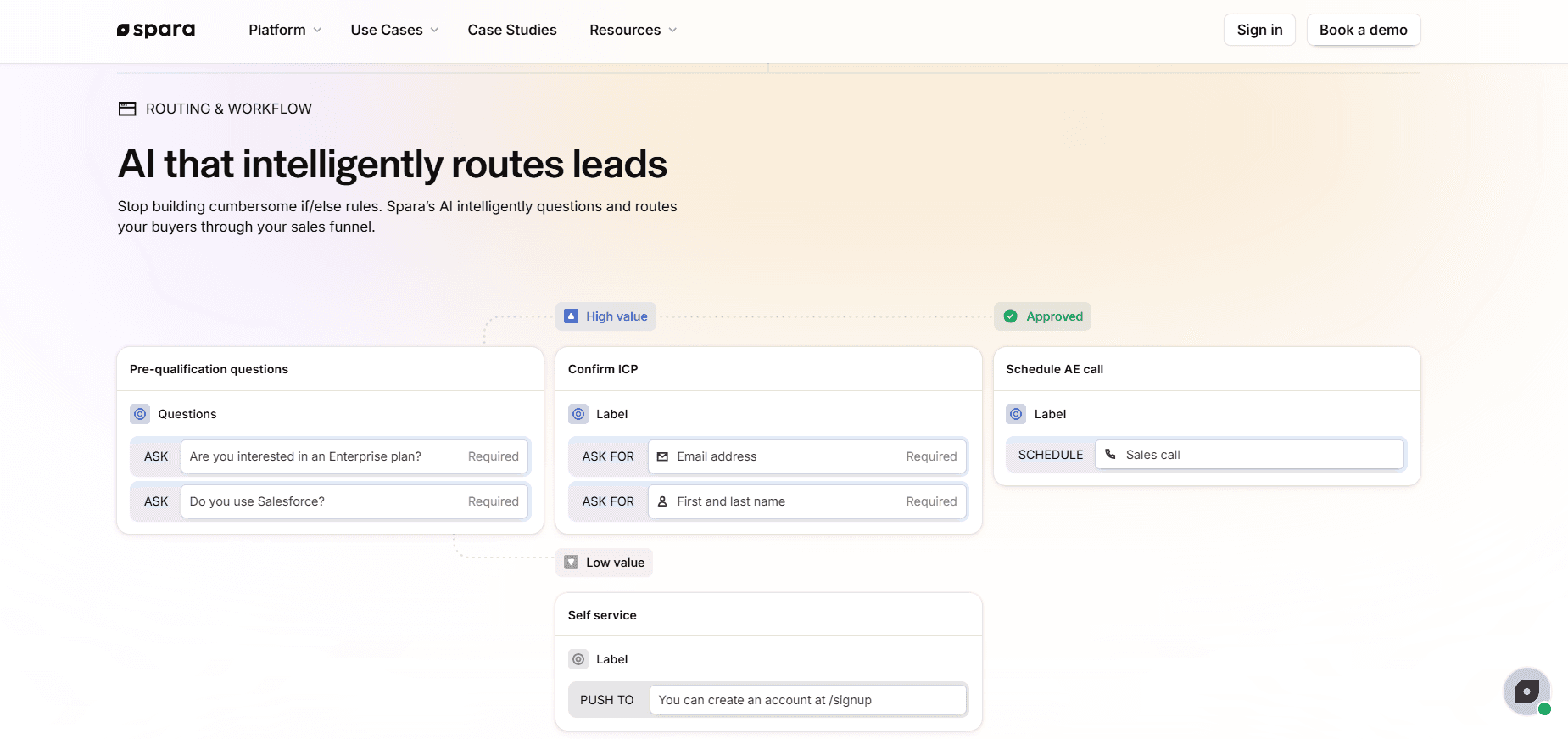
Spara is an AI-native sales assistant platform built to qualify, engage, and convert buyers across communication channels in real time. It replaces manual sales development representative (SDR) workflows with inbound SDR automation through autonomous AI agents that operate directly inside existing sales tools.
Best for: Spara is best for B2B sales teams focused on pipeline conversion, speed-to-lead, and enterprise-grade control.
Features:
Multi-channel AI agents: Engage buyers across chat, AI email, and voice while maintaining shared context to reduce friction and close deals faster
Real-time qualification and routing: Uses intent signals and ICP fit to qualify leads instantly and route high-value opportunities to sales reps
CRM-native automation: Handles data entry, enrichment, summaries, and sales activities directly in Salesforce and HubSpot
Cons:
Usage-based pricing can feel unfamiliar for teams accustomed to per-seat models
Advanced workflows may require strategic planning for complex sales orgs
Book a demo with Spara to see how Spara’s AI-native sales assistant qualifies inbound leads, books meetings, and accelerates pipeline.
2. Avoma
Avoma focuses on conversation intelligence for sales calls, offering transcription, call recording, and actionable insights for sales managers. It helps teams analyze performance after conversations rather than driving engagement during them.
Best for: Avoma is best for teams optimizing sales calls and coaching.
Features:
Call recording and transcription: Captures sales calls and generates summaries to reduce note-taking
Conversation intelligence: Highlights keywords, objections, and trends to improve sales coaching
Dashboards and analytics: Tracks metrics across sales calls for performance insights
Cons:
Real-time outbound engagement is limited compared to full AI sales assistants
Does not handle lead qualification or outreach workflows
3. Clay
Clay acts as a data enrichment and automation tool that supports outbound sales workflows. It helps teams build lead lists and personalize outreach using AI-driven enrichment.
Best for: Clay is best for RevOps and outbound-focused sales teams.
Features:
Automated data enrichment: Pulls sales data from multiple sources to improve lead quality
Workflow automation: Connects enrichment to outbound sales tools and CRMs
AI-assisted research: Uses artificial intelligence to speed up account research
Cons:
Does not engage buyers directly through chat, email, or voice
Requires integration with other sales tools to impact deal flow
4. Lavender
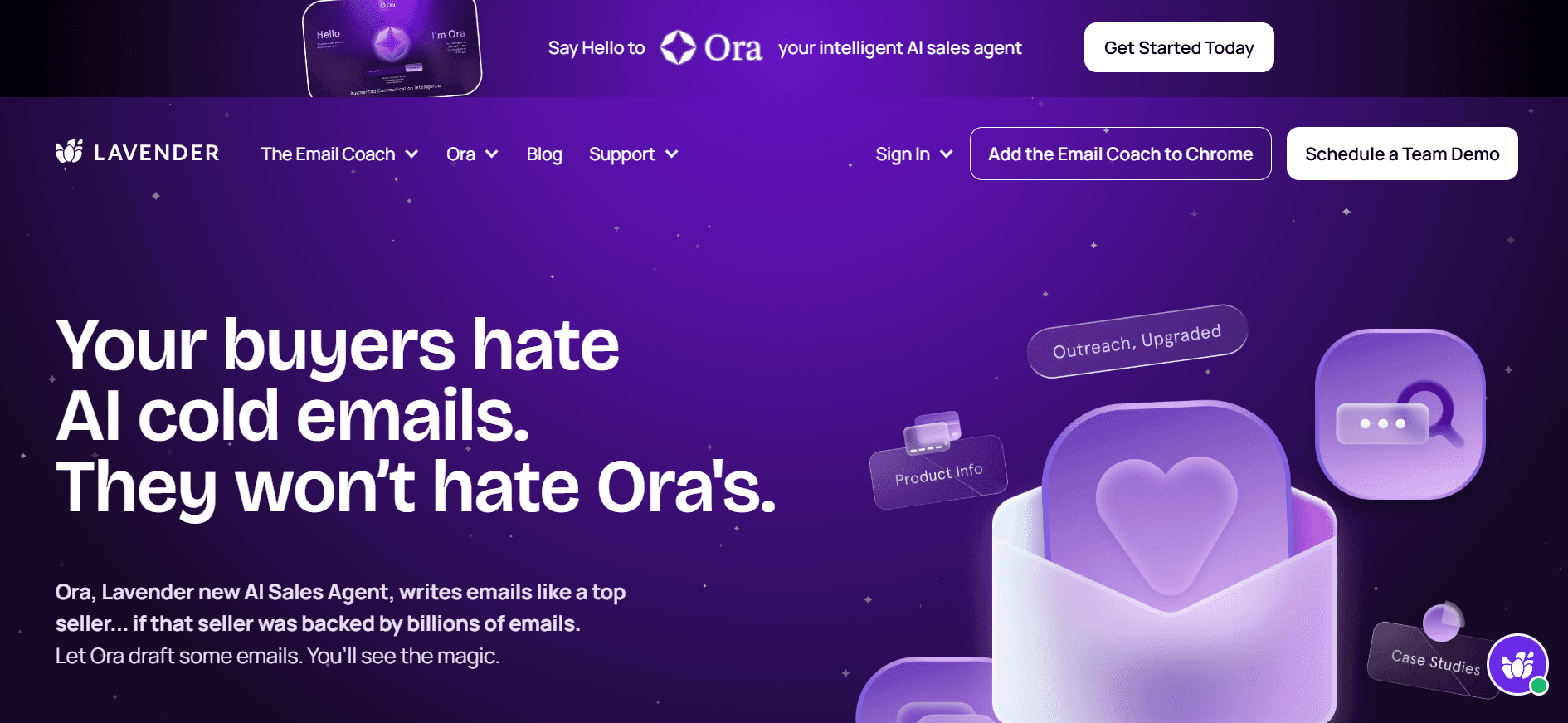
Lavender focuses on improving outbound email quality for individual sales reps. It provides AI guidance on messaging, tone, and deliverability.
Best for: Lavender is best for salespeople optimizing cold email outreach.
Features:
AI email coaching: Recommends edits to improve response rates
Inbox insights: Analyzes engagement and reply data
Lightweight integrations: Works alongside existing email tools
Cons:
Narrow use case limited to email
Does not support qualification, voice, or full sales workflows
How does Spara compare to traditional AI sales assistants?
Traditional AI sales assistant software promises automation, but most tools still rely on rules-based workflows, delayed follow-ups, and heavy manual oversight.
Spara fixes inbound sales by using AI-native agents designed to act like part of the sales team, engaging buyers instantly, qualifying accurately, and moving deals forward without friction. Here’s how that happens.
AI-native agents that respond instantly and book meetings autonomously
Before: A buyer fills out a form or starts a chat, then waits minutes or hours for a response. SDRs follow up manually, often after intent has cooled.
After: Spara responds in seconds across channels, qualifies the buyer in real time, and books meetings automatically.
Teams using AI-native agents see near-zero speed-to-lead, higher engagement rates, and materially better conversion from inbound traffic to qualified pipeline.
Real customer results: Faster pipeline creation and higher qualification accuracy
Traditional tools capture leads. Spara converts them. Customers like Fama report dramatic increases in inbound conversion after replacing rules-based chat with AI-driven qualification. Rho and Tiny use Spara’s autonomous agents to pre-qualify buyers, route only high-intent opportunities to sales reps, and maintain clean CRM data without manual review.
The result: faster pipeline creation, fewer unqualified meetings, and more accurate forecasting.
Cross-channel orchestration that reduces friction and lifts show rates
Before: Chat, email, and voice operated as separate systems. Buyers repeat themselves, and context gets lost.
After: Spara facilitates seamless conversations across different channels with shared memory, where chat transitions smoothly into email follow-ups and voice calls.
This continuity reduces friction, increases show rates, and improves the overall buyer experience during the sales cycle.
Reduced operational overhead with simpler setup and fewer workflows
Legacy AI sales tools require complex playbooks, constant tuning, and ongoing admin work, but Spara replaces brittle workflows with adaptive reasoning.
The result? Sales teams spend less time maintaining automation and more time closing deals, while AI SDR handles qualification, data entry, summaries, and sales activities automatically.
How to implement AI sales assistant software (4-step framework)
Implementing AI sales assistant software works best when teams focus on buyer intent, clean qualification logic, and fast iteration. The following framework reflects how high-performing revenue teams deploy AI without disrupting existing sales workflows.
1. Identify high-intent pages and inbound entry points
Start where buyers already signal intent. High-performing teams deploy AI sales assistants on pages that attract prospects ready to engage.
Focus on:
Pricing pages and comparison pages
Demo and contact sales forms
Product feature pages tied to core use cases
Inbound voice calls and chat entry points
These touchpoints capture the highest-value customer interactions and create the fastest path to a qualified pipeline.
2. Define qualification criteria and routing logic
AI works best when teams clearly define what “qualified” means. Establish criteria that reflect your ICP and sales process before launch.
Key inputs include:
Firmographics, like company size, industry, and geography
Behavioral signals such as page views, questions asked, and urgency
Sales-ready actions, like pricing inquiries or integration questions
Modern AI sales assistants apply this logic in real time, ensuring sales reps only engage with high-value, qualified leads.
3. Integrate CRM, calendar, and communication channels
AI sales assistant software should operate inside your existing stack, not alongside it. Tight integration prevents manual data entry and keeps sales data clean.
Enterprise-ready platforms like Spara connect directly to:
CRMs such as Salesforce and HubSpot
Calendars for instant meeting scheduling
Chat, AI email, and voice channels with shared context
This integration allows AI agents to log activities, update records, and book meetings automatically while sales teams stay focused on closing deals.
4. Launch a pilot, analyze conversations, and refine
Start with a controlled rollout rather than a full-scale launch. A pilot lets teams validate performance quickly and adjust based on real conversations.
During the pilot:
Review transcripts and summaries to spot gaps
Measure response time, qualification accuracy, and conversion rates
Refine prompts, routing rules, and follow-up workflows
AI-driven systems improve as they learn from sales data and customer interactions, making continuous optimization a built-in advantage.
See how Spara helps revenue teams convert more inbound demand
Inbound demand only converts when teams respond instantly, qualify accurately, and act without friction. Spara replaces slow, manual workflows with AI-native sales assistants that engage buyers across communication channels the moment intent appears.
As a result, revenue teams book more meetings, protect sales capacity, and turn real customer conversations into a qualified pipeline automatically.
See how Spara’s AI-native sales assistants help teams qualify inbound demand instantly, book meetings automatically, and turn conversations into pipeline.

Lauren ThompsonHead of Marketing, Spara
FAQs
Related posts
View all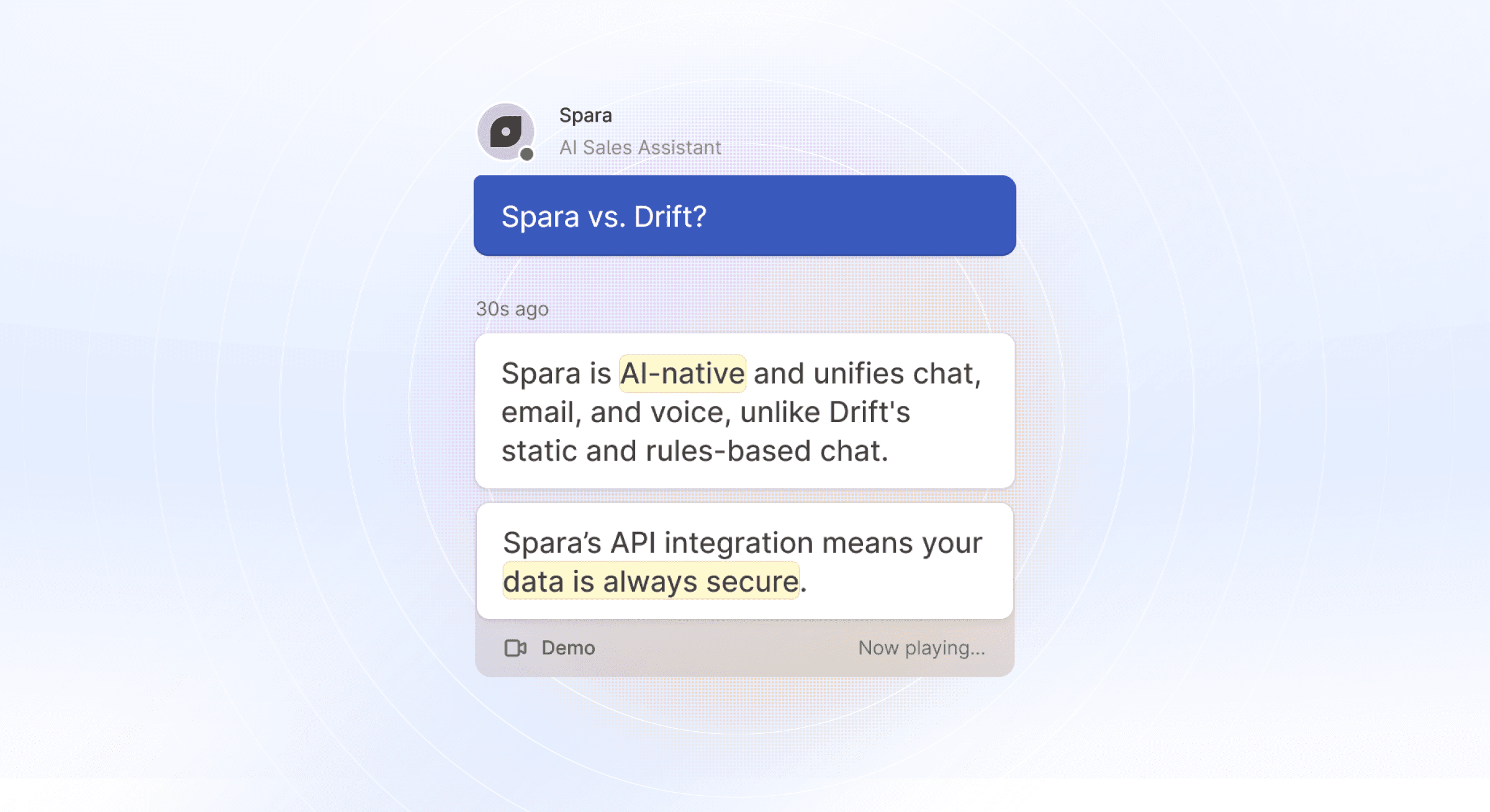
GTM
Top 5 Drift alternatives in 2026 for better lead conversion
Drift is winding down and 1mind is the named successor, but it isn’t the only option. Five Drift alternatives compared, plus a migration checklist.
Oct 10, 2026
•
10 min read

GTM
Jon Harper on the four traps that stall complex deals before the proposal
Jon Harper's PEO reps closed 35 to 45% of the deals they proposed, but only 9% of first meetings ever got that far. The BizBenchmark founder breaks down the four traps that stall complex deals, and what to do instead.
Oct 9, 2026
•
4 min read
GTM
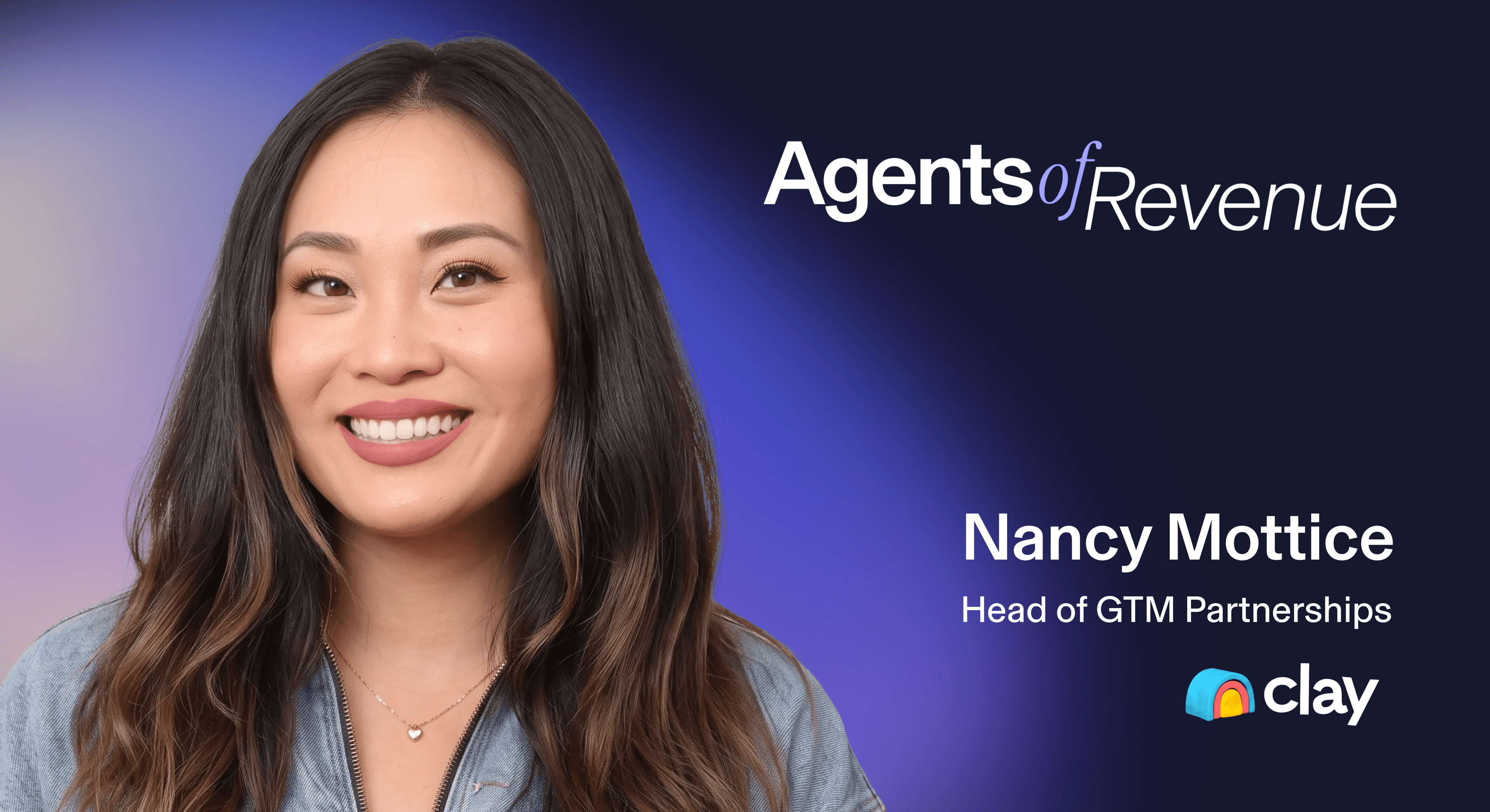
How Clay Built a Partner Motion That Drives 20% of Revenue
Nancy Mottice joined Clay as it moved from product-led growth into enterprise. Since then, partner-sourced revenue is up 16x and drives 20% of the business. Here are the six steps she took to get there.
Oct 9, 2026
•
7 min read
Sign up for the latest from Spara
Subscribe to get more GTM insights straight to your inbox.