
Your B2B sales stack decisions are less about picking a "best overall" platform and more about matching specific sales tools to the areas of your revenue motion that need covering, especially across the seven core areas every B2B sales stack should cover:
CRM system of record
Inbound qualification and routing / GTM automation
Outbound prospecting and enrichment
Intent data and account intelligence
Conversation intelligence and coaching
Forecasting and pipeline analytics
Enablement and content intelligence
With most teams already running over 100 SaaS applications, this framework helps you understand the key areas and avoid adding to the sprawl.
In this guide you'll find a definition of what a B2B sales stack is and how it anchors on your CRM, a recommended tool for each of the seven areas, and best practices to avoid tool sprawl and improve pipeline conversion.
What is a B2B sales stack?
Your B2B sales stack is the sales tools you use to run the full revenue motion, from first touch to renewal. At the center sits your CRM as the system of record for accounts, contacts, and opportunities. Every other tool executes revenue workflows around it.
Sales teams that build without a plan often end up with tool sprawl, disconnected customer data, and low rep adoption. The most effective stacks assign each tool a clear primary role, tight CRM integration, and a fit with how your sales reps actually sell.
At-a-glance B2B sales stack overview
This table gives you a side-by-side view of each tool's primary job, AI capabilities, CRM support, and key integrations.
Tool | Stack role (primary job) | AI capability | CRM support | Key integrations |
Salesforce Sales Cloud or HubSpot Sales Hub | CRM system of record | Predictive scoring, workflow automation, AI-powered insights | Native CRM | Slack, calendar tools, marketing automation, data enrichment |
Spara | Inbound qualification and routing / GTM automation | AI agents for chat, email, voice, and text, real-time qualification and follow-up | Any CRM | Chili Piper, Slack, Calendly, email platforms |
Apollo | Outbound prospecting and enrichment | AI personalization, data quality, basic intent signals | Salesforce, HubSpot, other major CRMs | LinkedIn, email providers, dialer systems |
6sense | Intent data and account intelligence | Predictive models, buying stage scoring | Salesforce, HubSpot, Microsoft Dynamics | Ad platforms, marketing automation, ABM tools |
Gong | Conversation intelligence and coaching | Call transcription, deal risk insights, coaching recommendations | Salesforce, HubSpot | Zoom, Microsoft Teams, phone systems, Slack |
Clari | Forecasting and pipeline analytics | AI sales forecasting, deal health scoring, time-series pipeline views | Salesforce, HubSpot | Email, calendar, activity tracking tools |
Seismic | Enablement and content intelligence | AI content recommendations, presentation insights | Salesforce, HubSpot, Microsoft Dynamics | Content management, presentation tools, digital sales rooms |
Best B2B sales stack tools in 2026
Each tool below owns one core job in a modern B2B sales stack. Mix and match based on your motion rather than stretching a single platform to cover everything.
Salesforce Sales Cloud or HubSpot Sales Hub: CRM system of record
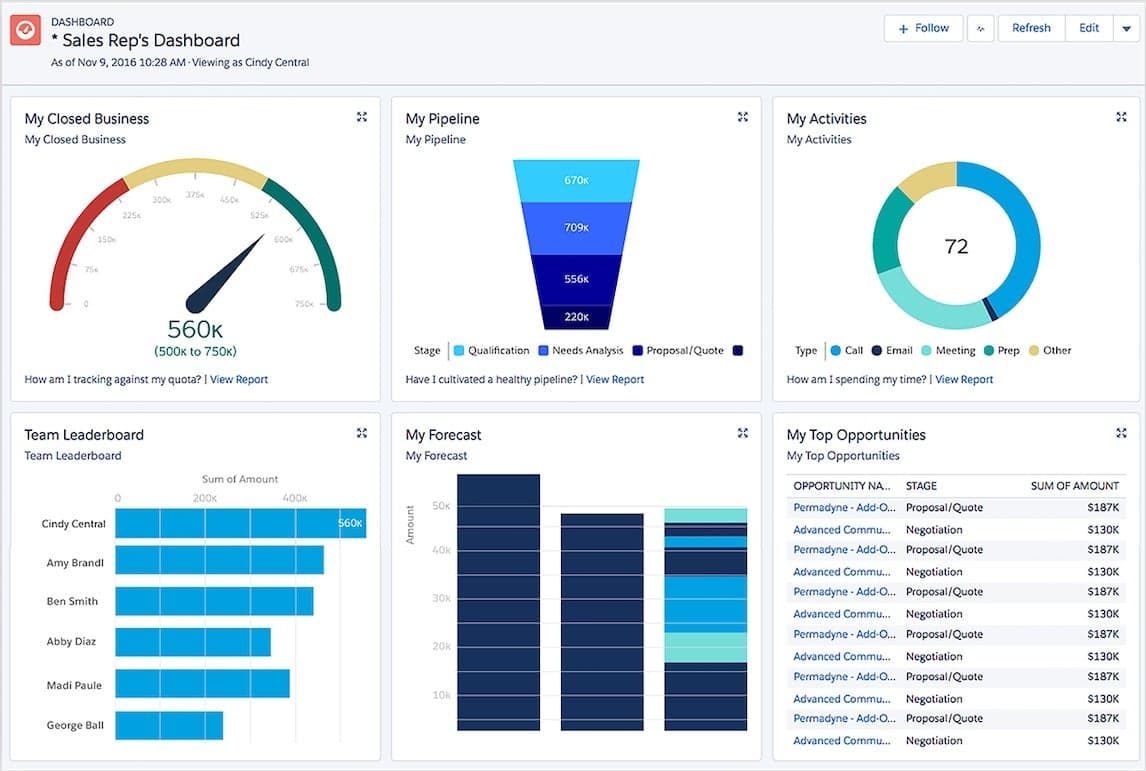
Salesforce and HubSpot are the two most common choices for the CRM core of a B2B sales stack. Your choice should reflect how complex your sales cycle is and how much configuration you're willing to support.
Selected featuresCentralized account, contact, and opportunity data with customizable fields and page layouts.
Workflow automation tools for lead assignment, approvals, and stage progression.
Forecast and pipeline dashboards suitable for weekly reviews and board reporting.
App ecosystems with integrations to prospecting, intelligence, and sales enablement tools.
AI capabilities such as Einstein or HubSpot AI for scoring and actionable insights.
Salesforce tends to fit complex, multi-region enterprise motions, while HubSpot often suits teams that want faster setup and tighter alignment with marketing.
Example use casesSalesforce supports multi-product, multi-region selling with custom approval workflows and territory rules. You can also connect it to tools like 6sense, Gong, and Clari. Mid-market revenue teams lean on HubSpot for CRM, basic sequences, and reporting before adding specialized tools as the motion matures.
Spara: Inbound qualification and GTM automation layer
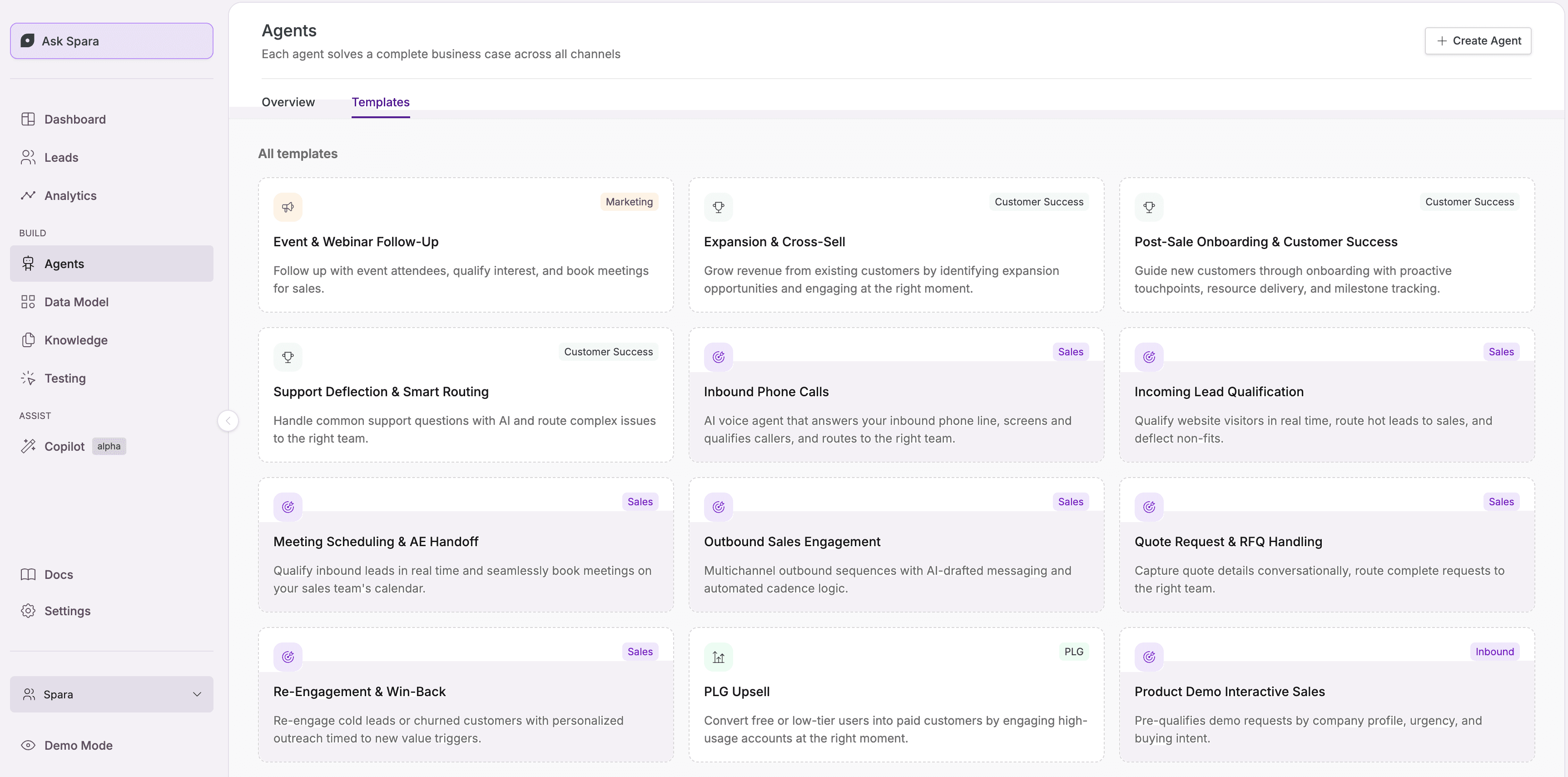
Spara engages, qualifies, and routes inbound leads across chat, email, voice, and text from an AI-native layer between your website and CRM. Its AI agents handle first-touch qualification, routing, meeting booking, no-show recovery, and pipeline follow-through, so inbound demand consistently converts to pipeline.
Selected featuresAI chat that runs on your site, asks qualifying questions, shares content, and books meetings in real time.
AI agents that qualify inbound visitors through chat, then follow up via email, voice, and text to re-engage and convert leads who didn't book on the first touch.
Native CRM integrations with Salesforce, HubSpot, and Marketo, plus webhooks and API support for custom workflows and data flows into and out of any CRM.
Routing and scheduling logic that connects to Calendly or Chili Piper and assigns meetings by territory, ownership, or product.
Bidirectional CRM sync that automatically writes qualification data, conversation context, and meeting outcomes back to your CRM, and reads existing records to inform routing decisions in real time.
A SaaS company uses Spara's inbound SDR automation to qualify demo requests from pricing and product pages, route SQLs to the right AE based on territory and product line, and book meetings in minutes instead of hours. All activity is written back to Salesforce, so Marketing and Sales share a single inbound view.
What users say"Spara has dramatically increased our most important inbound conversion metric. In all my years of GTM experience, I've never seen a product have such an impact so quickly."

Ben MonesFounder & CEO, Fama
Apollo: Outbound prospecting and enrichment
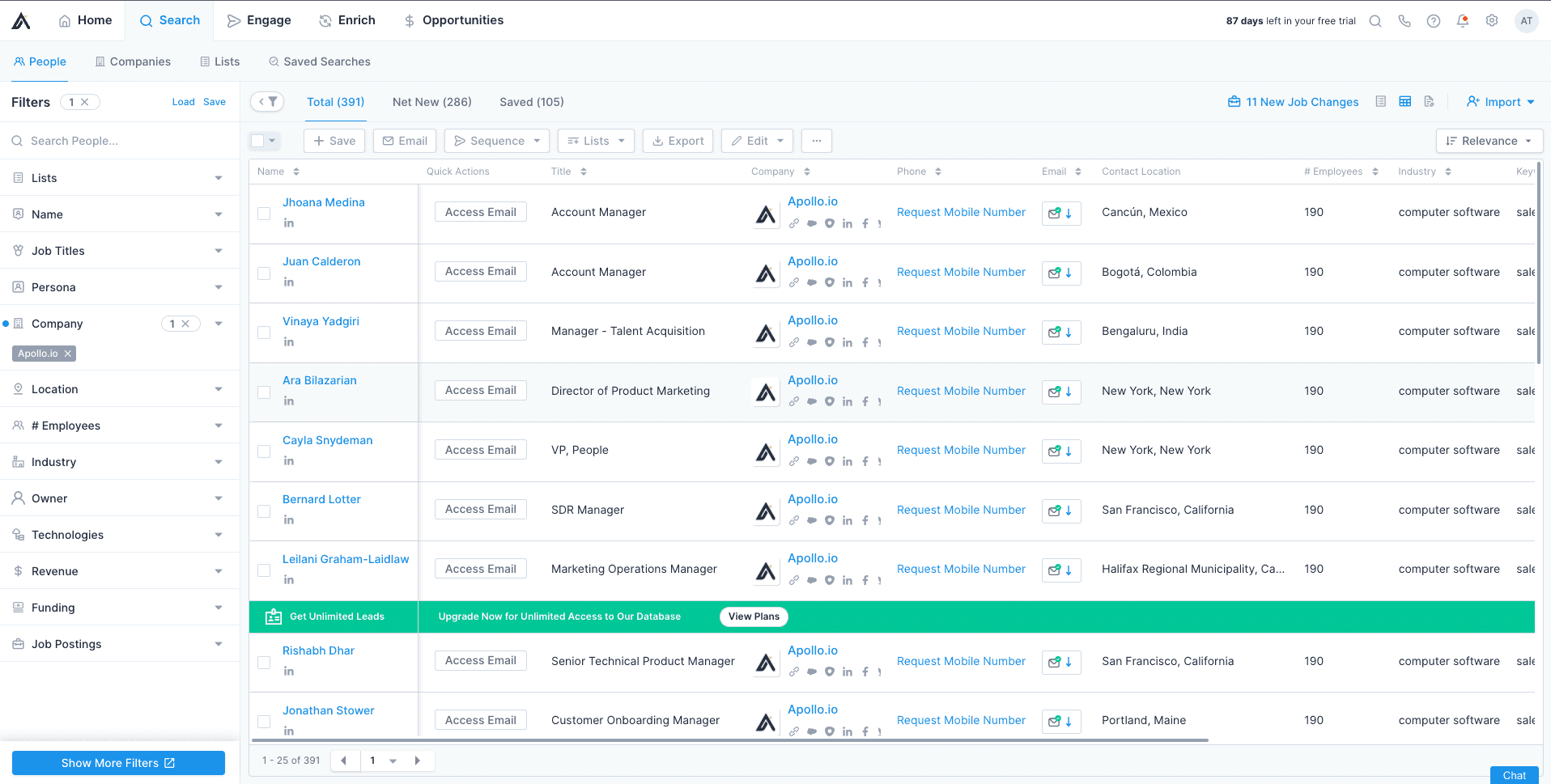
Apollo combines a large B2B contact database with sequencing and enrichment, giving your outbound team one place to find accounts and run multi-channel outreach.
Selected featuresContact and account search with 60+ filters to match your ICP.
Sales engagement sequences combining email, call, and LinkedIn with basic AI personalization and branching.
Real-time enrichment that fills in missing contact data and firmographics in your CRM.
Your SDRs can build target account lists, sync them to Salesforce or HubSpot, then trigger sequences that combine emails, calls, and social touches. RevOps uses Apollo's enrichment to keep CRM data current and route inbound leads to the right owner based on clean firmographics.
6sense: Intent data and account intelligence
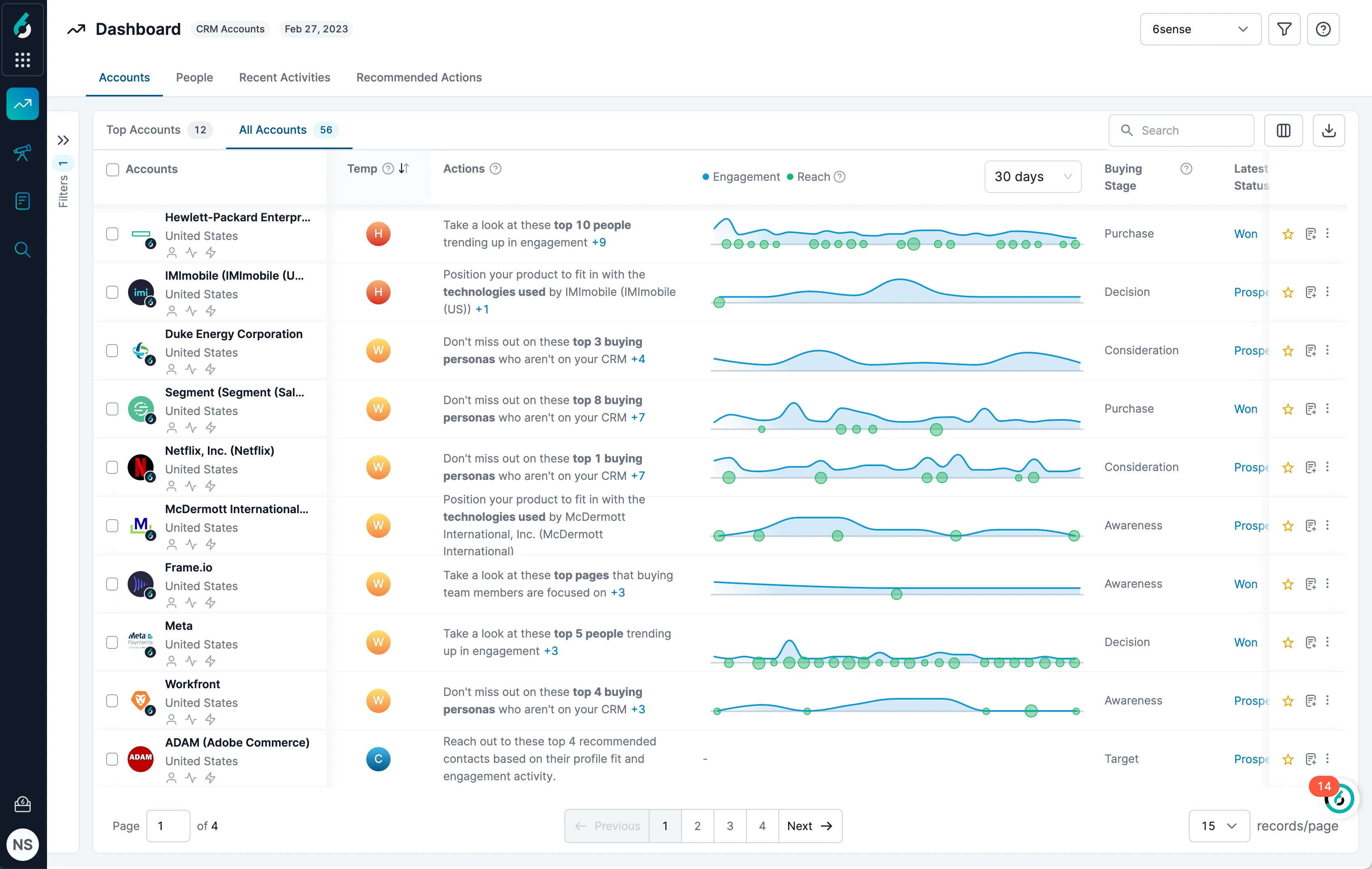
Sales intelligence platforms like 6sense help you see which accounts are researching your category before they ever fill out a form. It's most valuable when you run an account-based motion and care about timing outreach to real buyer interest.
Selected featuresAccount identification that maps anonymous web activity to known companies.
Predictive scoring that classifies accounts by buying stage and likelihood to buy.
Orchestration that syncs signals into CRM, marketing automation, and ad platforms to eliminate silos.
Feed 6sense intent data into Salesforce, then have SDRs prioritize outreach to potential customers in the "decision" stage while marketing runs coordinated ads. Outbound stays focused on in-market buyers instead of cold accounts that haven't shown meaningful research behavior.
Gong: Conversation intelligence and coaching
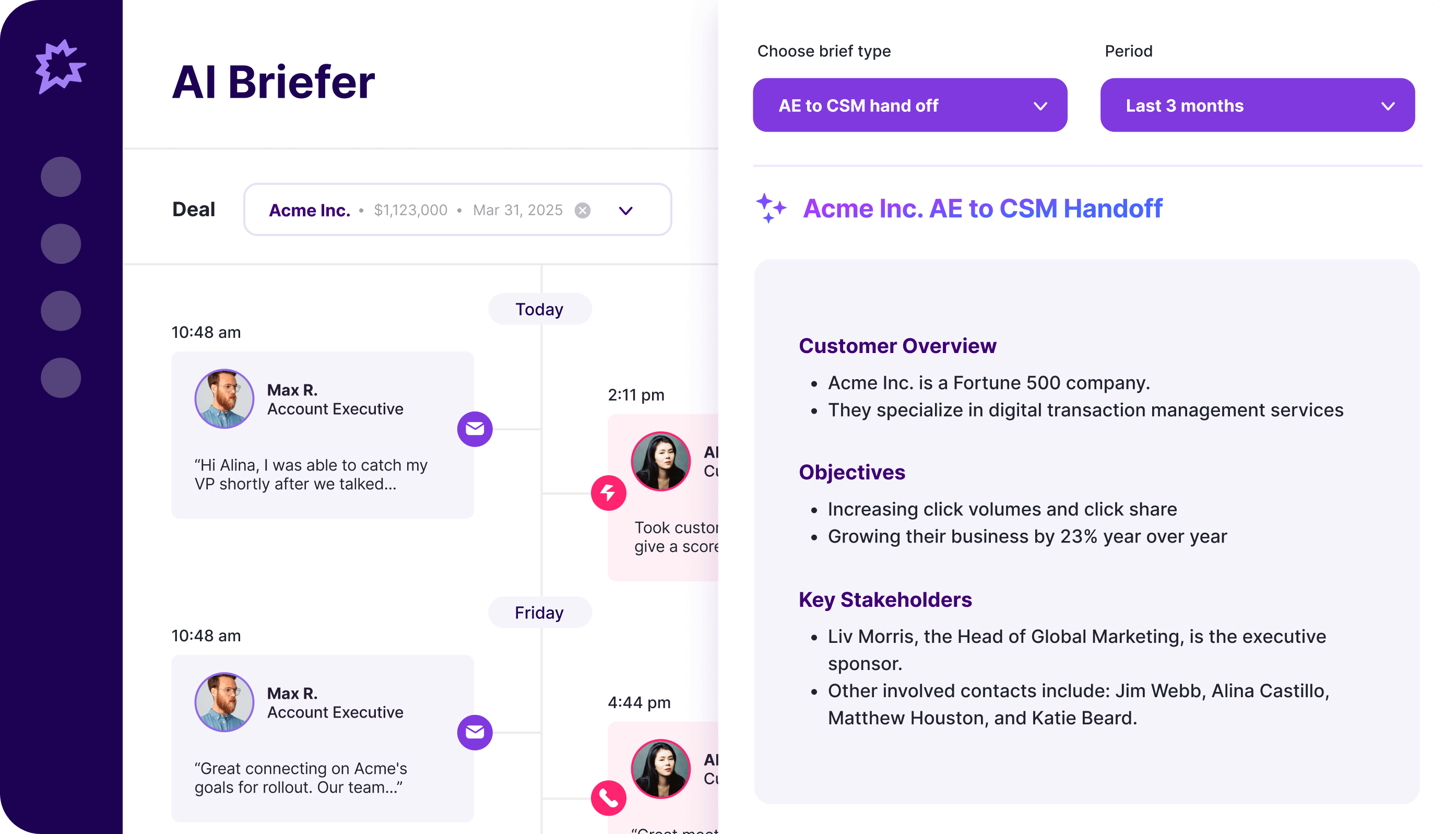
Gong captures calls, emails, and meetings so you can see what's actually happening in deals, not just what gets updated in CRM. Gong is most useful once you have enough call volume to analyze patterns across your team.
Selected featuresAutomatic recording and transcription of sales calls across Zoom, Teams, and phone.
Deal boards that surface risk based on recent activity and stakeholder engagement.
Coaching insights that compare rep behavior to top performers and suggest focus areas.
Sales leaders use Gong to review stalled deals before forecast calls, checking talk tracks, next steps, and stakeholder coverage. Enablement sales teams build onboarding paths from real calls, and sales operations teams use sales data to validate which stages truly predict win rates.
Clari: Forecasting and pipeline analytics
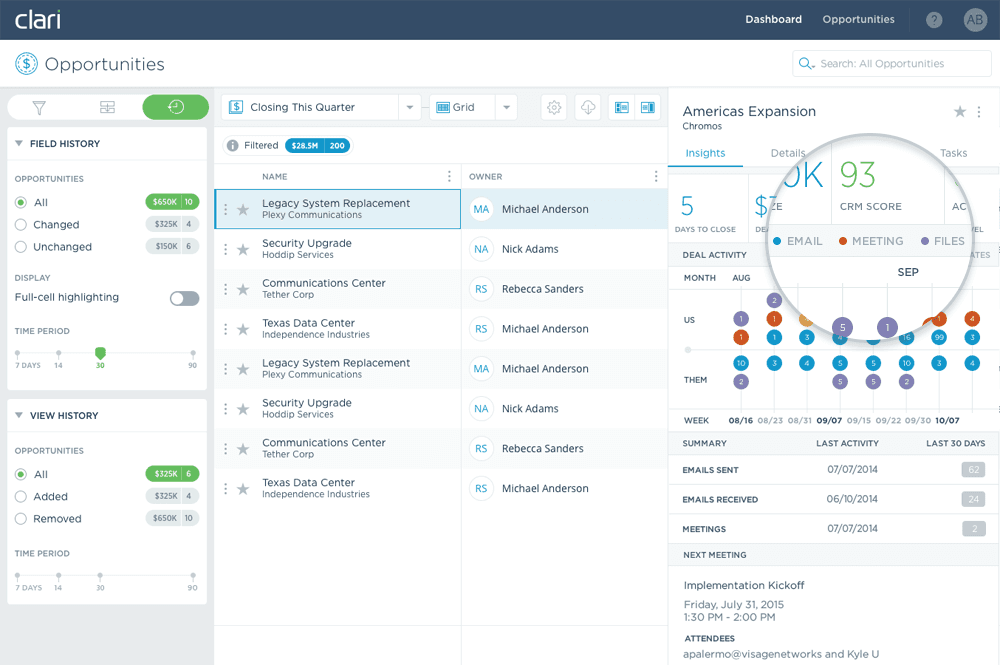
Clari sits on top of your CRM to give you a clearer, time-based view of your pipeline and sales forecasting. It's designed for revenue teams that need consistent, auditable roll-ups rather than spreadsheet-based forecasts.
Note: Clari and Salesloft merged in December 2025, forming a combined revenue AI company. The Clari platform and its core functions described below remain available.
Selected featuresAI forecasting models that blend rep commits, manager judgment, and activity data.
Time-series pipeline views that show how coverage and deal counts change over time.
Deal inspection that flags stalled or risky opportunities based on engagement signals.
Use Clari to replace spreadsheet roll-ups, compare current-quarter coverage to previous quarters, and hold managers accountable to realistic commits. Sales operations can quickly highlight which segments are under-covered so marketing and SDRs know where to focus lead generation efforts.
Seismic: Enablement and content intelligence
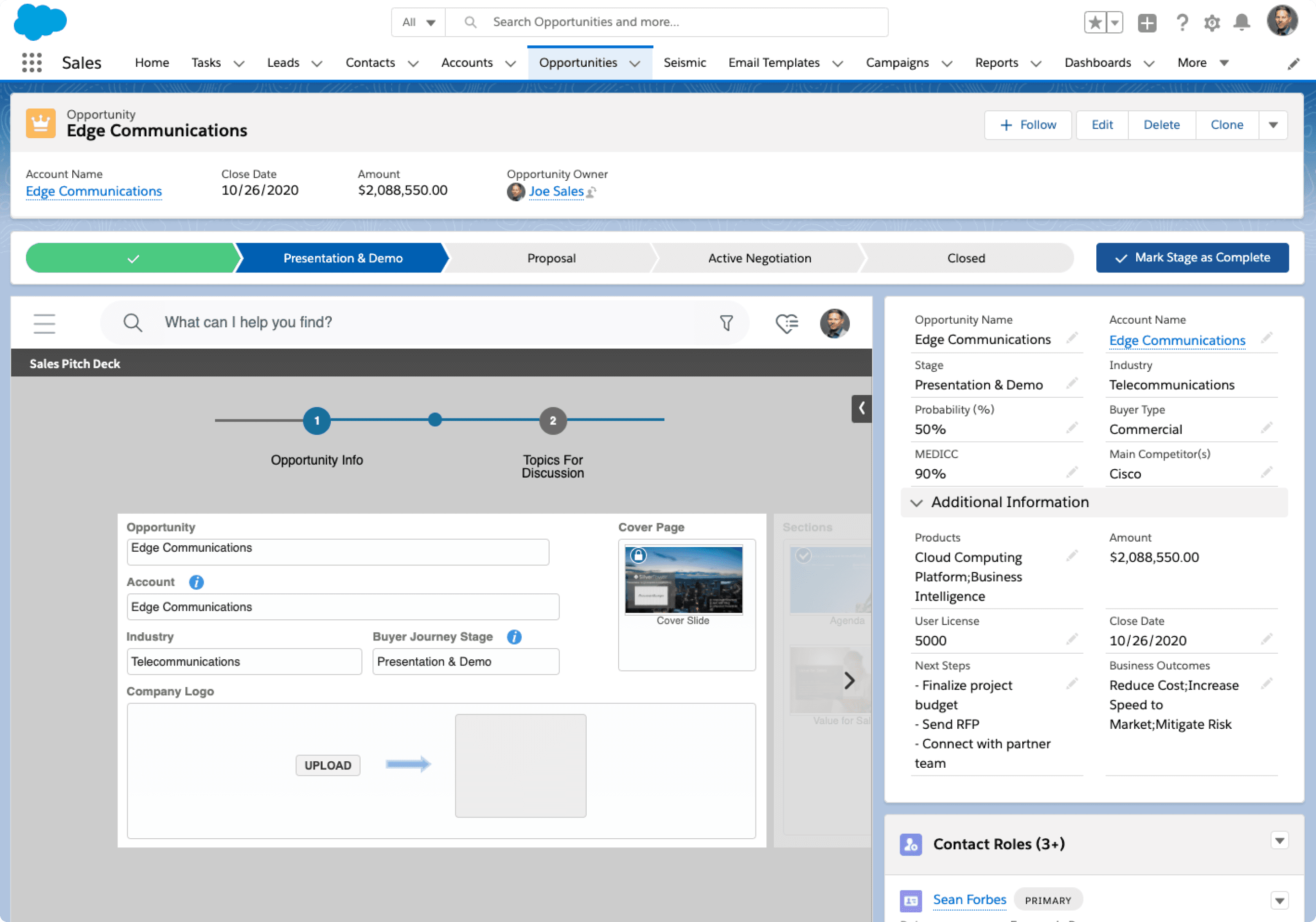
Seismic centralizes sales content, training, and buyer engagement into a single enablement platform. It's aimed at teams that want consistent messaging and content analytics across regions and segments.
Selected featuresContent libraries and playbooks that surface approved assets inside the CRM.
Digital sales rooms and mutual action plans for complex, multi-stakeholder deals.
Content analytics that show which assets influence opportunities and stages.
Your enablement team can publish templates and playbooks for specific products, then see which content gets used on high-win-rate deals. AEs use mutual action plans inside digital rooms to keep complex buying groups aligned on next steps and close deals faster.
Best practices when building a B2B sales stack
With companies running an average of 106 SaaS applications, the risk of overlap and low adoption is all too real. Use these considerations to ensure fit before you buy and to avoid the sprawl that kills adoption.
Ensure the tools connect cleanly to your CRM
Your CRM is the source of truth. Every tool you add should read and write the right fields without custom workarounds. During trials, check whether the integration supports custom fields, bi-directional sync, and near real-time updates for key events such as lead status changes or meetings booked.
If you need middleware or manual data entry for basic workflows, you're adding operational risk and increasing the odds that sales reps will ignore the tool. Watch for data silos that prevent your GTM teams from sharing a single view of customer profiles.
Check API availability and data sources during evaluation too. Tools that integrate cleanly with your existing stack reduce the manual work that creates gaps between systems.
Keep the "next step" simple for your team
Each tool should make ownership and next actions obvious. After a lead is qualified, sales reps should know who owns it, what to do, and where to work, ideally from the CRM or Slack rather than a separate dashboard.
If a platform needs a long playbook just to explain daily usage, adoption will lag and pipeline will leak at every handoff. Poor sales process design is one of the most common failure modes in stack optimization.
Choose tools that align with how your team actually sells
Match tools to your motion. High-velocity inbound sales teams benefit most from speed-to-lead automation tools and routing. Enterprise motions with long sales cycles see more value from conversation intelligence, mutual action plans, and advanced sales forecasting.
Before you sign a contract, map the tool to a specific step in your current sales process and confirm that sales reps won't need to reinvent how they sell to use it. This is especially true for modern sales motions that blend inbound and outbound.
Prioritize fast setup over "nice-to-have" features
RevOps capacity is finite. A tool that you can configure in a week and start generating value the same month is often the right starting point. Feature-rich platforms can deliver more over time, but only if your team has the capacity to implement and adopt them properly. Ask vendors how long it took comparable customers to reach their first measurable outcome, not just first login.
Decide what success looks like before you add more tools
Every new tool should be tied to a clear metric such as speed-to-lead, MQL to SQL conversion, sales forecasting accuracy, or ramp time. Establish a baseline and a target lift before you buy. This makes it easier to justify spend, compare vendors, and cut tools that don't deliver measurable revenue impact.
The best revenue teams also track customer success and retention metrics alongside pipeline creation, because a stack that wins new business but loses accounts is still leaking revenue.
Is inbound conversion your biggest pipeline gap? Spara handles qualification, routing, and meeting booking automatically, so your team picks up leads that are already advanced and ready to convert. Book a demo.

Lauren ThompsonHead of Marketing, Spara
FAQ
Related posts
View all
GTM
Top 5 Drift alternatives for better lead conversion
Drift alternatives drive more conversations, leads, and revenue growth. From AI chat to product demos, they personalize every stage of the customer journey.
Sep 14, 2026
•
10 min read

GTM
Databricks' Barry Dauber on why every project should start with impact, not AI
Barry Dauber runs Gen AI go-to-market at Databricks, talking companies down from AI hype every day. Here's his framework for scoping an AI project: name the metric, classify the initiative, and reserve the model for what actually needs one.
Sep 2, 2026
•
4 min read

GTM
How Clay's Head of GTM Engineering Took Event ROI From 2x to 10x
Everett Berry treats every dinner like a funnel. Here's the six-stage system — golden lists, leader-to-leader invites, engineered seating, automated follow-up — that took Clay's event ROI from 2x to 10x.
Aug 26, 2026
•
5 min read
Sign up for the latest from Spara
Subscribe to get more GTM insights straight to your inbox.